

Description
Channel & Physical Interface Configuration
-
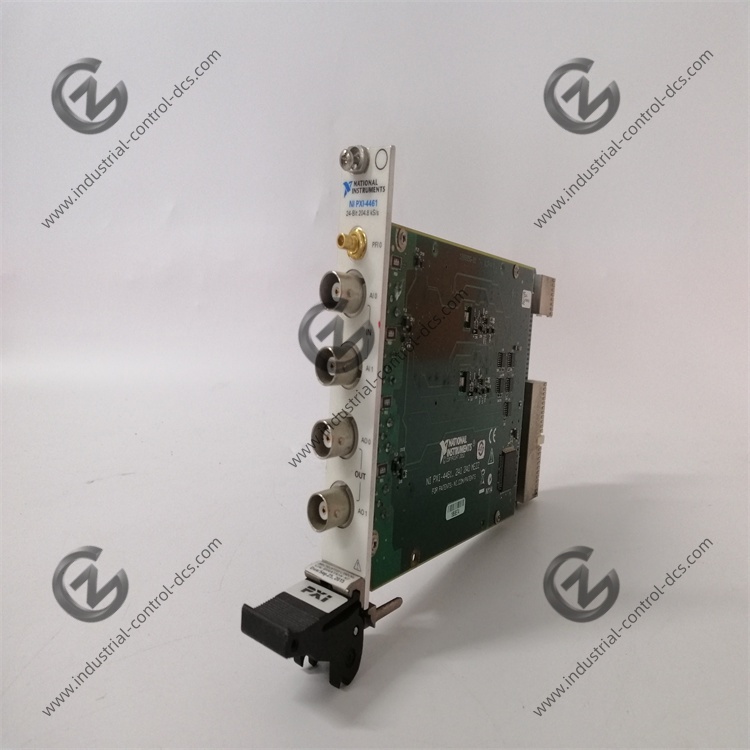
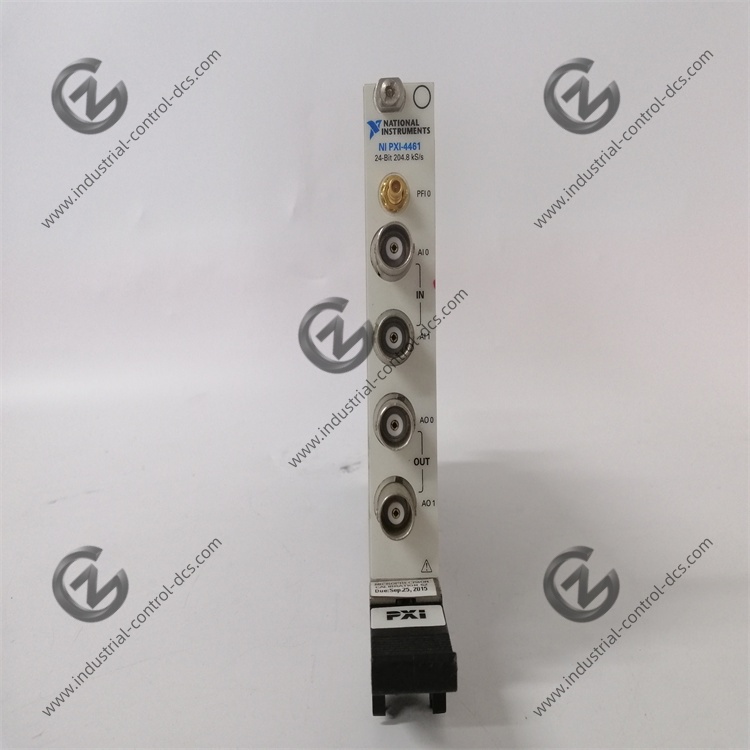
Channel layout: 2 fully simultaneously sampled differential analog inputs (AI), 2 synchronized differential analog outputs (AO)
-
Front panel interfaces: 4 isolated female BNC ports (2 AI / 2 AO), 1 SMB PXI star trigger synchronization port
-
Signal mode: Every AI/AO channel supports independent differential or pseudodifferential software switching
-
Slot occupation: Single-width 3U PXI peripheral slot, no auxiliary slot occupation
-
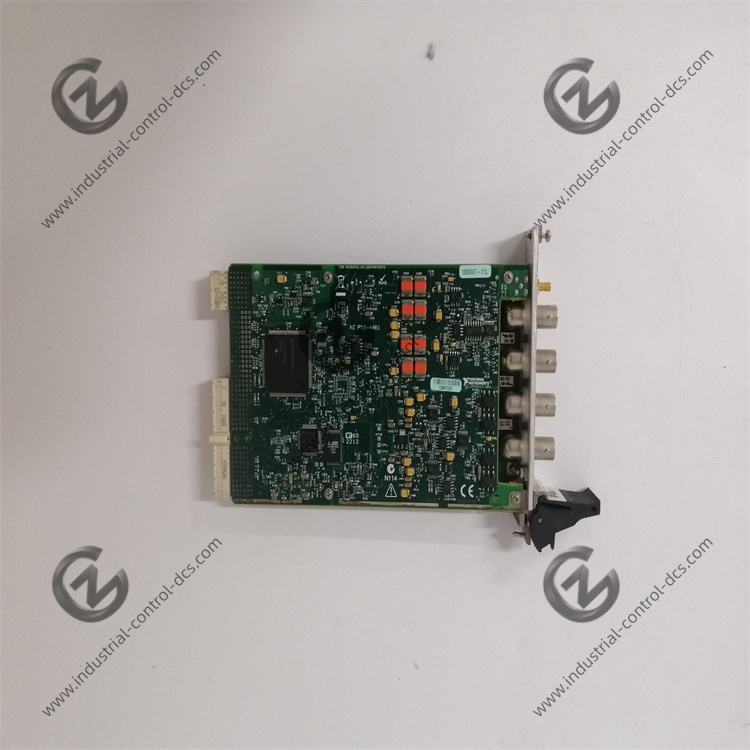
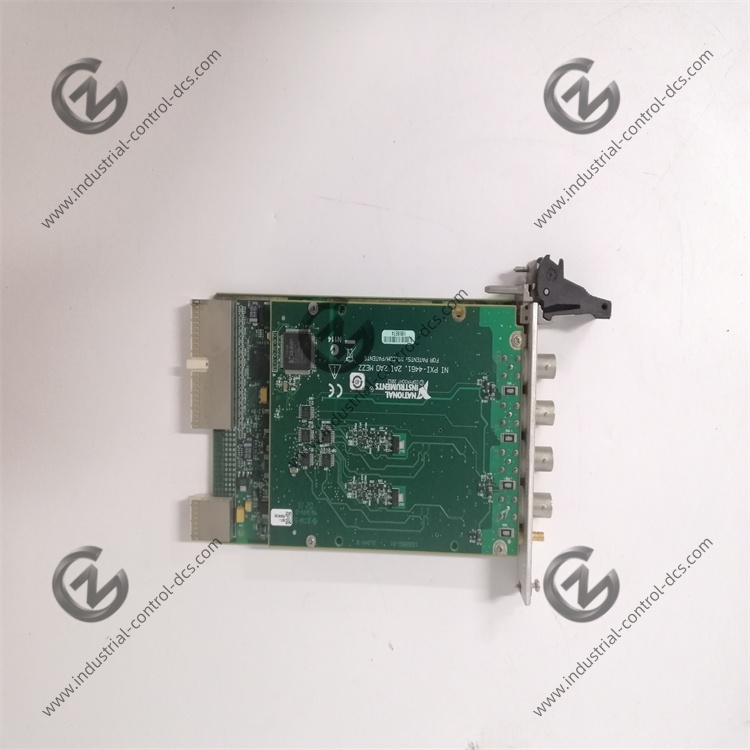
Mechanical parameters: 160 × 100 mm footprint, 252 g bare module weight, aluminum shielding shell
Core Analog Input Electrical Parameters
-
ADC architecture: 24-bit delta-sigma modulator, oversampling ratio dynamically adjusted by sampling rate
-
Sampling rate range: 1 kS/s to 204.8 kS/s with 181.9 μS/s ultra-fine incremental tuning
-
Software gain settings: -20/-10/0/10/20/30 dB, corresponding full-scale ranges ±42.4 Vpk to ±0.316 Vpk
-
Input impedance: 1 MΩ || 217 pF (differential); pseudodifferential negative terminal fixed 50 Ω to chassis ground
-
Overvoltage protection: ±42.4 Vpk differential withstand; pseudodifferential negative terminal limited to ±10 Vpk
-
AC coupling cutoff: -3 dB at 3.4 Hz, eliminating low-frequency DC offset without external circuitry
Analog Output Exclusive Parameters (vs PXI-4462)
-
DAC performance: 24-bit delta-sigma DAC, synchronous output latency matched with ADC within 1 sample cycle
-
Output voltage range: Software-selectable ±0.316 Vpk to ±42.4 Vpk, consistent with AI gain gears
-
Load driving capability: Minimum stable load 600 Ω; optimal performance for 10 kΩ and above loads
-
Output impedance: 50 Ω onboard series matching resistor for coaxial cable impedance matching
-
AO distortion: THD -108 dBc @ 1 kHz, 0 dB gain, meeting professional audio excitation standards
-
Output noise floor: 1.2 μVrms idle noise across full audio bandwidth
IEPE & TEDS Transducer Compatibility
-
IEPE excitation current: Per-channel independent 0/4/10 mA constant current source, ±15% current tolerance
-
IEPE compliance voltage: 24 V minimum headroom, supporting long-distance accelerometer cabling over 50m
-
TEDS compliance: IEEE 1451.4 Class I standard, automatic reading of sensor sensitivity, serial number and calibration date
-
Low-noise current source: <300 pA/√Hz current noise, avoiding signal distortion for high-impedance microphones
Noise, Distortion & Crosstalk Performance
-
Dynamic range: 118 dB typical @ 0 dB gain, 1-51.2 kS/s sampling rate
-
SFDR: 110 dBc typical @ 204.8 kS/s full-rate sampling
-
Inter-channel phase mismatch: ≤0.015° @ 0 dB gain, guaranteeing dual-channel vibration phase consistency
-
Channel crosstalk: -138 dBc @ 1 kHz adjacent channels, negligible interference for multi-channel testing
-
DC CMRR: 80 dB @ 0 dB gain, suppressing industrial common-mode ground noise
Dual Anti-Aliasing Filter Modes
-
Enhanced Low-Frequency Alias Rejection (Default): 104 dB minimum alias rejection, alias-free bandwidth 0.4 fs
-
Standard Alias Rejection: 120 dB minimum alias rejection, alias-free bandwidth 0.4535 fs for high-frequency signal acquisition
-
Passband flatness: ±0.003 dB typical within 20 Hz-20 kHz audio bandwidth
-
Filter latency: 63 sample delay at maximum sampling rate, fixed latency for phase-locked excitation
PXI Bus & Power Consumption
-
PXI compliance: PXI Rev.2.2, supports PXI_Clk10, local trigger and star trigger for cross-module synchronization
-
DMA resource: 2 independent bidirectional DMA channels for zero-CPU continuous AI/AO streaming
-
Backplane power draw: +3.3 V 1820 mA, +5 V 1050 mA, +12 V 140 mA, -12 V 75 mA
-
Multi-module synchronization: Up to 12 synchronized PXI-4461 modules in one chassis with sub-500 ps skew
Mechanical & Environmental Specifications
-
Operating temperature: 0 ℃ ~ +55 ℃; Storage temperature: -40 ℃ ~ +85 ℃
-
Humidity: 10%–90% non-condensing operation, 5%–95% non-condensing storage
-
Safety rating: IEC 61010 Measurement Category I, Pollution Degree 2, max altitude 2000 m
-
Calibration rules: 1-year external traceable calibration cycle; onboard 5V precision reference for self-calibration
-
EMC compliance: CE, FCC Class A industrial electromagnetic certification, shielded BNC cables mandatory for EMI environments
Compatibility Matching List
-
Compatible chassis: PXI-1031, PXI-1042, PXI-1045 all legacy 3U PXI chassis
-
Compatible controllers: PXI-8186 and all NI embedded/external PXI system controllers
-
Matching accessories: SHC68-BNC shielded cable, TB-4462 BNC breakout terminal block
-
Official status: Fully obsolete, only aftermarket inventory and third-party repair available
Software Compatibility
-
Drivers: NI-DAQmx, NI Sound and Vibration Toolkit, NI-DAQmx Stimulus Response add-on
-
Configuration tools: NI MAX, Sound and Vibration Assistant, Stimulus Response Assistant
-
Supported software: LabVIEW, LabWindows/CVI, Python PyDAQmx, C# dynamic signal SDK
-
Supported OS: Windows XP/7/10, Phar Lap ETS real-time operating system; incompatible with Windows 11 latest DAQmx
Pros & Limitations
-
Pros: Integrated input-output synchronous measurement/excitation, identical ultra-low noise performance with PXI-4462, full IEPE/TEDS support, hardware DMA for long-duration streaming, built-in impedance matching for coaxial wiring, closed-loop vibration testing capability
-
Limitations: Only two input channels, CAT I low-voltage safety rating, poor anti-EMI performance without shielding, obsolete driver iteration, minimum 600Ω AO load requirement
Reviews
There are no reviews yet.