


Description
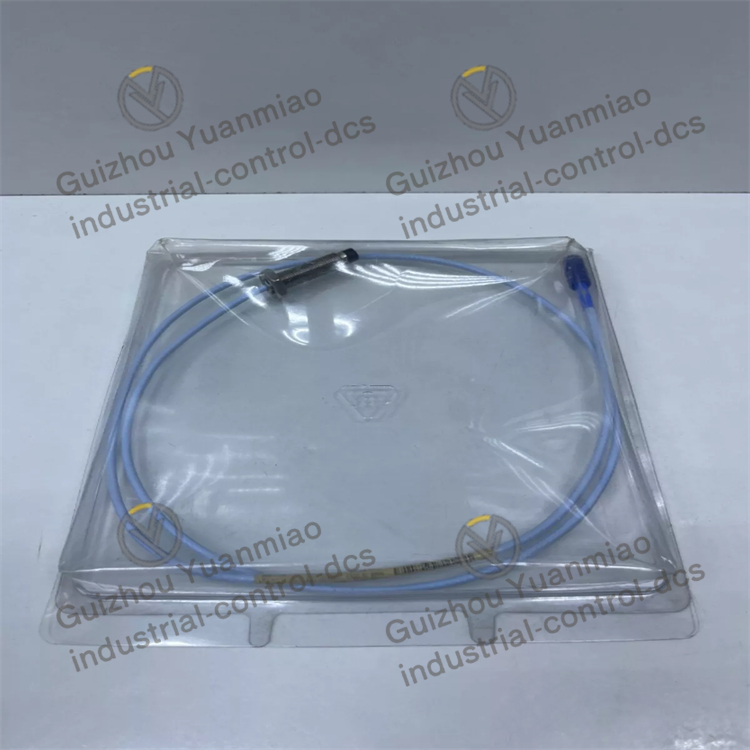
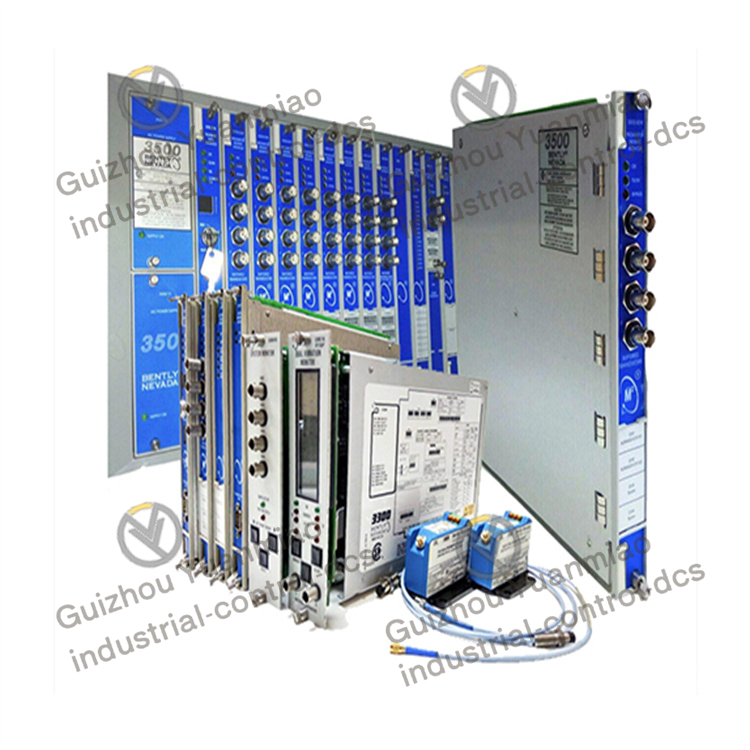
BENTLY 330103-00-04-10-02-00 Eddy current proximity Probe
Working principle
Alternating magnetic field generation: There is a high-frequency oscillator inside the probe, which generates a high-frequency alternating current. This current passes through the coil at the end of the probe, thereby creating a high-frequency alternating magnetic field around the coil.
Eddy current generation: When the metal object being measured approaches the probe, an induced electromotive force will be generated on the surface of the metal conductor in an alternating magnetic field, thereby forming a closed induced current on the metal surface, which is known as an eddy current.
Magnetic field interaction: The eddy current itself will also generate a magnetic field in the opposite direction to the original magnetic field. The interaction of these two magnetic fields will cause a change in the equivalent impedance of the probe coil. The degree of impedance change is related to the distance between the object being measured and the probe. The closer the distance, the stronger the eddy current, and the greater the impact on the impedance of the probe coil.
Signal conversion and output: The circuit inside the probe will detect the change in coil impedance and convert it into the corresponding voltage or current signal. This signal, after being amplified and filtered by subsequent processing circuits such as a preamplifier, ultimately outputs an electrical signal related to the displacement or vibration of the object being measured, thereby achieving non-contact measurement of the object being measured.
Application
Automobile manufacturing and testing
Engine testing: In engine bench tests, it is used to measure the displacement, vibration and rotational speed of components such as the crankshaft and camshaft, optimizing the performance and reliability of the engine.
Component assembly: During the assembly process of automotive components, the installation position and assembly clearance of the parts are inspected to ensure assembly quality and improve the assembly accuracy and consistency of the entire vehicle.
Vehicle dynamic testing: Installed on the vehicle chassis, suspension and other parts, it measures parameters such as vibration and displacement of the vehicle during driving, providing data support for the optimization of the vehicle’s dynamic performance.
Aerospace field
Engine monitoring: Real-time monitoring of the rotor system of an aircraft engine is carried out, measuring parameters such as the displacement, vibration and rotational speed of the shaft to ensure the safe operation of the engine and enhance flight safety.
Structural health monitoring: It is used for fatigue detection and damage monitoring of aircraft structural components. By detecting minute deformations and crack propagation on the surface of metal structures, potential structural safety hazards can be identified in a timely manner.

Reviews
There are no reviews yet.