

Description
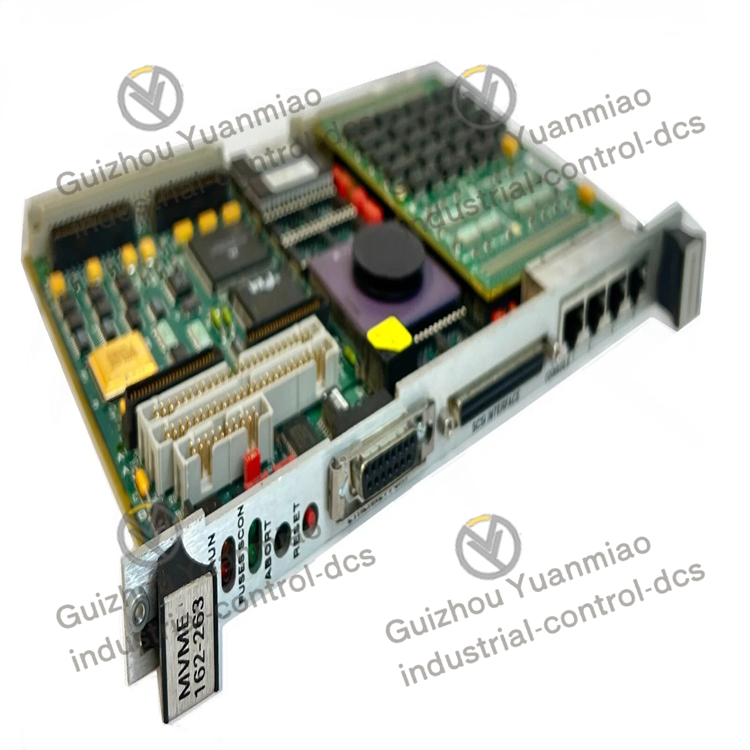
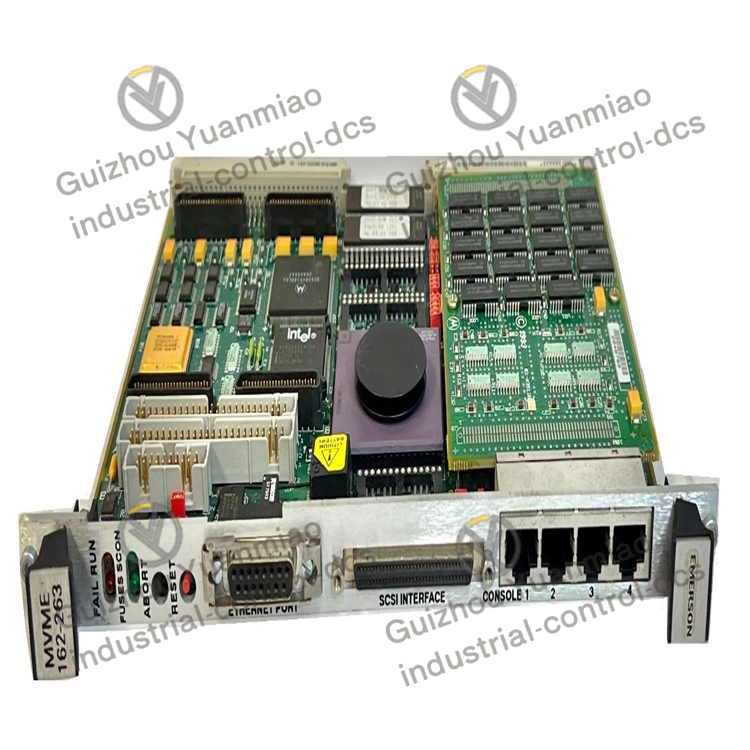
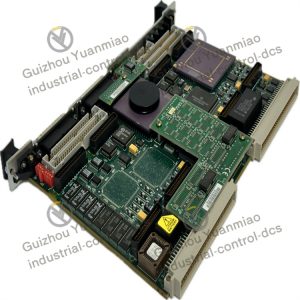
MOTOROLA MVME162-263 bus single-board computer
Processor: It adopts a 25MHz MC68LC040 enhanced 32-bit microprocessor, equipped with 8KB cache and MMU (Memory Management Unit), which can efficiently handle complex tasks and meet the application scenarios with high real-time requirements.
Memory:
Shared DRAM: Available in 4MB, 8MB, 16MB or 32MB, it supports parity check or error checking and correction (ECC), and can be expanded to 64MB by extending the mezzanine, providing sufficient memory space for system operation and data processing.
Backup SRAM: Equipped with 128KB of SRAM with a spare battery, it is used to retain critical data and configuration information in case of power failure. In addition, there is 8K x 8 NVRAM and a real-time clock with battery, which can record the system time and save a small amount of data that needs to be stored for a long time.
Storage and Interface:
Flash memory: 1MB of flash memory is used to store the on-board monitor, debugger or firmware specified by the user, meeting the user’s customized requirements for system startup and basic functions. For some 7xx/8xx models, the flash memory capacity is 2MB.
Communication interface: It provides 4 serial communication ports, configured to the EIA-232-D DTE standard, which enables convenient serial communication with other devices. It is equipped with 2 IndustryPack ports. By inserting IndustryPack modules, various functions can be expanded, such as adding I/O interfaces, data acquisition modules, etc. It provides 6 32-bit timers, among which 4 do not rely on the VME bus, as well as a watchdog timer for the system’s timing control and monitoring, ensuring the stability and reliability of the system.
Other interfaces: An optional SCSI bus interface is available, featuring a 32-bit local bus burst DMA, which can be connected to external storage devices or other SCSI devices to achieve high-speed transmission of large-capacity data. It can also be optionally equipped with an Ethernet transceiver interface, featuring a 32-bit local bus DMA, which facilitates access to the Ethernet network and enables network communication functions. In addition, four 32-pin JEDEC sockets are provided (only available for the MVME162-2xx /3xx models, and only two for the 7xx/8xx models) for connecting EPROM and Flash chips, which can further expand the storage capacity or be used to store specific programs and data.
Bus and Control: Supports VMEchip2 A32/D64 VMEbus master/slave interfaces, has the function of a system controller, and is capable of achieving high-speed data transmission and collaborative work with other VMEbus devices. It is equipped with a four-level requester, a seven-level interrupter and a seven-level interrupt handler, which can effectively manage various interrupt requests in the system and ensure the system’s rapid response to external events.
Other functions: It features remote reset, stop and status control functions, facilitating users to control and monitor the device remotely. The on-board debugger and diagnostic firmware help users debug and diagnose faults of the system during the development and maintenance process, improving the maintainability of the system.
Reviews
There are no reviews yet.