

Description
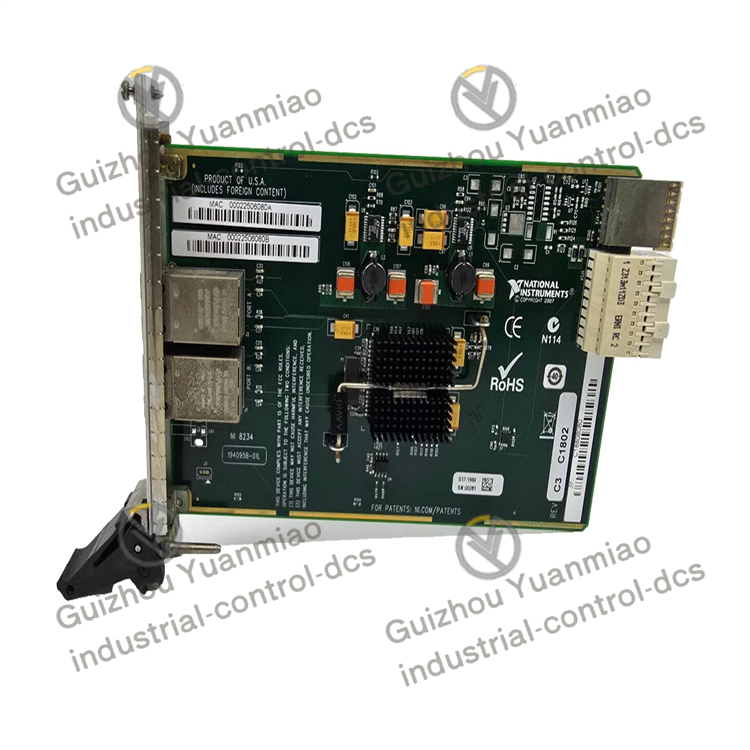
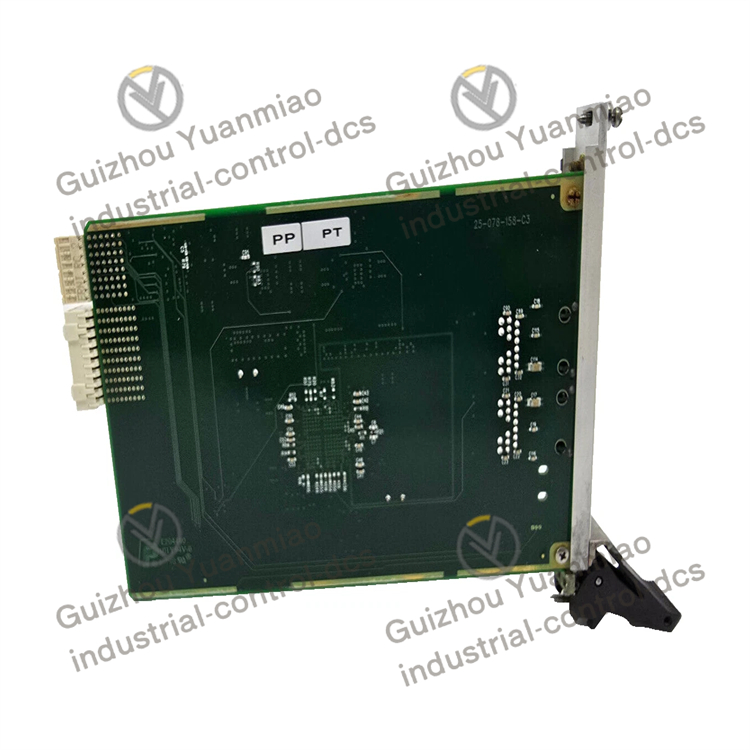
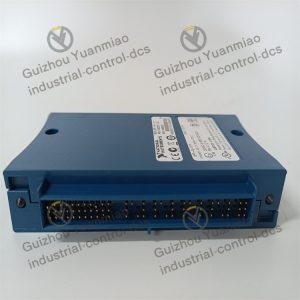
NI PXIe-8234 Ethernet interface module
Interface features: Two RJ45 Gigabit Ethernet ports are provided in a single-slot PXI Express module, compatible with copper cables, and the data transmission rate of each port can reach 40Gb/s.
Performance advantages: It can simultaneously transmit images on two ports with full Gigabit Ethernet bandwidth, and has been optimized with extremely low CPU load, providing the necessary transmission capacity for demanding visual applications.
Functional features: It has two Ethernet ports, which is conducive to developing a hybrid test framework. Users can integrate multiple buses into the test framework by using the second Ethernet port. In addition, the module is equipped with dual display ports and video ports, supporting simultaneous output. Users can connect two displays to the PXI system at the same time and display them independently without the need for additional PXI or CompactPCI video modules.
Software support: It can be used in conjunction with NI Visual acquisition software. Users can quickly develop application programs using programming languages such as LabVIEW, C, C++, C#, and Visual Basic.
Application field:
Parallel communication of multiple devices
In semiconductor testing equipment, the Probe Station and testing instruments (such as digital multimeters and signal generators) are simultaneously connected through two independent Ethernet ports to achieve synchronous control and data exchange between the devices.
In automotive electronic testing, one port is connected to the ECU (Engine Control Unit) for communication protocol testing, while the other port is connected to the data acquisition system for real-time monitoring of test parameters, significantly enhancing the testing efficiency.
Multi-camera synchronous acquisition system
Connect multiple GigE Vision cameras to achieve parallel transmission of high-speed image data. For example:
In the inspection of printed circuit boards (PCBS), four cameras are simultaneously controlled to conduct high-precision scanning of different areas of the PCB, and the dual-port load balancing technology is adopted to ensure frame-free transmission of image data.
In the package sorting system of the logistics industry, dual-port cameras are respectively connected to the upper and lower parts of the conveyor belt to identify the package labels and size information in real time.
Remote visual monitoring and analysis
Connect a local industrial camera through one port for real-time image acquisition, and transmit the processed data to a remote server or cloud via Ethernet through the other port for AI analysis. For example:
In an intelligent factory, appearance defect detection is carried out on the products on the production line, and the data is synchronized to the MES system.
In medical equipment, cell images under the microscope are transmitted to the remote diagnostic platform.
Reviews
There are no reviews yet.