


Description
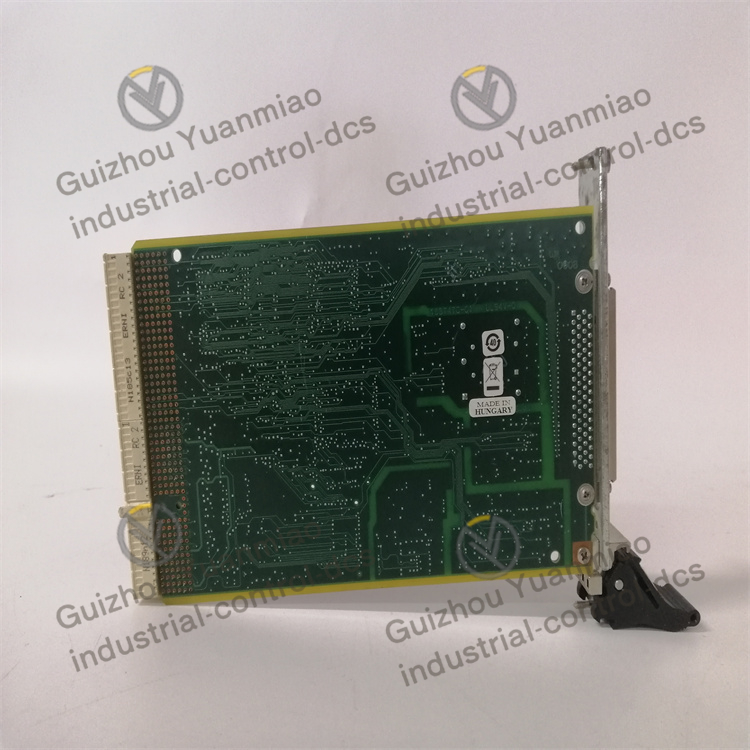
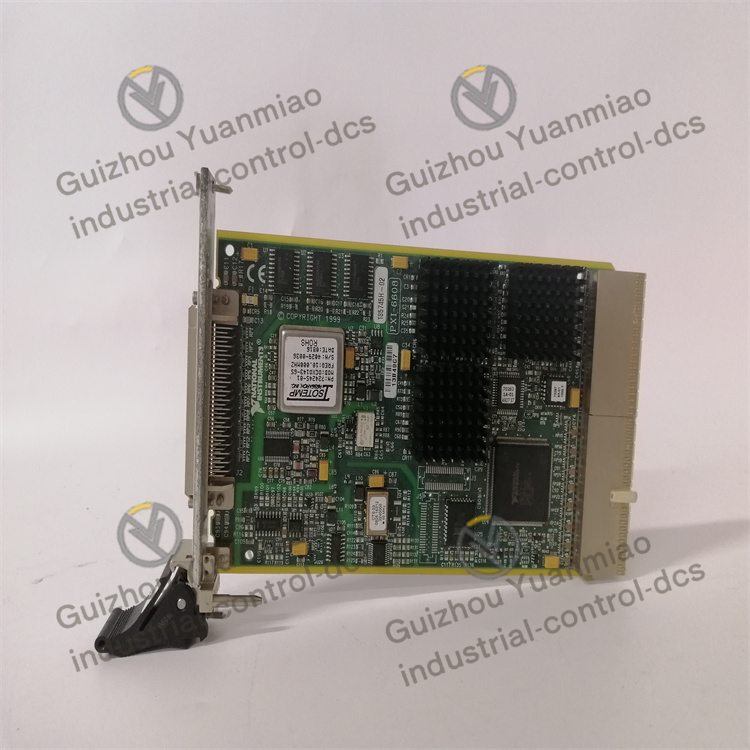
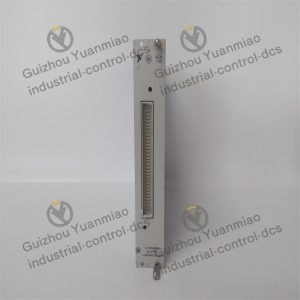
NI PXI-6608 Timing and synchronization module
Module positioning and core functions
Pxi-6608 is a high-performance timing and synchronization module launched by NI (National Instruments), belonging to the PXI (PCI eXtensions for Instrumentation) bus standard device. Its core function is to provide precise clock synchronization and timing control for multi-channel test systems, supporting complex multi-device synchronous measurement and high-speed data acquisition scenarios. It is commonly used in aerospace, automated testing, communication equipment verification and other fields.
Key technical specification parameters
Clock source
Internal clock: 100 MHz differential quartz oscillator, stability ±50 ppm (configurable from 10 MHz to 100 MHz)
External clock input: Supports 5 V TTL/CMOS level, with a frequency range of 0.1 Hz to 100 MHz
Timed output
8-channel differential timing output (SMA interface), which can be configured as a clock, trigger signal or custom pulse sequence
Output level: LVDS (Low Voltage Differential Signal), compatible with multiple device interfaces
Trigger input/output
8-channel differential trigger input (SMA interface), supporting edge trigger and level trigger
Trigger response time: <10 ns (typical value), supporting multi-module cascading synchronization
Synchronization function
Supports PXI backplane clock (10 MHz) and STAR trigger bus (for multi-module phase synchronization)
External synchronization cables can be expanded through adapters such as SCXI-1349 to achieve clock synchronization between systems
Counter resource
It is equipped with 4 24-bit general-purpose counters/timers on board, supporting functions such as frequency measurement, pulse width modulation (PWM), and event counting
The counting rate can reach up to 80 MHz at most
Physical properties
Size: 1U PXI module (conforming to PXI Express standard)
Power consumption: Typical value 3.5W, maximum 5W
Operating temperature: 0℃ to 50℃, storage temperature: -20℃ to 70℃
Software compatibility
Support NI development environments such as LabVIEW, LabWindows/CVI, and Measurement Studio
The driver supports systems such as Windows (XP/7/10) and Linux
Analysis of Core Functions
High-precision clock generation and allocation
The internal 100 MHz oscillator reduces frequency drift through thermostatic crystal oscillator technology and can be used as the main clock source of the system. It synchronizes up to 8 devices (such as oscilloscopes and data acquisition cards) through the differential output interface, with a phase deviation of less than 1 ns.
Supports clock division/doubling configuration (such as converting 100 MHz to 10 MHz or 200 MHz), adapting to the clock requirements of different devices.
Multi-device synchronous triggering mechanism
By using the STAR trigger bus of the PXI backplane, nanosecond-level synchronization (trigger delay < 5 ns) of up to 8 PXI modules can be achieved, such as synchronizing the timing of the transmitting and receiving modules in radar tests.
The external trigger input supports programmable filtering (to eliminate noise interference), and the trigger threshold can be set to any level within the ± 5V range.
Flexible counter applications
The counter can be used for:
Frequency measurement: Perform high-precision counting of input signals (such as sensor pulses) with a resolution of 100 ps;
Pulse generation: Output a PWM signal with adjustable duty cycle to control the motor speed or LED brightness;
Event timing: Records the time intervals between the actions of external devices (such as the response delay of mechanical switches).
System scalability design
Multiple PXI-6608 can be cascaded through the SMA interface to build a distributed synchronous network (such as a large array antenna test system), and the longest synchronous cable supports 50 meters (with strong anti-attenuation ability of differential signals).
Compatible with NI’s clock Synchronization Protocol (such as Synchronization and Timing Protocol, STP), it can be paired with chassis such as PXIe-1075 to achieve cross-chassis synchronization.
Application scenarios
Aerospace testing
In the calibration of aircraft sensors, multiple data acquisition cards (such as PXI-4472) are synchronized to collect signals such as vibration and pressure, ensuring that the timestamp error of data in each channel is less than 1 μs, which is convenient for subsequent dynamic analysis.
Verification of wireless communication equipment
Provide a synchronous clock for the base station RF module test system, trigger the vector signal generator (such as PXI-5673) to work collaborates with the spectrum analyzer (PXI-5663) to achieve the phase consistency test of millimeter-wave signals.
Industrial automation and robot control
Synchronous multi-axis motion controllers (such as PXI-7358) and vision sensors ensure that the robotic arm accurately grasps objects during high-speed movement (positioning error < 0.1mm), and are suitable for semiconductor packaging equipment.
High-energy Physics Experiment
In the particle collision experiment, the sampling clocks of multiple detectors (such as the PXI-5105 digitizing instrument) are synchronized to achieve sub-nanosecond event time marking and restore the particle trajectories.
Summary
As the core module of NI’s timing and synchronization product line, PXI-6608 provides a reliable time reference for complex test systems through high-precision clocks, low-latency triggering and flexible counting functions. Its design takes into account both performance and ease of use. Combined with NI’s software ecosystem, it can quickly build a complete solution from single-machine testing to multi-device distributed synchronization, especially suitable for scientific research and industrial applications with strict requirements for time consistency.
Reviews
There are no reviews yet.