


Description
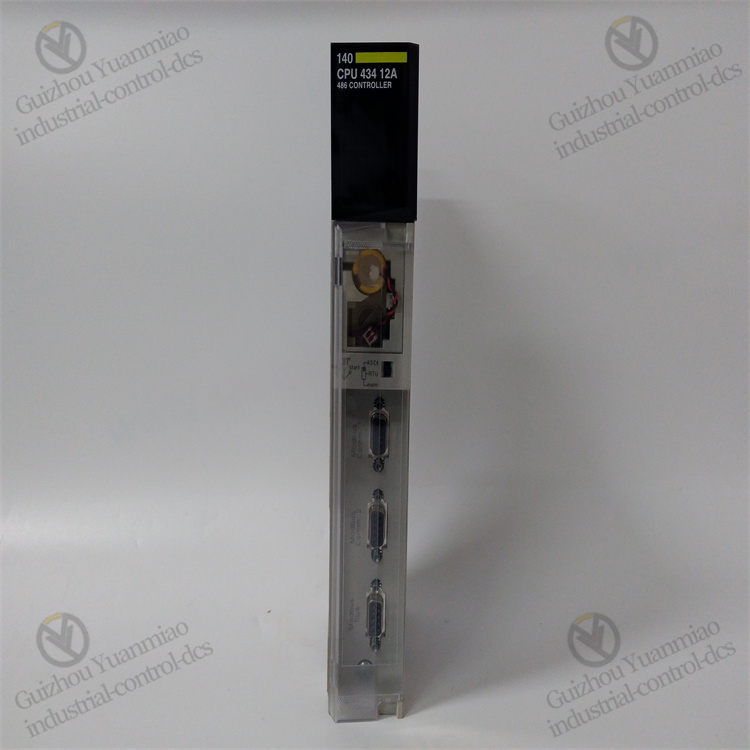
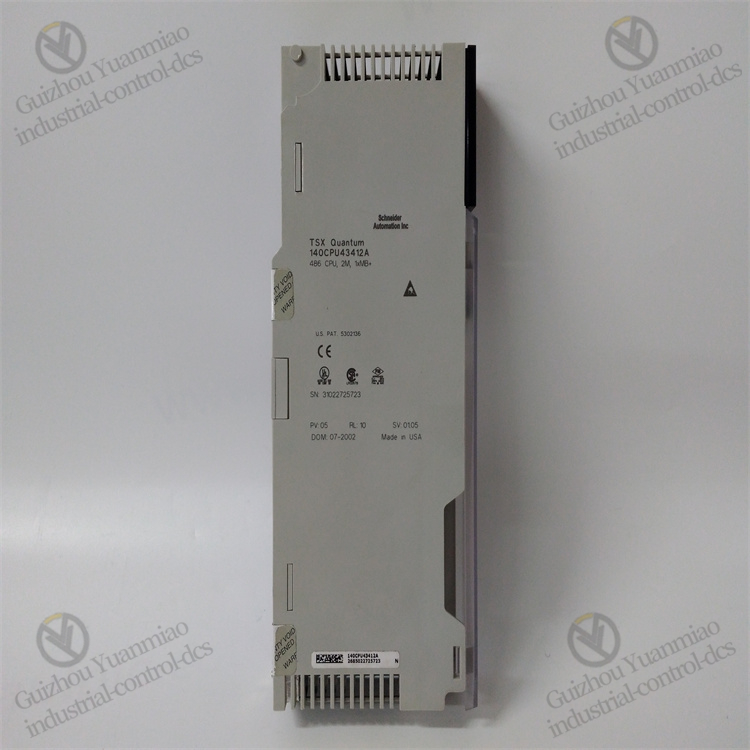
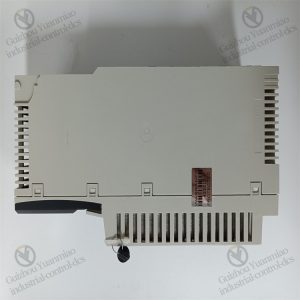
Schneider 140CPU43412A PLC processor module
Basic working mechanism
Program storage and execution: This module uses flash memory technology to store execution memory and instruction sets. Applications can be stored in RAM with battery backup or flash memory RAM. When working, the CPU reads the instruction code from the memory, that is, “fetching instructions”. Then the instructions are analyzed and interpreted to determine the operations to be performed and the required operands, that is, “decoding”; Finally, based on the decoding result, the operation logic unit, registers and other components are called to complete the operations specified by the instruction, such as arithmetic operations, logical operations, etc. This is the “execution” process, and this cycle repeats until the task is completed.
Data acquisition: By scanning, the status or data sent from the on-site input devices, such as temperature, pressure, position and other signals detected by sensors, are collected and stored in the specified registers to provide a basis for subsequent operations and control.
Control signal output: Based on the operation results of the program, the CPU generates corresponding control signals to direct the relevant control circuits, thereby controlling the on-site actuators such as motors, valves, contactors, etc., to achieve the control of industrial processes or equipment.
Communication function: The 140CPU43412A is equipped with 2 Modbus RS232 ports and 1 Modbus Plus port, enabling communication with other devices or control systems. Through these ports, it can receive instructions from the host computer, upload its own status and collected data to the host computer, and also interact with other PLCS or intelligent devices for data exchange, achieving distributed control.
Fault diagnosis and condition monitoring: The module has a certain self-diagnostic capability, which can diagnose the working status of the power supply and internal circuits, as well as syntax errors during the programming process, etc. Meanwhile, the LED indicator light on the front panel can display the working status of the module, such as operation and communication status, facilitating users to monitor and troubleshoot in real time.
Performance Introduction
Processor performance: It adopts the 80486 processor with a clock pulse frequency of 66MHz and is equipped with a mathematical coprocessor, capable of quickly handling complex operations. The execution time of the 1K instruction is 0.1-0.5ms LL984, which can efficiently perform logical operations, timing control, arithmetic operations, etc.
Memory capacity: The internal RAM is 896kB, which can store a large number of programs and data, meeting the storage requirements of complex programs and large amounts of data in industrial control.
Communication capability: Equipped with 1 Modbus Plus port and 2 Modbus RS232 ports, supporting multiple communication protocols. It can connect to 2 remote networks and 3 distributed networks. Moreover, it can support up to six network modules through option module interface technology, such as Modbus Plus, Ethernet and multi-axis motion option modules, etc., facilitating the realization of distributed control and system integration.
Input and output capabilities: Supports local 64I/64O, remote 64I/64O, distributed 30I/32O, and can also achieve distributed 500I/500O input and output. It can connect a large number of field devices and collect and control a large number of signals.
Power supply and power consumption: The required bus current is 1250mA, and it can usually operate stably in an industrial standard power supply environment.
Battery features: It adopts A lithium 7μA to 210μA battery with a capacity of 1.2Ah. The battery has a service life of up to 10 years and can retain data in the memory even in the event of a power outage.
Working environment adaptability: The operating temperature range is 0-60℃, the storage environment temperature is -40 -85℃, the relative humidity is 95% without condensation, and the working altitude is no more than 5000m. It has good environmental adaptability. Meanwhile, it features 4kV anti-static discharge contacts and 8kV broadcasting, with an anti-electromagnetic range of 10V/m from 80 to 2000MHz. It complies with relevant IEC standards and has a certain anti-interference capability.

Reviews
There are no reviews yet.