


Description
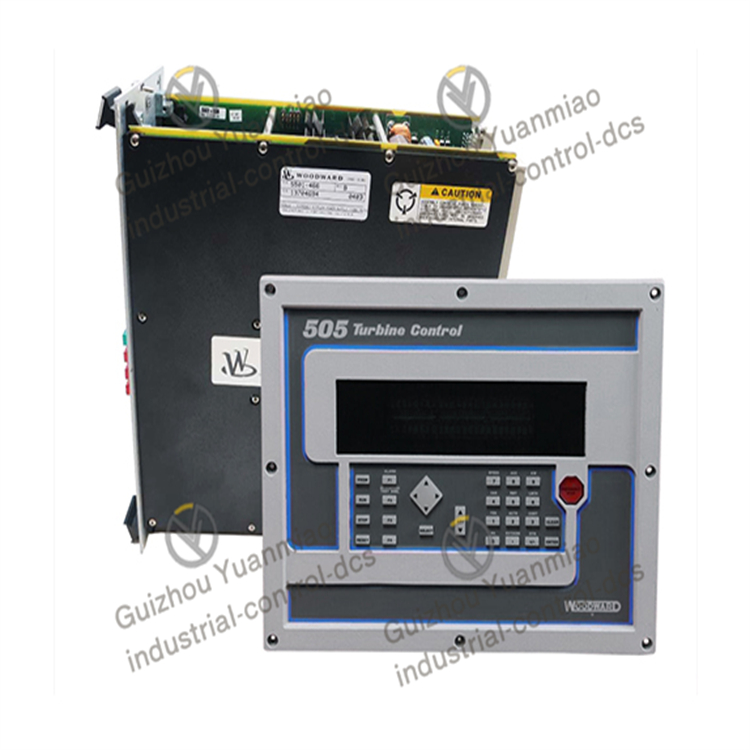
Woodward 8280-1109 723 plus digital Control Series Marine digital controller
Functional features:
Precise torque control: Mechanical torque sharing is achieved by matching the input of the torque sensor, and it has a torque sensor failure mode. During clutch operation, single-throttle operation of two engines is allowed, with clutch control and permission logic.
Advanced speed measurement algorithm: Equipped with an advanced speed sensing algorithm, it can use two magnetoresistive tachometer sensors or proximity switches to achieve redundant speed signal input, thereby enhancing the accuracy and reliability of speed monitoring.
Technical parameters:
Input voltage: 18-40VDC, with rated values typically being 24VDC or 32VDC.
Inrush current: 7A, lasting for 0.1ms.
Analog output: 0-1mA or 4-20mA (maximum load 600 ohms).
Operating temperature: -40℃ to + 70℃ (-40℉ to + 158℉).
Storage temperature: -55℃ to + 105℃ (-67℉ to + 221℉).
Weight: Approximately 3.18kg (7 pounds) unpackaged.
Certification and Standards: Complies with the regulations of Lloyd’s Register, as well as the electrical standards of EN 50081-2 and EN 50082-2. Meanwhile, it has passed the CSA certification and complies with the CE standard. It is suitable for hazardous environments in Zone 2 of Class I, Groups A, B, C and D.
Software Settings: Software parameters can be set using the Watch Window software (based on PC, Part number 8923-932) or the Woodward handheld programmer (Part number 9907-205). There are three serial ports on the controller for this purpose.
Specific working principle:
The principle of speed monitoring: Two magnetoresistive speed sensors or proximity switches are used to obtain the engine speed signal. Advanced speed sensing algorithms are adopted to process these signals, which can achieve redundant speed signal input, improve the accuracy and reliability of speed monitoring, and provide precise speed data for subsequent control.
Torque sharing principle: Mechanical torque sharing is achieved by matching the input of the torque sensor. The controller compares the torque sensor signals of the two engines. According to the load requirements, it uses LonWorks communication technology to distribute the torque between the two engines in real time. When the torque output of one engine is insufficient or the load changes, the torque output of the other engine is automatically adjusted to ensure that the torque of the two engines is balanced and they jointly drive the load stably.
Clutch control principle: It is equipped with clutch control and permission logic. During clutch operation, single-throttle operation of two engines can be achieved. When the clutch action signal is received, the controller adjusts the engine speed and torque according to the preset logic to ensure the clutch engages or disengages smoothly, avoiding engine overload or excessive speed fluctuations.
Load control principle: It has integrated load sharing/soft loading/unloading functions. When the load of the ship’s electrical equipment changes, the controller can monitor it in real time and automatically adjust the output of the two engines based on the speed and torque signals, rationally distributing the load to the two engines to achieve a soft loading/unloading process and ensure the stable operation of the ship’s power system or propulsion system. Meanwhile, in case of any abnormal situation, the circuit breaker can be automatically triggered to disconnect, ensuring the safety of the system.
Communication principle: It has two serial ports and supports Modbus and ServLink protocols. It can communicate with other control systems or equipment on board the ship, receive control instructions or upload information on the engine’s operating status, facilitating the crew to centrally monitor and manage the engine through the ship’s monitoring system. It can also work in coordination with other intelligent devices to achieve intelligent control of the ship’s power system.
Application scenarios:
Marine propulsion system: It can be used in the Marine propulsion system driven by dual engines to adjust the engine speed and load, achieve the sharing of mechanical torque between the two engines, ensure stable power output during the ship’s navigation, improve propulsion efficiency, and at the same time, during clutch operation, allow single throttle operation of the two engines, which is convenient for crew control.
Ship power station system: In a ship power station, when there are two engines driving the generator, this controller can achieve a reasonable distribution of the load. Through the integrated load sharing/soft loading/unloading function, the output of the two generators can be automatically adjusted according to the load changes of the ship’s electrical equipment, ensuring the stable operation of the ship’s power system, avoiding the overload of a single generator, and improving the reliability and efficiency of the power station.
Emergency power supply system In the scenario of emergency power supply for ships, if two emergency engines are equipped to drive generators, the 8280-1109 can ensure that in an emergency, the two engines can start quickly and stably and achieve torque sharing and load distribution, providing reliable power supply for key equipment on the ship such as communication systems and navigation systems, and ensuring the safety of the ship in emergency situations.
Special ship operation system: For some special ships that require precise power control, such as scientific research vessels and engineering ships, this controller can precisely control the engine torque and speed. When the scientific research vessel conducts specific scientific experiments, it can stably provide the required power to ensure the normal operation of the experimental equipment. When engineering vessels are conducting hoisting, excavation and other operations, the engine power output can be adjusted in real time according to the changes in the operation load to ensure the accuracy and safety of the operation.
Reviews
There are no reviews yet.