

Description
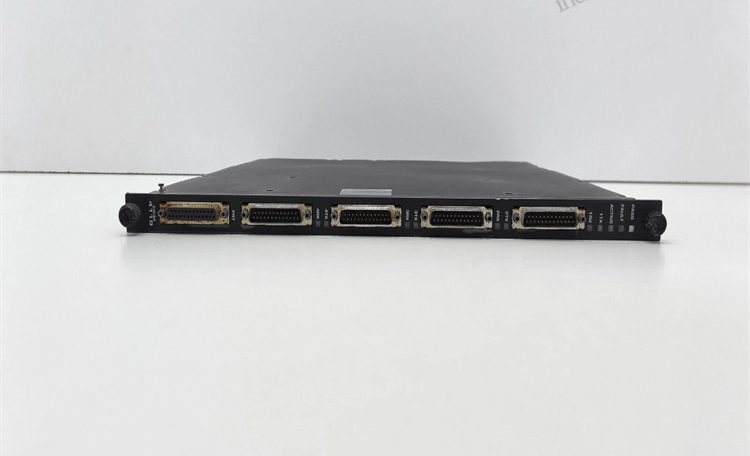
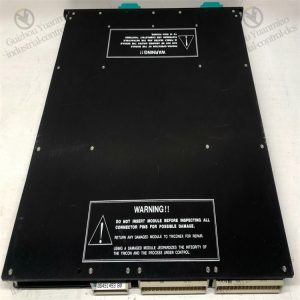
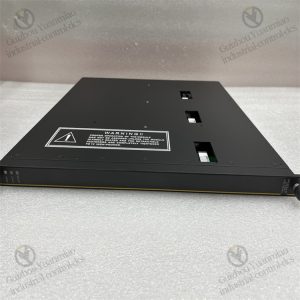
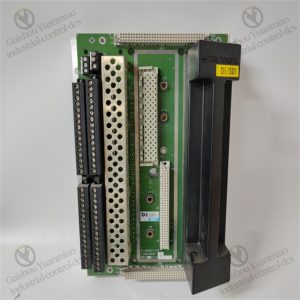
TRICONEX 4508 industrial control component module
I. Core Positioning of Digital Communication Functions
As a key component of the Safety Instrumented System (SIS), the digital communication functions of the TRICONEX 4508 module likely center on high reliability, real-time performance, and security, aiming to achieve:
- Bidirectional data interaction between field devices and control systems: Collect digital signals from sensors, actuators, and other devices, and transmit control commands to the field layer.
- Multi-device collaboration and safety interlocking: In SIL 3-level safety applications, ensure no distortion or delay in digital signal transmission, supporting real-time responses for safety functions such as Emergency Shutdown Systems (ESD) and Fire & Gas Monitoring Systems (F&G).
- Cross-system integration and protocol conversion: Adapt to various industrial field communication protocols, solve compatibility issues of devices from different manufacturers, and improve system integration efficiency.
II. Supported Digital Communication Protocols
Based on the technical logic of other TRICONEX products (such as the 4118 analog input module) and industrial automation communication standards, the 4508 module may support the following protocols:
1. Industrial Fieldbus Protocols
- HART Protocol:
Used for bidirectional communication between intelligent instruments and control systems, supporting digital signal superposition on 4-20mA analog signals to achieve device parameter configuration and diagnostic information transmission. For example, it can interface with intelligent devices like pressure transmitters and temperature sensors to obtain real-time data and device status. - Modbus RTU/ASCII:
Common in serial communication of industrial devices, supporting master-slave mode data transmission. Suitable for low-speed, short-distance scenarios (such as interconnection of devices in control cabinets), it can read digital data from devices like flowmeters and valve controllers. - CANopen:
A fieldbus protocol suitable for real-time control, with high anti-interference capability and error detection mechanisms. It may be used to connect distributed I/O modules or motion control devices, ensuring real-time responses of safety systems.
2. Safety-Related Communication Protocols
- Safety over EtherCAT (SoE):
A safety communication protocol based on the EtherCAT bus, which can transmit standard data and safety-related data on the same physical link, meeting the real-time and reliability requirements of SIL 3-level systems. It may be used for high-speed interconnection between modules and safety controllers. - PROFINET Safety:
Combining PROFINET industrial Ethernet with safety protocols, it supports connection of fail-safe devices, ensuring quick triggering of safety responses (such as shutdown) when errors are detected during communication.
3. Industrial Ethernet Protocols
- EtherNet/IP:
An industrial communication protocol based on Ethernet, supporting real-time data transmission and device-layer network interconnection. It can interface with PLCs, SCADA systems, or host computers to achieve remote monitoring and data interaction. - Modbus TCP:
Transmitting Modbus protocol over Ethernet, suitable for medium-to-long-distance communication (such as interconnection of devices across workshops). It can package field digital signals and transmit them to the control system server.
III. Technical Characteristics of Digital Communication Functions
1. High-Reliability Design
- Hardware redundancy: May adopt dual-channel communication interfaces (such as dual Ethernet ports), supporting hot-standby switching to avoid communication interruptions caused by single-link failures, in line with the redundancy requirements of SIS systems.
- Error checking mechanisms: Integrates functions like CRC checking and parity checking to real-time detect bit errors in data transmission and ensure data integrity through retransmission mechanisms.
- Anti-interference capability: Communication interfaces have electrical isolation (such as optocoupler isolation) to reduce electromagnetic interference (EMI) and ground loop effects, adapting to complex industrial field environments (such as strong electromagnetic interference scenarios in petrochemical plants).
2. Real-Time Performance and Determinism
- Optimized communication cycle: Supports millisecond-level data update rates (such as ≤10ms), meeting the strict real-time requirements of safety interlocking systems (such as fast transmission of emergency shutdown signals).
- Priority scheduling: Assigns high priority to safety-related data (such as device fault signals), ensuring critical information is transmitted first during communication congestion to avoid response delays.
3. Safety Certification and Compliance
- Compliance with functional safety standards: May be certified by IEC 61508 SIL 3, ensuring that fault detection and fault tolerance capabilities during communication meet safety integrity level requirements.
- Data encryption and protection: Supports SSL/TLS encryption in industrial Ethernet communication to prevent data tampering or malicious attacks, adapting to information security needs in industrial internet scenarios.
IV. Typical Application Scenarios
1. Safety Interlocking Systems for Petrochemical Plants
- Scenario: In an ethylene cracking unit, the 4508 module collects digital signals from pressure sensors and temperature transmitters via the HART protocol and real-time transmits them to the safety controller. When process parameters exceed limits, it sends shutdown commands to emergency shutdown valves via the PROFINET Safety protocol, achieving millisecond-level safety responses.
- Value: Ensures reliable digital communication between multiple devices, avoiding safety accidents caused by communication delays.
2. Remote Monitoring of Natural Gas Pipelines
- Scenario: Transmits digital data from flow sensors and leakage detection devices along the pipeline to the central control room via the EtherNet/IP protocol, supports remote configuration of device parameters (such as flow thresholds), and interfaces with the SCADA system via Modbus TCP to generate real-time monitoring reports.
- Value: Achieves centralized management of long-distance, multi-node devices, reducing manual inspection costs.
3. Equipment Condition Monitoring for Metallurgical Blast Furnaces
- Scenario: Connects digital devices such as blast furnace temperature monitoring sensors and vibration sensors using the CANopen protocol, real-time collects equipment operation status data (such as bearing temperature and rotational speed), and transmits it to the predictive maintenance system via the 4508 module’s communication interface to provide early warnings of equipment failures.
- Value: Achieves precise monitoring of equipment health status through digital communication, enhancing production continuity.
Reviews
There are no reviews yet.