

Description
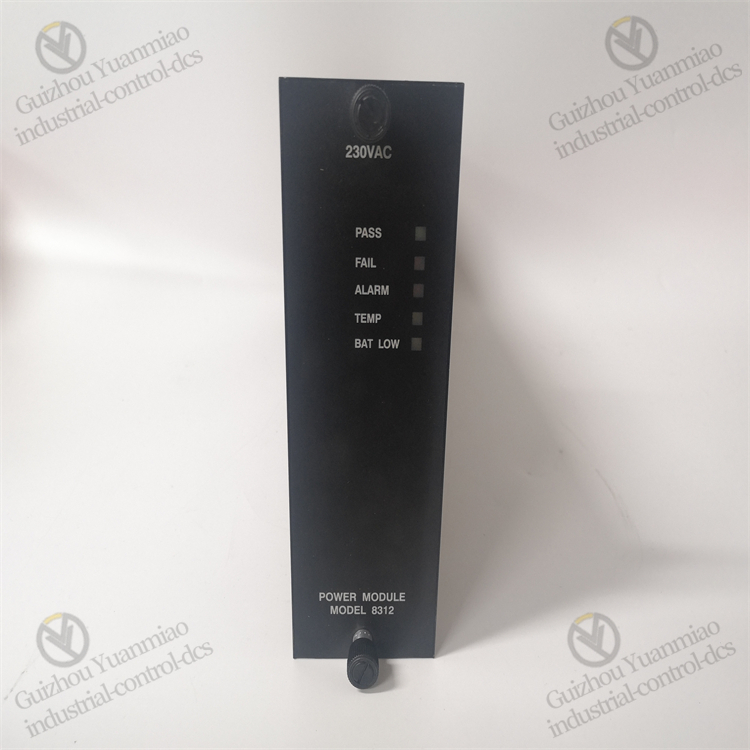
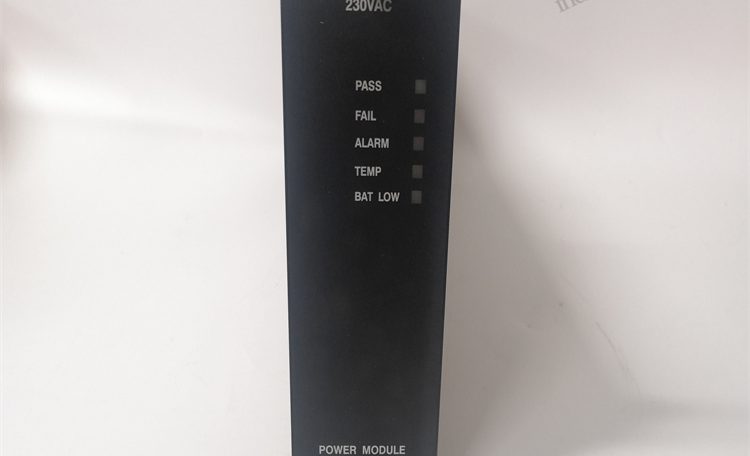
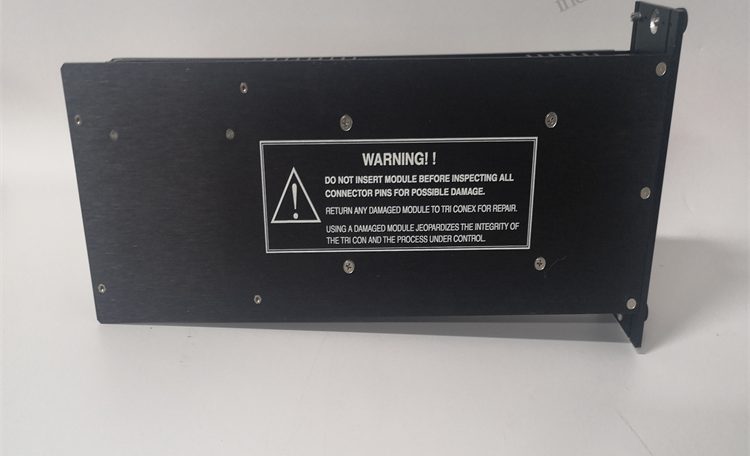
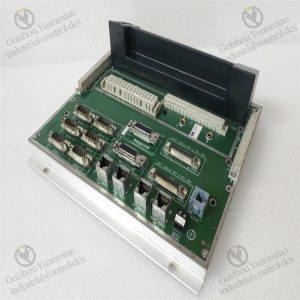
TRICONEX 8312 Safety Controller Module
I. Product Positioning and Core Functions
The TRICONEX 8312 is a safety controller based on the Triple Modular Redundancy (TMR) architecture, serving as a core component of Triconex’s industrial safety control system. It is designed to provide high-reliability safety control for critical industrial processes, meeting the SIL 3 (Safety Integrity Level 3) standard, and is suitable for scenarios with extremely high safety requirements, such as petrochemical, nuclear power, and natural gas industries.
Core functions include:
- Executing safety logic operations, monitoring industrial process parameters, and triggering protection actions;
- Achieving fault tolerance through TMR design to ensure continuous system operation in case of single or multiple point failures;
- Supporting real-time data interaction with I/O modules, communication modules, and upper-level systems.
II. Hardware Architecture and Technical Features
1. Triple Modular Redundancy (TMR) Architecture
- Core Processors: Adopts three independent high-performance processors (such as ARM or dedicated safety chips), each executing the same control logic independently. The “2 out of 3” voting mechanism ensures result correctness.
- Hardware Isolation: The three processor branches are completely isolated in circuitry, power supply, and communication to prevent single-point failure propagation.
- Fault Detection and Tolerance: Built-in self-diagnostic circuits continuously monitor the status of each processor and internal modules. When a channel fails, the system automatically isolates the fault, maintains operation through remaining channels, and triggers an alarm.
2. Performance Parameters
- Processing Speed: Instruction cycle within 1ms, supporting high-speed logic operations and real-time response.
- Memory Capacity: Standard large-capacity non-volatile memory (e.g., Flash) for program storage and data backup.
- Communication Interfaces: Integrates RS-232/485, Ethernet (e.g., Modbus, EtherNet/IP), and dedicated buses (e.g., Triconex internal communication bus), supporting multi-protocol data interaction.
- Power Input: Supports 24V DC wide-range power supply with reverse connection protection and surge suppression.
3. Physical Characteristics
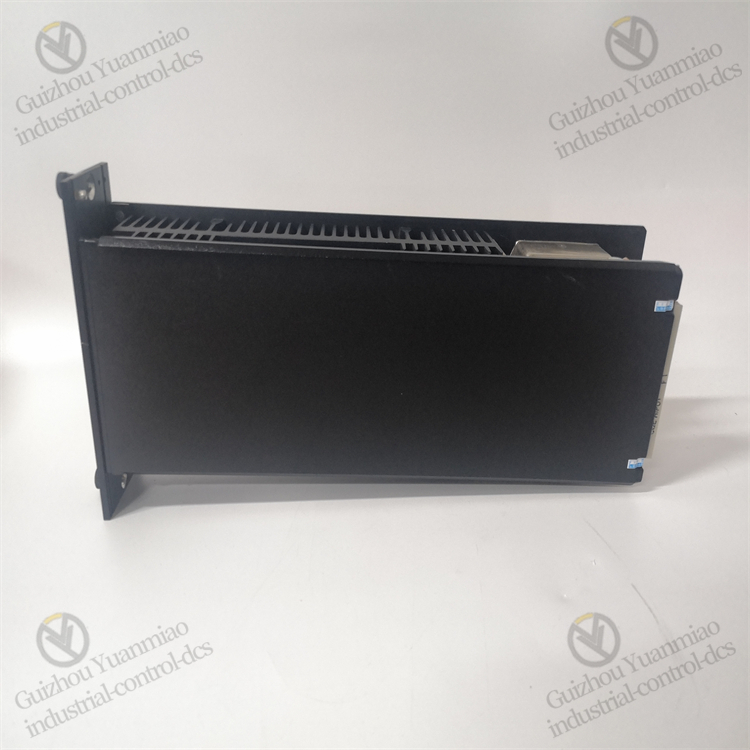
- Dimensions and Installation: Standard rack-mounted design, compatible with industrial control cabinets, supporting rail or screw installation.
- Operating Environment:
- Temperature: -40°C to +70°C (wide-temperature type);
- Protection Level: IP20 (for indoor cabinet installation), resistant to vibration, shock, and electromagnetic interference (compliant with IEC 61000 standards).
III. Working Principle and Redundancy Mechanism
1. Triangulated Operation Process
- Input Sampling: Three processors simultaneously receive input signals (e.g., sensor data) from I/O modules and independently perform analog-to-digital conversion (A/D).
- Logic Operation: Each processor executes user-written safety logic programs (e.g., ladder diagram, SCL language) in parallel to generate control outputs.
- Voting Mechanism: The internal hardware voting circuit compares the output results of the three processors using “2 out of 3” logic. If results are consistent, the output is valid; if a channel is abnormal, the system automatically masks it and uses results from the remaining two channels.
- Output Drive: The voted results drive I/O modules through a triplicated output circuit to control actuators (e.g., valves, motors).
2. Self-Diagnosis and Fault Handling
- Periodic Self-Testing: The controller continuously self-checks internal circuits (e.g., processors, memory, communication interfaces), records error codes, and triggers alarms upon detecting faults.
- Online Replacement: Supports hot-swappable maintenance. When replacing faulty modules, the system maintains operation through redundant channels without interrupting control tasks.
- Status Monitoring: Real-time working status is displayed via front-panel LED indicators (e.g., power, operation, fault, redundancy status), while health data is uploaded to the monitoring system through communication interfaces.
IV. Software Functions and Programming Support
1. Programming Environment
- Supports Triconex-specific programming software (e.g., TriStation 1131), compatible with IEC 61131-3 standard programming languages (Ladder Diagram LD, Structured Text ST, Function Block Diagram FBD, etc.).
- Provides safety logic libraries (e.g., emergency shutdown, interlock protection) to simplify user program development.
2. System Configuration and Debugging
- Enables software configuration of triplication parameters (e.g., voting mode, fault response strategy).
- Features simulation debugging to verify the correctness of logic programs offline.
3. Data Interaction and Communication
- Supports communication with upper-level SCADA systems, HMIs, and third-party controllers for remote monitoring and centralized management.
- Built-in redundant communication interfaces ensure reliable data transmission (e.g., automatic switching between primary and backup Ethernet channels).
V. Safety Certification and Industry Applications
1. Safety Integrity Level
- Complies with IEC 61508 and IEC 61511 standards, certified by third parties (e.g., TÜV), and applicable to SIL 3 safety systems.
2. Typical Application Scenarios
- Petrochemical Industry: Serves as the core controller for Emergency Shutdown Systems (ESD) and Safety Instrumented Systems (SIS), monitoring reactor pressure, temperature, etc., and triggering interlock protection during anomalies.
- Nuclear Power and Energy: Used in reactor protection systems and turbine emergency shutdown control to meet high-reliability safety requirements.
- Natural Gas Processing: Controls fire protection systems, leakage detection, and shut-off devices in Liquefied Natural Gas (LNG) plants.
- Rail Transit: Provides safety control for train braking systems and signal interlock devices to ensure driving safety.
VI. Comparative Advantages over Other Models
| Feature | TRICONEX 8312 | Ordinary Industrial Controllers |
|---|---|---|
| Redundancy Architecture | Triangulated (TMR), 2oo3 voting | Dual redundancy or non-redundant |
| Safety Level | SIL 3 | Typically SIL 1-2 |
| Fault Tolerance | Supports single/multiple point fault tolerance | Partial models support single-point tolerance |
| Environmental Adaptability | -40°C to +70°C, high anti-interference | Conventional industrial environment (0°C to +50°C) |
| Certification Standards | ATEX, UL, CSA, TÜV, etc. | Ordinary industrial certification |
VII. Maintenance and Reliability
- Mean Time Between Failures (MTBF): Over 100,000 hours. Industrial-grade component selection ensures a long lifecycle (10-15 years).
- Maintenance Features: Modular design supports online replacement. Status indicators and diagnostic software enable quick fault location, reducing maintenance costs.
The TRICONEX 8312 safety controller, through its TMR architecture, high safety certification, and industrial-grade design, serves as a core component in critical industrial processes to prevent accident escalation and protect personnel and equipment. Its reliability and fault tolerance have been widely validated in global safety-critical systems.
Reviews
There are no reviews yet.