

Description
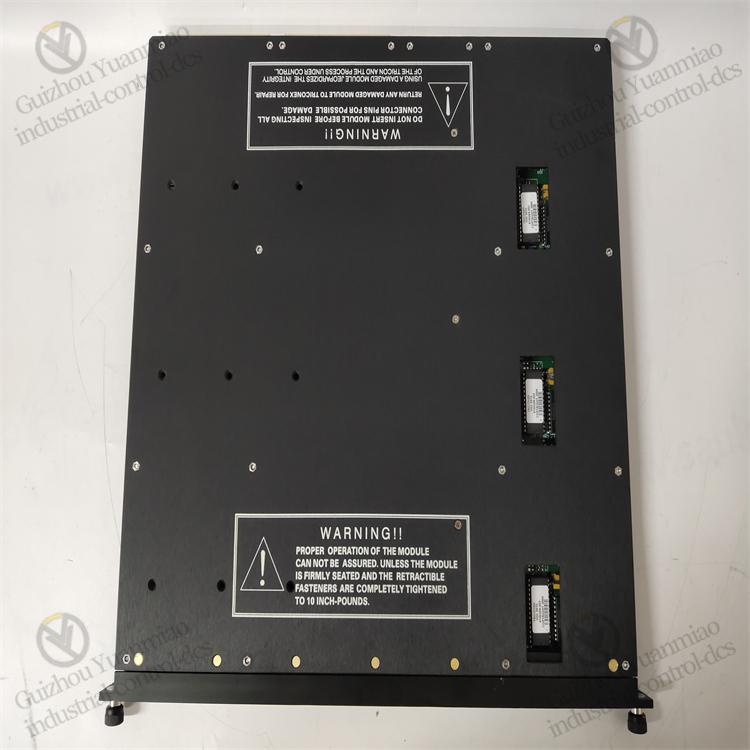
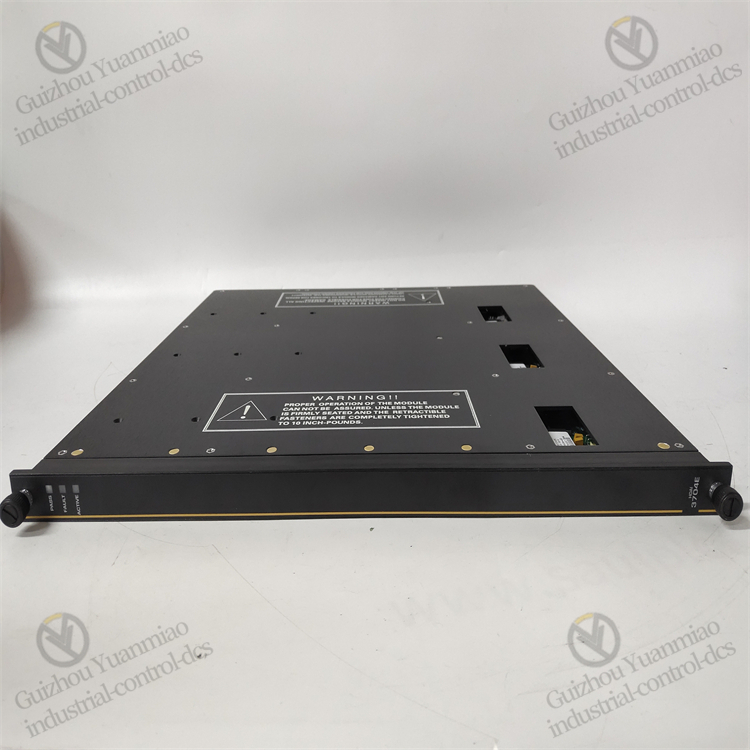
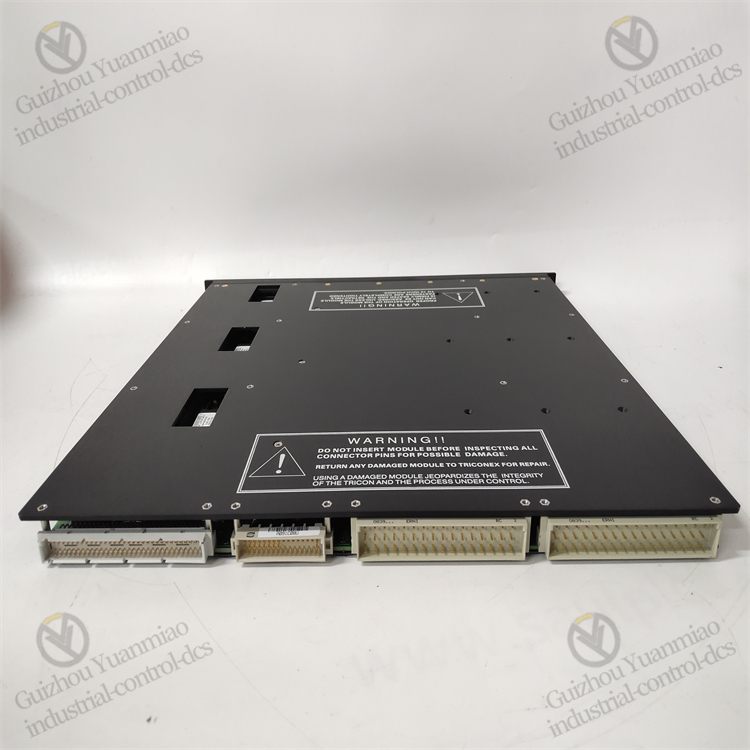
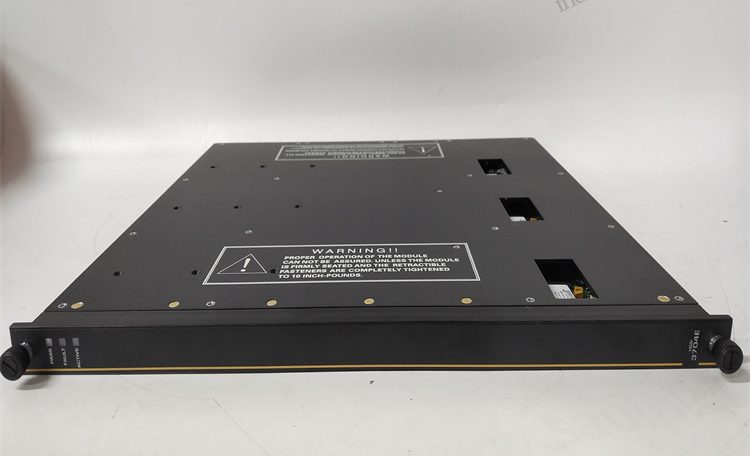
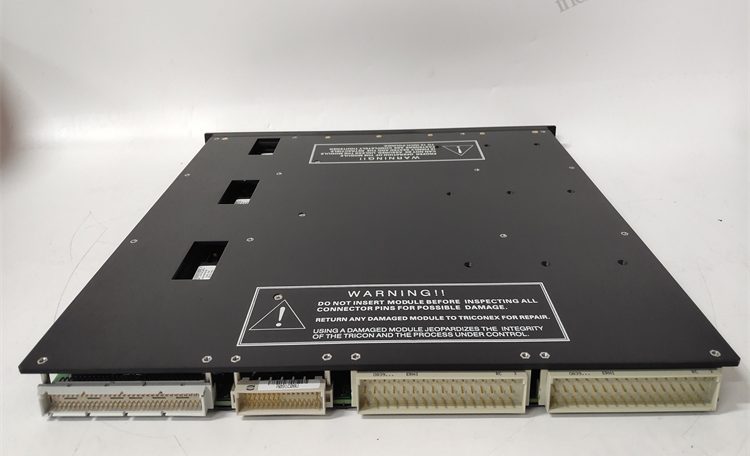
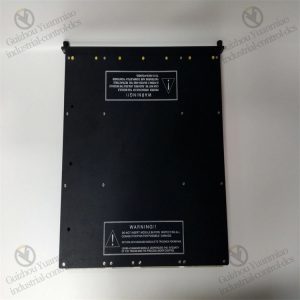
TRICONEX 3704E Analog Input Module
I. Module Positioning and Overview
The TRICONEX 3704E is a high-performance analog input module and a core component of the TRICONEX Safety Instrumented System (SIS). It primarily converts analog signals (such as current, voltage, temperature, etc.) from industrial fields into digital signals, ensuring the reliability and safety of data acquisition through redundancy mechanisms. Designed to meet the SIL 3 safety integrity level, it is suitable for scenarios with extremely high safety requirements, such as petrochemical, power, and metallurgical industries.
II. Core Features
Triple Redundancy Design (TMR)
- Adopts a three-channel independent sampling architecture (Channel A/B/C), with each channel equipped with independent ADC chips and power supplies. The “2 out of 3” voting mechanism (2oo3) ensures signal reliability, allowing the system to operate normally even when a single channel fails.
- Self-diagnosis coverage exceeds 99%, enabling real-time monitoring and alarming of channel failures, power anomalies, and other issues.
High Compatibility and Flexibility
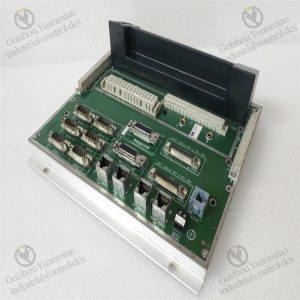
- Supports multiple analog signal inputs: 4-20mA current, 0-10V voltage, thermocouples (TC), resistance temperature detectors (RTD), etc., requiring matching terminal modules (e.g., 3721E for RTD, 3722E for TC).
- Number of input channels: Typically 16 (some models support expansion to 32), enabling simultaneous acquisition of multiple signals.
High Speed and Precision
- Resolution: 16 bits or higher, with measurement accuracy reaching ±0.05% FS (full scale).
- Input update rate: ≤55ms, response time <200μs, meeting real-time monitoring requirements.
Industrial-Grade Environmental Adaptability
- Operating temperature: -40°C ~ 85°C, resistant to vibration and electromagnetic interference (complying with IEC 61000 standards).
- Supports hot-swapping, allowing maintenance without interrupting system operation.
III. Technical Parameter Comparison (for reference with 3700A module)
| Parameter | 3704E Module | 3700A Module |
|---|---|---|
| Input Channels | 16 (expandable) | Up to 32 |
| Signal Types | 4-20mA/0-10V/TC/RTD (with adapter terminals) | 4-20mA/0-5V/TC/RTD (with adapter terminals) |
| Resolution | 16 bits | 16 bits |
| Communication Protocols | TriBus, Modbus, EtherNet/IP, etc. | Modbus TCP/IP, etc. |
| Dimensions | Approx. 150mm×100mm×50mm | Approx. 150mm×100mm×50mm |
| Special Functions | Supports HART communication protocol (some models) for reading additional data from intelligent sensors | Standard analog acquisition, no HART function |
IV. Working Principle Analysis
Signal Acquisition and Conditioning
- Input signals are processed by hardware filter circuits (resistant to high-frequency noise) and signal amplification/attenuation to ensure adaptation to the ADC input range.
- For temperature signals (TC/RTD), signal conversion is completed through terminal modules (e.g., RTD bridge circuit, TC cold junction compensation).
Triple Analog-to-Digital Conversion (A/D Conversion)
- Three independent channels sample the same analog signal synchronously and convert it into digital quantities (such as 16-bit binary data), with each channel independently powered to avoid interference.
- Differential input design suppresses common-mode interferences (such as ground potential differences and electromagnetic interference).
Redundancy Voting and Fault Diagnosis
- Digital signals from three channels are output through the “2 out of 3” voting mechanism. If the data deviation of a channel exceeds the threshold (e.g., ±0.5% FS), the system automatically isolates the faulty channel and gives an alarm.
- The self-diagnosis function real-time monitors ADC accuracy, power voltage, channel short circuit/open circuit, etc., and feeds back information through LED indicators (such as CHA/CHB/CHC fault lights) and the system bus in case of faults.
Digital Signal Processing and Transmission
- The voted digital signals are encoded and transmitted to the controller via the TriBus high-speed bus, while supporting industrial communication protocols for interaction with the host computer.
- Built-in algorithms linearize non-linear signals (such as TC temperature-voltage curves) and support user-defined calibration parameters (zero point, range).
V. Typical Application Scenarios
Petrochemical Industry
- Monitoring parameters such as reactor temperature, pressure, and flow to ensure process safety;
- Collecting pressure and liquid level signals in pipeline transportation systems for closed-loop control.
Power and Energy
- Monitoring temperature and vibration signals of generator sets;
- Real-time acquisition of substation equipment status (such as transformer oil temperature and current).
Pharmaceutical and Food Processing
- Monitoring temperature, humidity, and pressure difference in clean workshops;
- Controlling material concentration and temperature in reactors (scenarios requiring explosion-proof certification).

VI. Module Selection and Maintenance Recommendations
Selection Key Points:
Choose corresponding terminal modules according to input signal types (current/voltage/temperature). If HART communication function is required, confirm model compatibility.
Maintenance Notes:
Wear an anti-static wristband during hot-swapping operations. When the module fails, view specific fault codes through TRICONEX diagnostic software (such as TriStation) to quickly locate problems.
With its triple redundancy design and high safety level, the TRICONEX 3704E module achieves high-precision and reliable analog quantity acquisition in industrial safety-critical systems, making it one of the core components in complex industrial environments.
Reviews
There are no reviews yet.