

Description
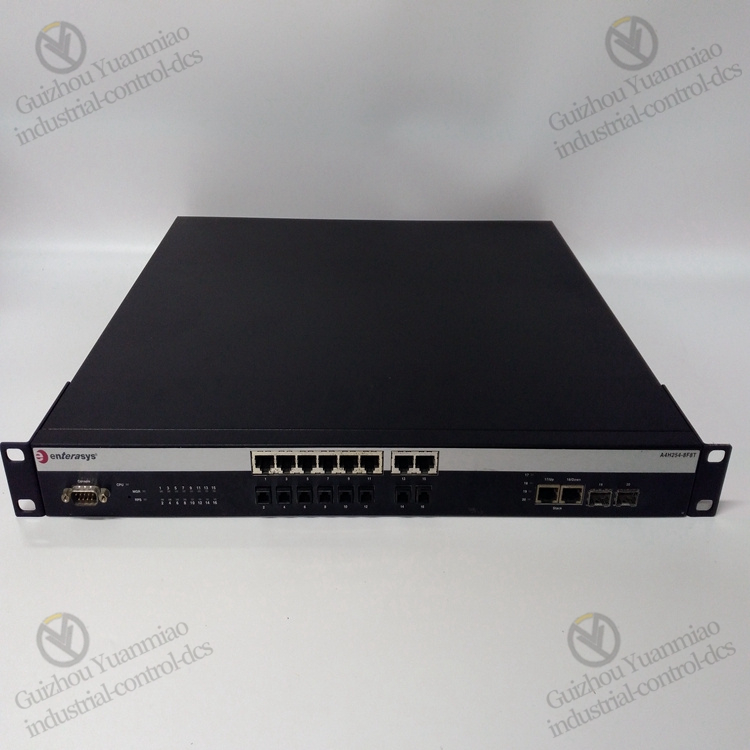
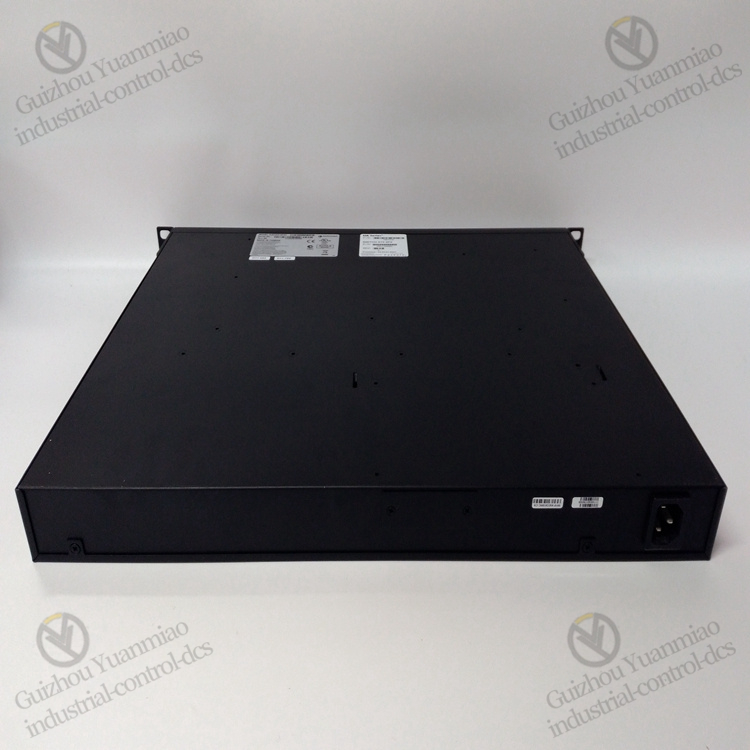
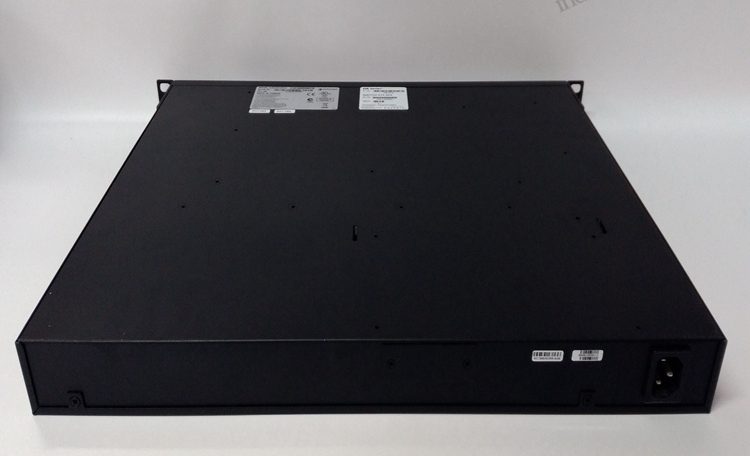
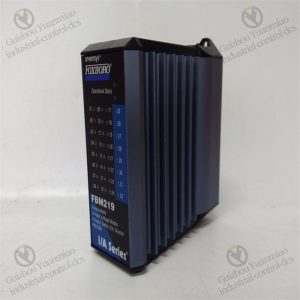
FOXBORO A4H254-8F8T High-Performance Ethernet Switch
As a high-performance industrial Ethernet switch, the working principle of FOXBORO A4H254-8F8T is based on industrial-grade Ethernet data exchange technology. Its core is to realize fast forwarding of data frames between different devices, network redundancy control, security isolation, and efficient management through the combination of hardware and software, while adapting to the harsh requirements of industrial environments. The following is an explanation from the perspective of key functional modules and working processes:
I. Core Hardware Architecture and Data Exchange Foundation
-
Port and Medium Adaptation
- The switch is equipped with 8 fiber ports (100Base-FX or 1000Base-FX) and 8 electrical ports (10/100/1000Base-T), corresponding to fiber optic (multimode/single-mode, SC/LC interface) and copper cable (RJ-45) transmission media respectively.
- The ports have built-in Media Access Control (MAC) chips, which are responsible for converting electrical or optical signals into digital data frames, and parsing the source/destination MAC addresses in the frame headers to provide basic information for data forwarding.
-
Switching Engine and Backplane Bandwidth
- The core switching engine is designed based on ASIC (Application-Specific Integrated Circuit), supporting wire-speed non-blocking switching (backplane bandwidth is usually ≥25Gbps), which can process concurrent data from multiple ports simultaneously to avoid congestion.
- It has a built-in MAC address table with a capacity of 8K or higher, and records the correspondence between device MAC addresses and ports through the “learning-forwarding” mechanism: when a data frame is received, it first reads the destination MAC address. If the corresponding port exists in the address table, it forwards directly; if not, it broadcasts to all ports (except the source port) and updates the address table through the source MAC address to achieve efficient addressing.
II. Working Logic of Key Functions
-
Data Frame Forwarding and Priority Control (QoS)
- It supports IEEE 802.1p priority marking and DiffServ (Differentiated Services). By parsing the priority fields in data frames, industrial control commands, monitoring data, management information, etc., are classified by importance (e.g., control commands have the highest priority).
- The switching engine forwards high-priority data first according to the priority queue scheduling mechanism, ensuring that millisecond-level real-time control commands are not delayed, and meeting the requirement in industrial automation that “control signals take precedence over ordinary data”.
-
Network Redundancy and Reliability Assurance
- It supports RSTP (Rapid Spanning Tree Protocol), MSTP (Multiple Spanning Tree Protocol), and ring network redundancy protocols: when a link failure occurs in the network (such as fiber optic breakage, port failure), the protocol will quickly detect and recalculate the optimal path, ensuring that the fault recovery time is <50ms and avoiding the interruption of the industrial control network.
- It is equipped with redundant power input (usually supporting 18-36VDC wide voltage). When the main power supply fails, the backup power supply switches automatically to ensure the continuous operation of the switch.
-
Network Isolation and Security Control
- VLAN (Virtual Local Area Network) function: By dividing different VLANs (based on ports, MAC addresses, or protocols), the physical network is divided into multiple logical subnets (such as control subnet, monitoring subnet, management subnet), restricting the forwarding of data frames within the subnet, avoiding broadcast storms, and isolating network traffic in different functional areas (e.g., data from production line A and production line B do not interfere with each other).
- Security protection mechanisms:
- Port security: Bind MAC addresses to ports to prohibit unauthorized devices from accessing;
- DHCP Snooping/ARP protection: Filter forged IP/MAC mappings to prevent network spoofing;
- ACL (Access Control List): Restrict the forwarding of specific data based on rules such as source/destination IP, port, and protocol to resist malicious attacks.
-
Management and Monitoring Functions
- It supports management methods such as SNMP (Simple Network Management Protocol), Web interface, and CLI (Command Line Interface). Users can remotely configure parameters such as VLAN, QoS, and redundancy protocols, and monitor port status (traffic, link quality), power status, temperature, and other information in real-time.
- It has built-in LED indicators (power, port link/activity, fault alarm) and alarm output interfaces, facilitating quick on-site fault diagnosis.

III. Underlying Design for Industrial Scenario Adaptation
- Wide Temperature and Anti-Interference: It uses industrial-grade components, with an operating temperature range usually covering -40°C to +70°C, and supports fanless heat dissipation; it has passed EMC (Electromagnetic Compatibility) certification, resisting electromagnetic interference in industrial environments (such as interference from motors and frequency converters) to ensure stable data transmission.
- Seamless Integration of Industrial Protocols: It is compatible with common protocols in the industrial control field (such as Modbus TCP/IP, Profinet, EtherNet/IP, etc.), and can be directly connected to PLC, DCS, SCADA systems, and on-site equipment (sensors, robots, instruments, etc.) to realize end-to-end transmission of industrial data.
Summary
The working principle of FOXBORO A4H254-8F8T can be summarized as: with a high-speed switching engine as the core, adapting to different transmission media through ports, realizing efficient forwarding of data frames using MAC address tables, and combining redundancy protocols, VLAN, QoS, and security mechanisms to build a highly reliable, low-latency, and manageable Ethernet communication network in harsh industrial environments, meeting the strict requirements of industrial automation for real-time performance, security, and stability.


Reviews
There are no reviews yet.