

Description
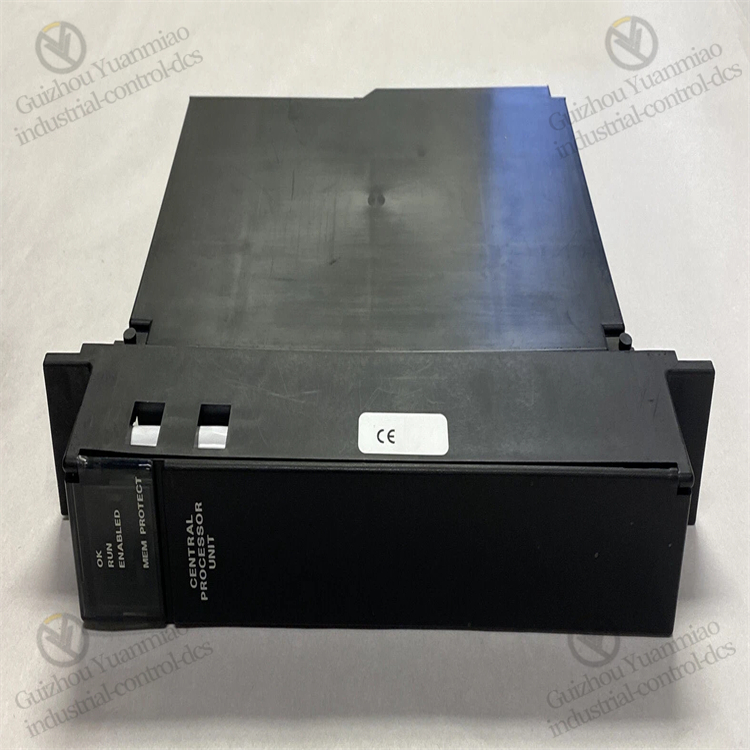
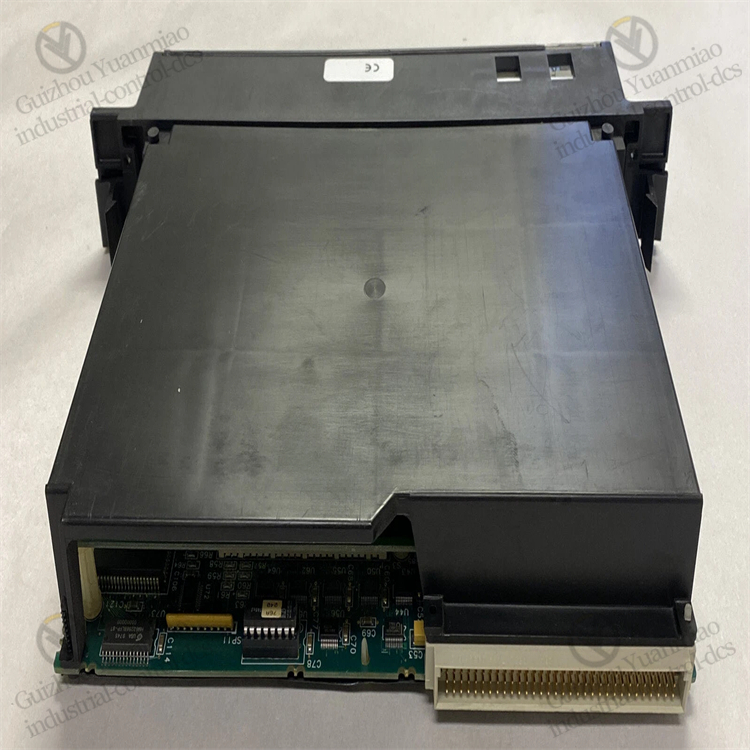
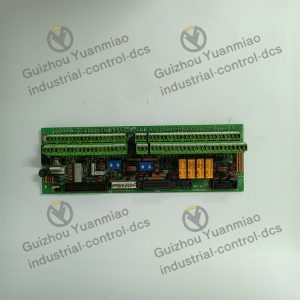
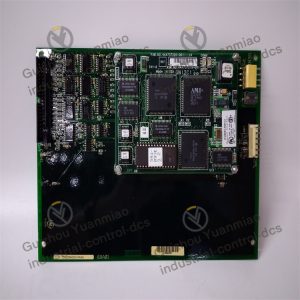
GE IC697CPM915 High-performance CPU Module
The IC697CPM915 is a high-performance CPU module in the GE Fanuc Series 90-70 PLC family, primarily designed for industrial control scenarios with medium to high complexity. It features strong processing capabilities and flexible expandability. The following is a detailed introduction covering its core characteristics, functions, applicable scenarios, etc.:
I. Core Positioning and Characteristics
- Series Affiliation: It belongs to the GE Fanuc Series 90-70 family, which is renowned for high reliability and strong expandability, widely used in medium-sized industrial automation systems.
- Functional Positioning: As the core control module of the system, it is responsible for executing user programs, processing I/O data, coordinating communications, and monitoring system status, serving as the “brain” of the PLC control system.
- Key Characteristics:
- High computing performance, supporting complex control algorithms (such as PID regulation, logical interlocking, sequential control, etc.).
- Compatible with multiple programming languages (ladder diagram, structured text ST, function block diagram FBD, etc.), adapting to different programming habits.
- Equipped with rich communication interfaces, enabling communication with I/O modules, upper computers (SCADA/HMI), and third-party devices (such as frequency converters, sensors).
- Built-in diagnostic functions, capable of real-time monitoring of hardware status (such as memory, power supply, communication links), facilitating fault troubleshooting.
II. Hardware and Interface Design
- Processor and Memory:
- Equipped with a high-performance microprocessor, whose operating speed meets the requirements of medium-sized systems (specific parameters refer to the manual; generally, it supports thousands of I/O points control).
- Built-in program memory (for storing user programs) and data memory (for storing real-time variables and register data), supporting memory expansion (some models can be expanded via plug-in cards).
- Interface Types:
- Local I/O Interface: Connects to local I/O modules (such as digital input/output modules, analog modules, special function modules) through the Series 90-70 backplane bus to achieve signal acquisition and control output.
- Communication Interface: Usually includes RS-232/485 and Ethernet interfaces (for some models), supporting industrial protocols such as Modbus, Genius bus, and EtherNet/IP, facilitating system integration.
- Programming Interface: Supports connection to programming software (such as GE Fanuc VersaPro or Cimplicity Machine Edition) via a dedicated programming cable (e.g., IC690ACC901) for program downloading, debugging, and monitoring.
III. Working Principle
As an independent CPU module (non-redundant design, different from GMR redundant modules like IC697CPM914), the working process of IC697CPM915 follows the classic “scanning cycle” mechanism of PLC, which specifically includes:
- Input Sampling Phase: Reads real-time signals from all connected I/O modules (such as digital input modules, analog sensors) and stores them in input image registers.
- Program Execution Phase: Processes input data and internal register data according to user-written control programs (such as logical judgment, mathematical operations, timing control) to generate output results.
- Output Refresh Phase: Writes the results of program execution into output image registers, and then drives external devices (such as relays, valves, motors) through output modules.
- Monitoring and Communication Phase: Simultaneously performs system self-inspection (such as hardware faults, memory errors) and exchanges data with upper computers or other devices (such as sending status information and receiving control commands).
IV. Differences from Redundant Modules (Taking IC697CPM914 as an Example)
| Comparison Items | IC697CPM915 (Non-redundant) | IC697CPM914 (GMR Redundant) |
|---|---|---|
| Redundancy Capability | Works as a single module, no redundant design, system shuts down in case of failure | Used in pairs (primary and standby CPUs), supports hot switching, no single-point failure |
| Applicable Scenarios | Non-critical processes (such as ordinary production lines, small equipment) | Scenarios with high reliability requirements (such as power industry, petrochemical industry, rail transit) |
| Synchronization Mechanism | No need for primary-standby synchronization | Dedicated synchronization bus for real-time synchronization of primary-standby data |
| Cost and Complexity | Lower cost, simple configuration | Higher cost, needs to be matched with redundant power supplies, racks, and network components |
V. Applicable Scenarios
The IC697CPM915 is suitable for industrial scenarios with medium reliability requirements and medium control scale, such as:
- Logical control and sequential control of manufacturing production lines (such as automobile assembly lines, packaging machinery).
- Automated control of small and medium-sized water treatment systems and air conditioning units.
- Coordinated control of warehousing and logistics equipment (such as conveyors, stackers).
- Auxiliary systems in process industries such as chemical industry and food processing that do not require redundant design.
VI. Summary
The IC697CPM915 is a core control module for medium-sized automation systems in the Series 90-70 family, characterized by stable performance, flexible expandability, and ease of use, suitable for scenarios that do not require redundant fault tolerance. Its design focuses on efficiently executing control logic and facilitating system integration. It is a classic model launched by GE Fanuc to balance performance and cost, and is still widely used in existing industrial systems. For higher reliability requirements (such as zero downtime), its redundant version IC697CPM914 and supporting GMR components should be selected.
Reviews
There are no reviews yet.