

Description
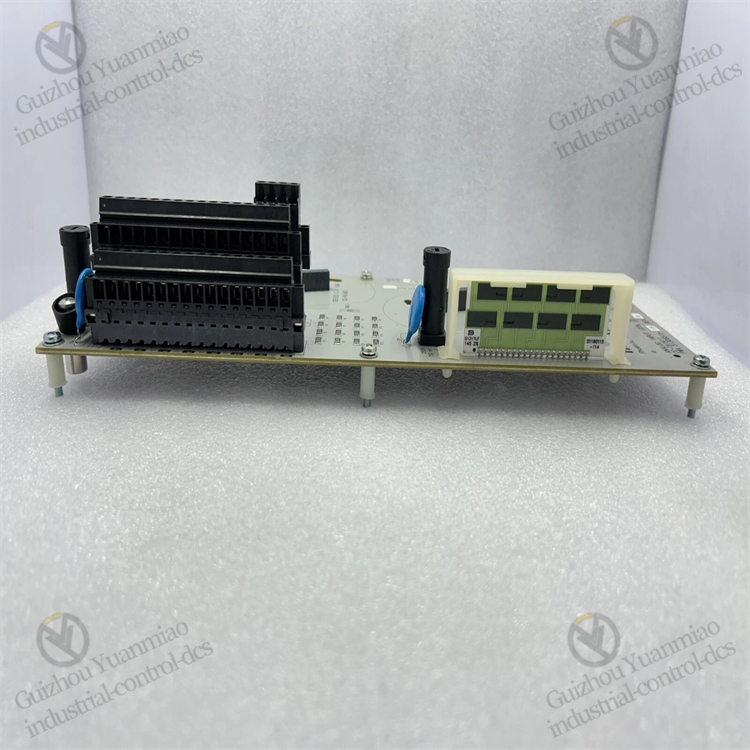
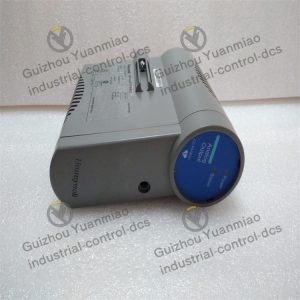
Honeywell CC-TAIN01 Analog Input Module
As an industrial-grade analog input module, the core function of CC-TAIN01 is to convert continuous analog signals (such as temperature, pressure, flow, etc.) output by on-site sensors into discrete digital signals recognizable by the control system. Through internal processing, it ensures the accuracy, anti-interference ability and reliability of the signals, and finally transmits them to the main controller (such as Honeywell ControlEdge™ PLC or C300 system) for monitoring and control.
Core Workflow and Key Links
Analog Signal Acquisition
The module receives analog signals from the field through terminal blocks, and the supported signal types may include:
- Thermocouples (J, K, T, etc.), thermal resistors (PT100, etc.);
- Current signals (4-20mA, 0-20mA);
- Voltage signals (0-10V, ±10V, etc.).
Different types of signals are initially adapted through internal hardware circuits (such as adaptive resistors, amplifier circuits) to ensure that the signals are within the processing range of the module.
Signal Conditioning
- Amplification and Filtering: Weak signals (such as millivolt-level signals from thermocouples) are amplified by high-precision operational amplifiers. At the same time, high-frequency noise (such as electromagnetic interference) is suppressed through low-pass filters to improve the signal-to-noise ratio of the signals.
- Cold Junction Compensation (for thermocouples): A built-in temperature sensor monitors the ambient temperature of the module and compensates for the temperature drift of the thermocouple’s cold junction to ensure the accuracy of temperature measurement.
- Linearization Processing: Linearization correction is performed on non-linear signals (such as the output characteristics of some sensors) to reduce conversion errors.
A/D Conversion (Analog-to-Digital Conversion)
The conditioned analog signals are sent to a high-precision A/D converter (presumed to be 16-bit or higher resolution) to convert continuous analog quantities (voltage/current) into discrete digital quantities (binary codes).
Conversion accuracy and sampling rate are key indicators: the higher the resolution, the closer the digital signal is to the original analog signal; the sampling rate determines the number of signals the module can process per second (such as 100ms level per channel).
Isolation and Anti-Interference
The module may adopt an electrical isolation design (such as optocoupler isolation or transformer isolation) to isolate the input signal from the internal circuit and the system backplane, preventing on-site high voltage, surges or ground interference from entering the control system.
Some models may support inter-channel isolation to avoid crosstalk between multi-channel signals.

Digital Signal Processing and Diagnosis
The converted digital signals are processed by the internal microprocessor and further corrected in combination with preset calibration parameters (such as range, offset) to ensure data accuracy.
Built-in fault diagnosis function: real-time monitoring of channel status, such as disconnection (sensor open circuit), over-range (signal exceeding the set range), sensor failure, etc., triggers an alarm and feeds back through LED indicators or system software.
Data Transmission to the Main Controller
The processed digital signals are transmitted to the main controller through the bus between the module and the system backplane (such as Honeywell’s dedicated bus or industrial Ethernet) for display, analysis and logical control by the control system (such as Experion PKS software).
If it supports hot-swap function, the module can be replaced while the system is running without affecting the overall communication.
Power Supply and Status Monitoring
It is usually powered by 24VDC from the system backplane, and the module has a built-in power management circuit to ensure stable power supply.
The overall status of the module (normal/faulty) is fed back in real-time through indicator lights (such as power light, running light, fault light).
Key Technical Features (Inferred Based on Similar Modules)
- High Precision: High-resolution A/D conversion and calibration algorithms ensure that the signal conversion error is within ±0.1%.
- Flexibility: Supports different signal types through software configuration (instead of hardware jumpers) to adapt to diverse sensor needs.
- Reliability: Wide temperature operating range (such as -40°C to +70°C), anti-vibration and electromagnetic compatibility design, adapting to harsh industrial environments.
Summary
The working principle of CC-TAIN01 is essentially a closed-loop process of “analog signal → conditioning → conversion → digital processing → transmission”. Through the combination of hardware design (isolation, filtering) and software algorithms (compensation, diagnosis), it realizes high-quality acquisition of analog signals in industrial fields and provides a reliable data foundation for industrial automation control.
Reviews
There are no reviews yet.