

Description
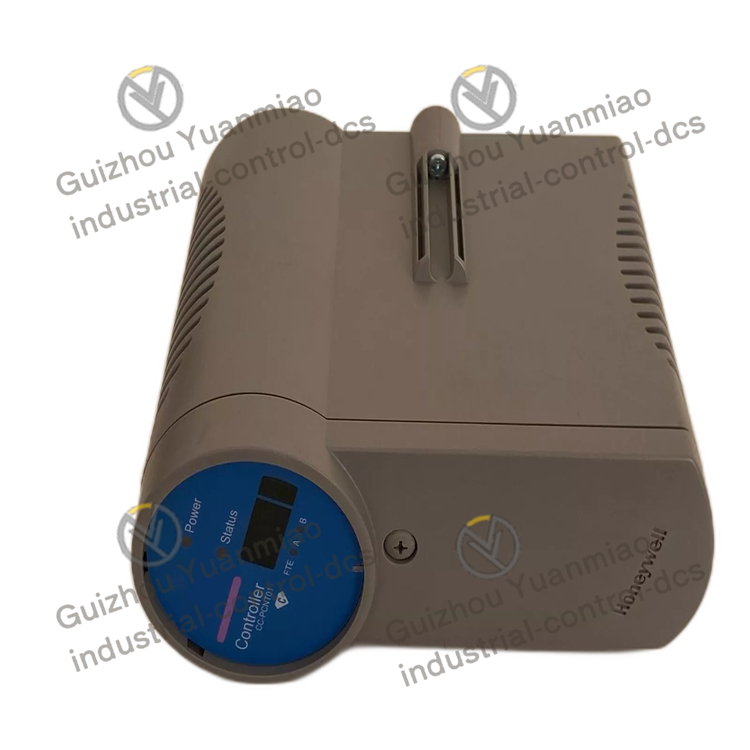
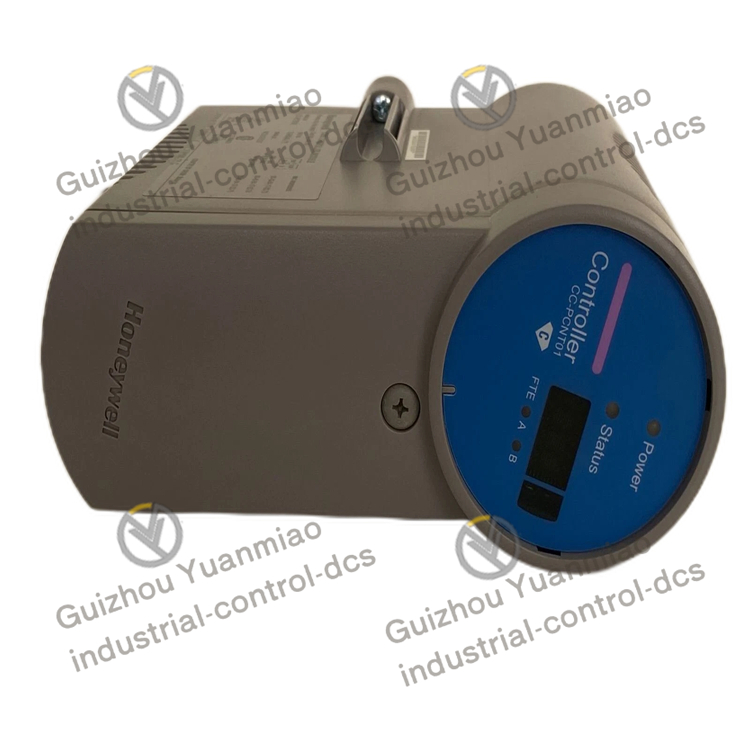
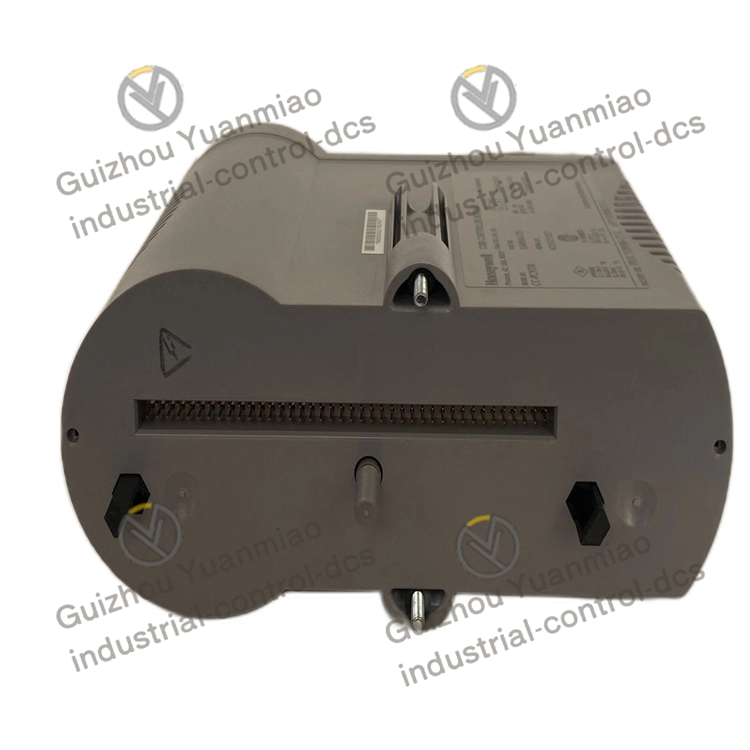
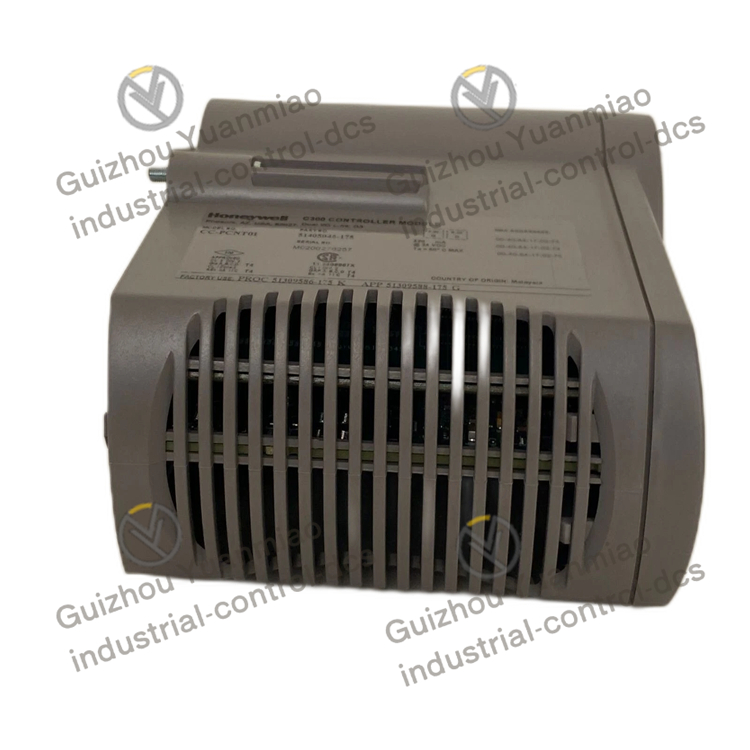
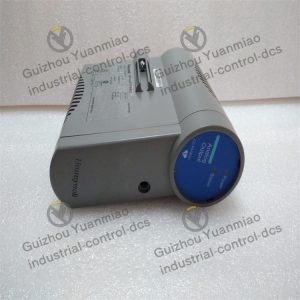
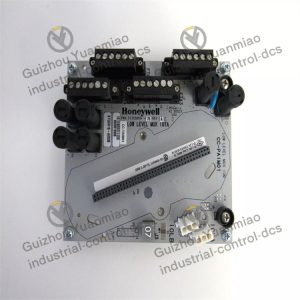
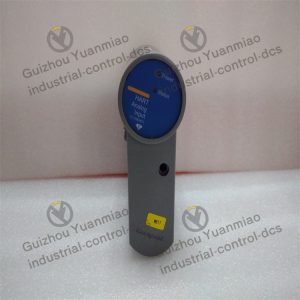
HONEYWELL CC-PCNT01 C300 Controller Module
As a C300 controller module, the working principle of HONEYWELL CC-PCNT01 revolves around the core requirements of Distributed Control Systems (DCS). It achieves precise monitoring and management of industrial on-site equipment and processes through data collection, processing, control output, and communication interaction. The following is a detailed explanation from the perspectives of core logic and key links:
I. Core Working Logic
The CC-PCNT01 module is an important part of the C300 controller. In essence, it is an industrial-grade data processing and control unit. It forms a closed-loop control process of “perception – decision – execution” by receiving on-site signals, executing preset control algorithms, outputting control instructions, and communicating with other components of the system, ensuring the stable operation of industrial processes.
II. Key Working Links
1. Data Collection: Perceiving On-site Signals
- Signal Access: The module connects to sensors or transmitters (such as temperature, pressure, flow, liquid level sensors, etc.) in industrial sites through dedicated interfaces (such as analog input and digital input channels) to receive real-time process parameter signals (such as 4-20mA analog signals, switch signals, etc.).
- Signal Preprocessing: The collected original signals are filtered, amplified, isolated, etc., to remove noise interference, and converted into digital quantities recognizable by the controller (for example, analog signals are converted into digital signals through an A/D converter) to ensure data accuracy.
2. Data Processing: Executing Control Algorithms
- Core Computing Unit: The module is equipped with a high-performance processor (such as a 32-bit microprocessor) and a real-time operating system to quickly process the collected data.
- Operation of Control Logic: Based on preset control strategies (such as PID control, logical interlocking, sequence control, etc.), it compares and analyzes real-time data with set values to calculate the required control quantity. For example, in the temperature control of a chemical reactor, if the measured temperature is lower than the set value, the processor will calculate the adjustment value of the output power of the heating device.
- Self-diagnosis and Fault Tolerance: During operation, it monitors the module’s own status in real-time (such as power supply, communication, interface faults), judges abnormalities through self-diagnosis programs, and triggers alarms (such as indicator light flashing or sending fault signals to the system) to ensure system reliability.
3. Control Output: Driving Actuators
- Instruction Conversion: The control quantity (digital signal) calculated by the processor is converted into signals recognizable by actuators (such as 4-20mA analog output, relay switch signals, etc.) through a D/A converter or digital output channel.
- Driving On-site Equipment: The output signals directly control actuators such as valves, pumps, and motors to adjust process parameters (such as opening valves to increase flow, starting heating devices to raise temperature), so that on-site parameters return to the set range, forming closed-loop control.
4. Communication Interaction: Integrating into the DCS System
- Internal Communication: It exchanges data with other modules (such as power modules, I/O expansion modules) through the backplane bus of the C300 controller to realize the coordination of internal resources of the controller.
- External Communication: With the help of interfaces such as Ethernet, RS485, and Modbus, it communicates with the operation station, engineer station, other controllers, or upper computers of the DCS system, uploads real-time data (such as process parameters, equipment status) and receives remote control instructions (such as set value modification, manual operation instructions) to realize centralized monitoring and remote management.
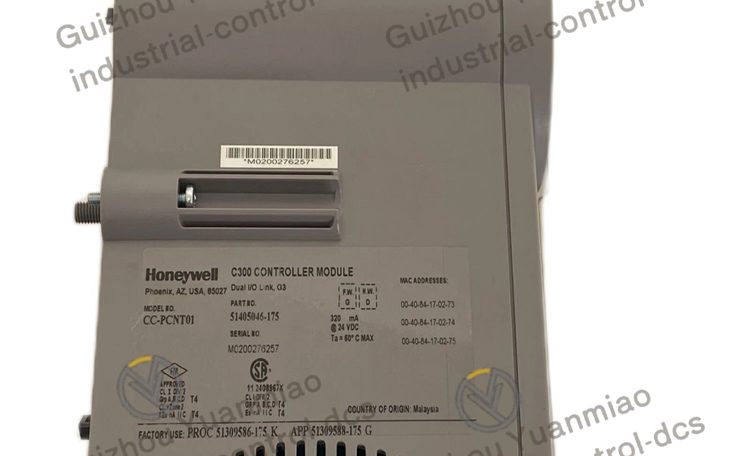
III. Cooperative Relationship with the C300 Controller
As a functional module of the C300 controller, the CC-PCNT01 does not run independently but relies on the overall architecture of the C300 controller:
- It shares the power supply, bus communication, and redundancy design (such as dual-machine hot backup) of the C300, improving the system’s anti-interference ability and fault tolerance.
- Cooperating with the C300’s programming software (such as Control Builder), users can configure control logic through a graphical interface and download it to the CC-PCNT01 module for execution, realizing flexible customization.
IV. Summary
The working principle of the CC-PCNT01 module can be summarized as: “collect on-site data → process through preset algorithms → output control instructions → link actuators → feedback adjustment”. At the same time, it integrates into the DCS system through communication interfaces to realize automatic and precise control of industrial processes, and is suitable for industrial scenarios with high requirements for reliability and real-time performance (such as chemical industry, energy, manufacturing, etc.).
Reviews
There are no reviews yet.