


Description
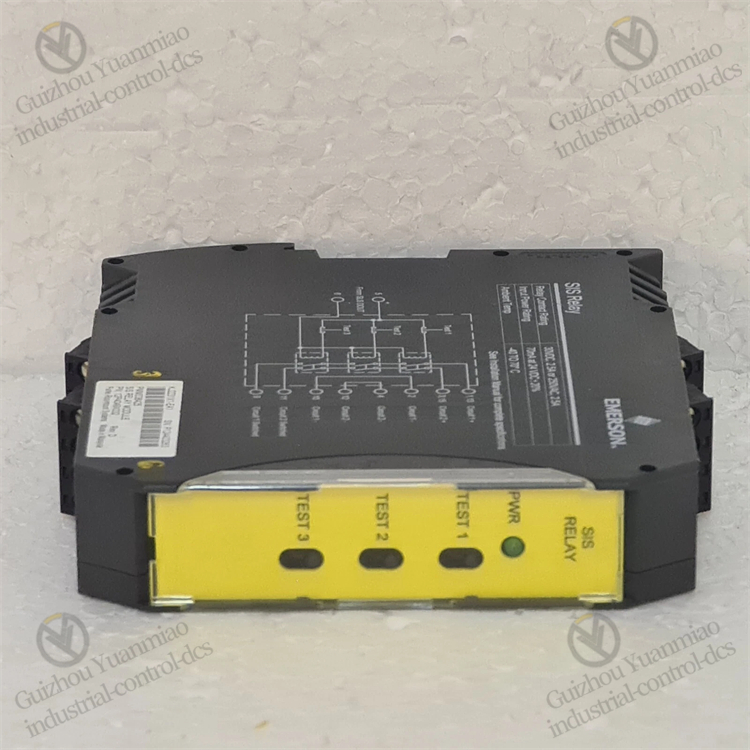
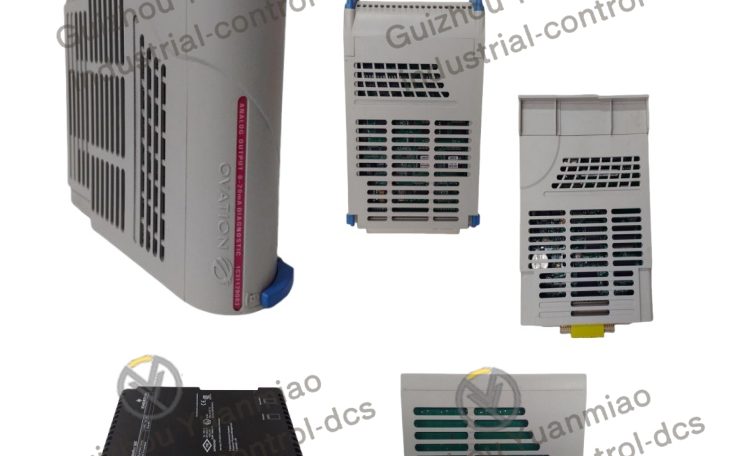
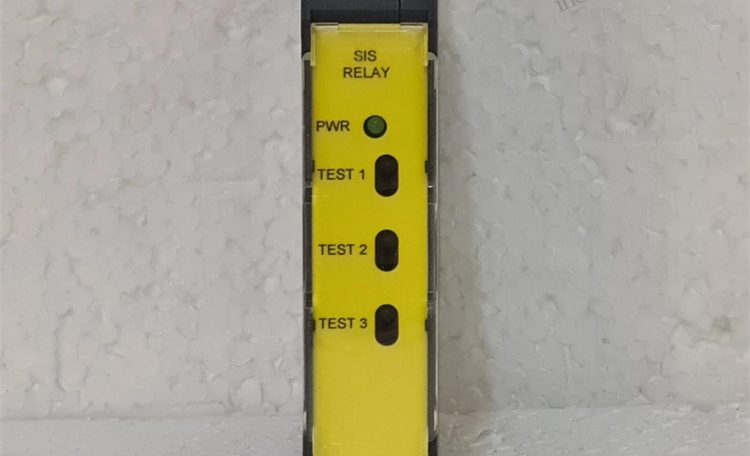
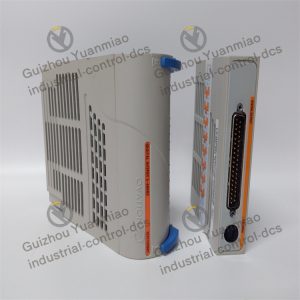
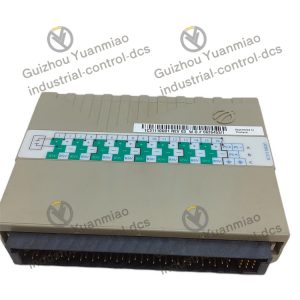
Emerson KJ2231X1-EB1 Digital Output (DO) Module
Emerson KJ2231X1-EB1 is a digital output (DO) module in the DTA-Direct series of the DeltaV system. Its core function is to convert digital signals from the control system into driving signals for on-site equipment. However, there are differences in details such as output configuration and performance parameters. The following is an explanation from the aspects of core characteristics, differences from the EA1 model, and typical application scenarios:
I. Core Functions and Characteristics
Basic Functions
Consistent with other modules in the same series, KJ2231X1-EB1 is mainly responsible for receiving digital commands from the DeltaV controller. After processing through the internal isolation circuit, it drives on-site equipment (such as solenoid valves, contactors, indicator lights, etc.) with electrical signals (relay or transistor output) and supports output status feedback to achieve closed-loop monitoring.
Consistent with other modules in the same series, KJ2231X1-EB1 is mainly responsible for receiving digital commands from the DeltaV controller. After processing through the internal isolation circuit, it drives on-site equipment (such as solenoid valves, contactors, indicator lights, etc.) with electrical signals (relay or transistor output) and supports output status feedback to achieve closed-loop monitoring.
Key Characteristics
- High Isolation Performance: The isolation voltage between input and output reaches 2500V AC, with independent isolation between channels, strong anti-interference ability, and compliance with industrial safety standards (such as IEC 61131-2).
- Industrial-grade Reliability: Operating temperature range is -40°C to 70°C, humidity is 5%-95% non-condensing, supports hot swapping, and is suitable for harsh industrial environments.
- Flexible Output Types: Mainly relay output (some models can choose transistor output). For specific load capacity, please refer to the manual (usually relay output supports 5A @ 250V AC/30V DC, meeting the needs of most industrial loads).
II. Main Differences from KJ2231X1-EA1
| Comparison Items | KJ2231X1-EA1 | KJ2231X1-EB1 |
|---|---|---|
| Number of Output Channels | Usually 8 channels or 16 channels (subject to specific model) | Mostly 16 channels (more channels in some configurations, focusing on high-density output) |
| Focus of Output Types | Supports mixed configuration of relay/transistor | Mainly relay output, some models only provide relay output |
| Redundancy Design | Some versions support dual-channel redundant output | Redundancy function is more simplified, focusing on basic reliability design |
| Load Adaptation | Compatible with low-power (transistor) and medium-high power (relay) loads | More suitable for medium-high power AC/DC mixed loads (such as contactors, solenoid valves) |
III. Typical Application Scenarios
Due to its focus on relay output and high-density channel design, KJ2231X1-EB1 is more suitable for scenarios that require centralized control of multiple devices:
- Process Industry: In chemical and petrochemical plants, it centrally controls the switching actions of multiple pneumatic valves and electric valves.
- Manufacturing Production Lines: It drives the start and stop of conveyors and sorting equipment through relay output to realize collaborative control of multiple workstations.
- Municipal Engineering: In water treatment plants and pump stations, it controls the operation logic of grid machines, sewage pumps and other equipment.
Summary
KJ2231X1-EB1 is a digital module in the DeltaV system designed for high-density relay output requirements. Compared with the EA1 model, it focuses more on the number of channels and relay load adaptation, and is suitable for industrial automation scenarios that require centralized control of multiple devices. Its high isolation and industrial-grade reliability ensure stable operation in complex environments.
KJ2231X1-EB1 is a digital module in the DeltaV system designed for high-density relay output requirements. Compared with the EA1 model, it focuses more on the number of channels and relay load adaptation, and is suitable for industrial automation scenarios that require centralized control of multiple devices. Its high isolation and industrial-grade reliability ensure stable operation in complex environments.
Reviews
There are no reviews yet.