

Description
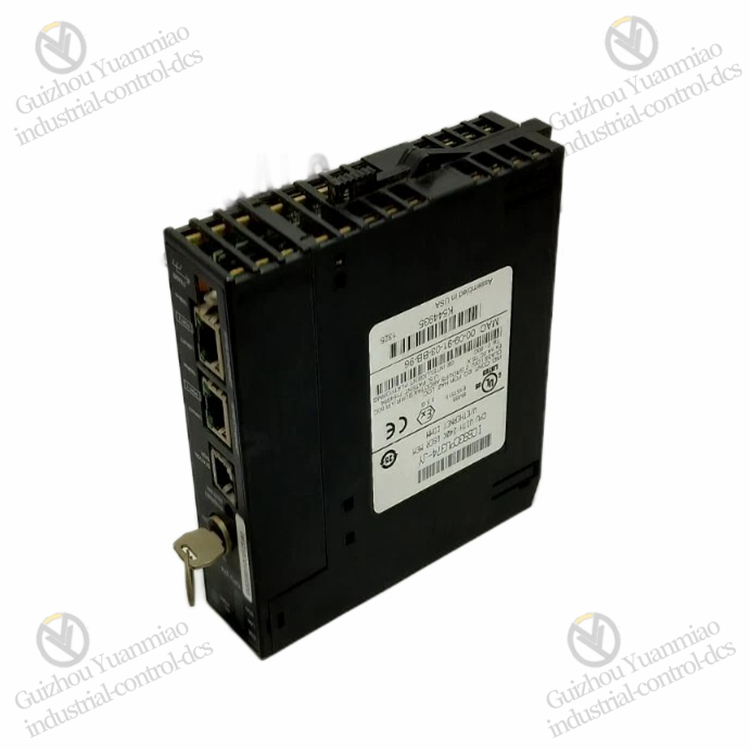
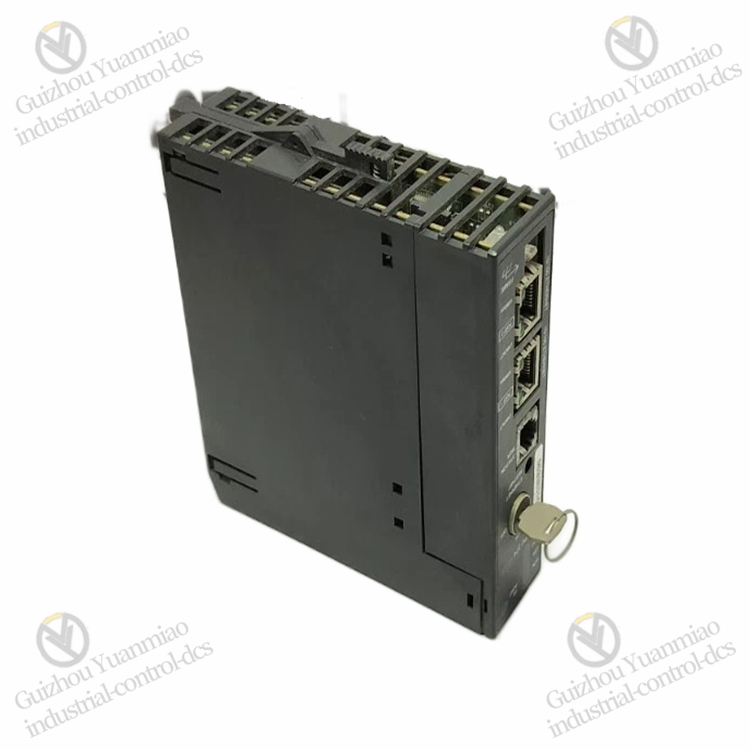
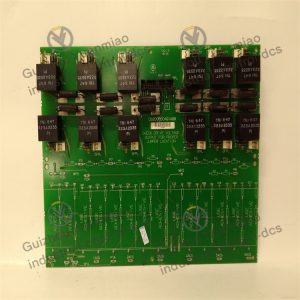
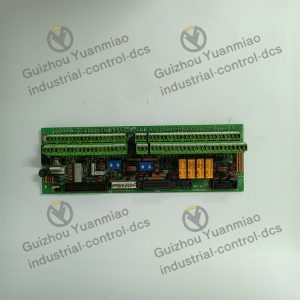
GE IC693CPU374-JY Core Processor Module
IC693CPU374-JY is a core processor module in GE Fanuc’s 90-30 series programmable logic controllers (PLCs). It is mainly used for logical operations, data processing, and equipment control in industrial automation control systems, and is a key component for realizing automated processes in small and medium-sized industrial control scenarios. The following is an introduction from the aspects of core functions, performance parameters, characteristics, and application scenarios:
I. Core Positioning and Functions
As the central processing unit (CPU) of the 90-30 series PLC, IC693CPU374-JY undertakes the core control tasks of the system. It is a “command center” that connects input/output (I/O) modules, executes control logic, and realizes equipment linkage. Its specific functions include:
As the central processing unit (CPU) of the 90-30 series PLC, IC693CPU374-JY undertakes the core control tasks of the system. It is a “command center” that connects input/output (I/O) modules, executes control logic, and realizes equipment linkage. Its specific functions include:
- Logical operation and program execution: Runs user-written control programs such as ladder diagrams and instruction lists, executes operations such as switching logic (e.g., start-stop control, interlock protection) and analog quantity regulation (e.g., temperature and pressure closed-loop control), and outputs control commands to drive external equipment.
- Data acquisition and processing: Communicates with I/O modules (such as digital input module IC693MDL240 and analog module IC693ALG220) through the backplane bus, collects real-time status data of on-site equipment (such as sensor signals and switch status), and performs data storage, verification, and conversion.
- Communication and linkage: Supports multiple communication interfaces (such as optional RS-232, RS-485, and Ethernet), and can exchange data with HMI (human-machine interface), upper computers (such as SCADA systems), or other PLCs to realize remote monitoring, parameter setting, and collaborative control.
- System management and diagnosis: Equipped with a built-in self-diagnostic function, it monitors the CPU operating status in real-time (such as memory usage, program errors, and communication failures), and feeds back fault information through indicator lights or communication messages, facilitating quick troubleshooting.
II. Performance Parameters
| Parameter Category | Specific Parameters |
|---|---|
| Processor Performance | 32-bit microprocessor with a clock frequency of approximately 25 MHz, supporting high-speed logical operations and data processing |
| Memory Configuration | Program memory: 512 KB (expandable); Data memory: 128 KB, supporting power-failure retention (via battery backup) |
| I/O Capacity | Maximum support for 4096 digital I/O points or 512 analog I/O channels (requires matching with an expansion rack) |
| Instruction Execution Speed | Basic logic instructions (such as normally open/normally closed contacts) have an execution time of approximately 0.1 μs, and complex instructions (such as PID operations) have an execution time of approximately 10 μs |
| Communication Interfaces | Standard RS-232 interface (for programming and debugging), can support Ethernet, DeviceNet, etc., through expansion modules |
| Operating Environment | Temperature: 0°C ~ 60°C; Humidity: 5% ~ 95% (non-condensing); Vibration resistance: 10 ~ 500 Hz, 1 g acceleration |
| Power Supply Requirements | DC 5V ± 5%, typical power consumption is approximately 10 W |
| Programming Languages | Supports ladder diagram (LD), instruction list (IL), and function block diagram (FBD), compatible with GE Fanuc programming software (such as VersaPro) |
III. Core Characteristics
High Reliability
Adopting an industrial-grade design, it has anti-electromagnetic interference (EMI) capability, adapting to harsh environments such as dust and vibration in factory workshops; supports battery-backed data memory to ensure that key data is not lost after power failure.
High Reliability
Adopting an industrial-grade design, it has anti-electromagnetic interference (EMI) capability, adapting to harsh environments such as dust and vibration in factory workshops; supports battery-backed data memory to ensure that key data is not lost after power failure.
Flexible Expansion
It can connect I/O modules, communication modules, and special function modules (such as high-speed counting module IC693CTM301) through 90-30 series expansion racks (such as IC693CHS391) to meet control requirements of different scales.
It can connect I/O modules, communication modules, and special function modules (such as high-speed counting module IC693CTM301) through 90-30 series expansion racks (such as IC693CHS391) to meet control requirements of different scales.
Real-time Response
The high-speed instruction execution speed and priority interrupt handling mechanism ensure quick response to on-site signals (such as emergency stop buttons and sensor triggers), making it suitable for control scenarios requiring real-time performance (such as production line beat control).
The high-speed instruction execution speed and priority interrupt handling mechanism ensure quick response to on-site signals (such as emergency stop buttons and sensor triggers), making it suitable for control scenarios requiring real-time performance (such as production line beat control).
Ease of Use
Compatible with general programming software, supports online programming and debugging, and can remotely download programs or monitor operating status through communication interfaces, simplifying on-site debugging and maintenance processes.
Compatible with general programming software, supports online programming and debugging, and can remotely download programs or monitor operating status through communication interfaces, simplifying on-site debugging and maintenance processes.
IV. Application Scenarios
IC693CPU374-JY is mainly used in small and medium-sized industrial automation systems, with typical applications including:
IC693CPU374-JY is mainly used in small and medium-sized industrial automation systems, with typical applications including:
Manufacturing production line control: Such as equipment linkage control in food packaging lines and automobile parts assembly lines (conveyor start-stop, valve switching, sensor logic interlocking).
Municipal and infrastructure: Pump and valve control in water treatment plants, logical regulation of sewage treatment processes; water level monitoring and automatic start-stop control in small pumping stations.
Light industry equipment: Speed regulation of textile machinery, tension control of printing equipment, temperature and pressure closed-loop control of plastic molding machines.
Building automation: Linked control of air conditioning systems, lighting systems, and elevators in large buildings, realizing energy conservation and safety management through logical programming.
Reviews
There are no reviews yet.