

Description
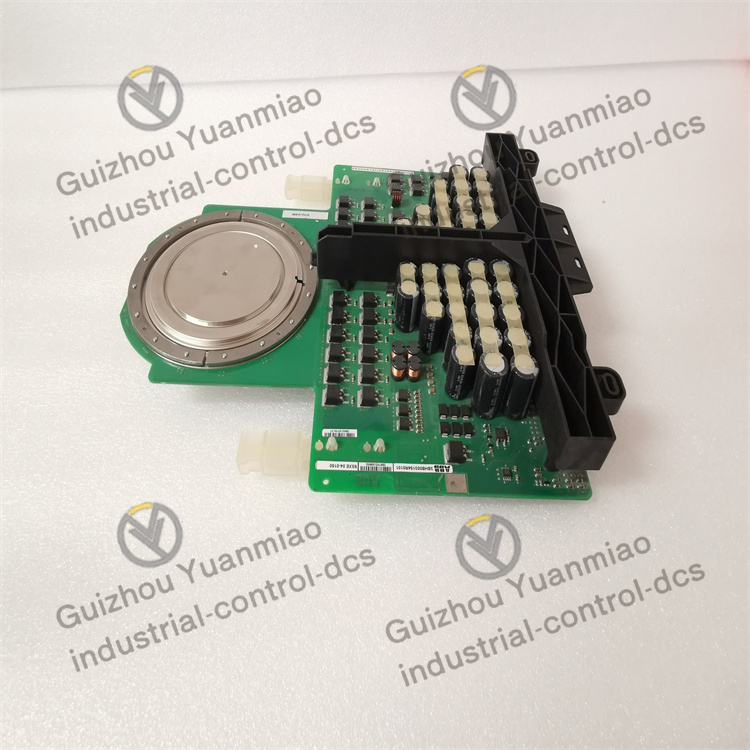
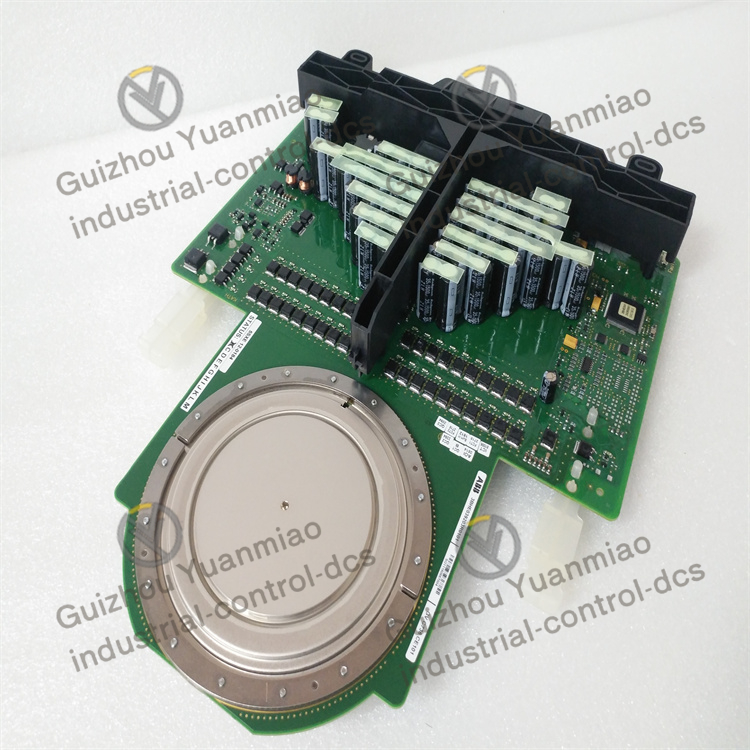
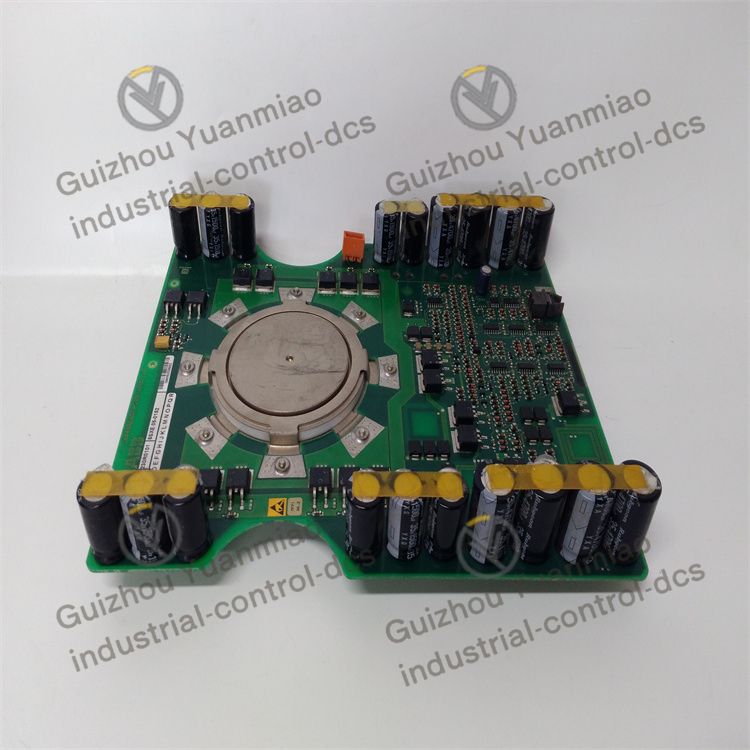
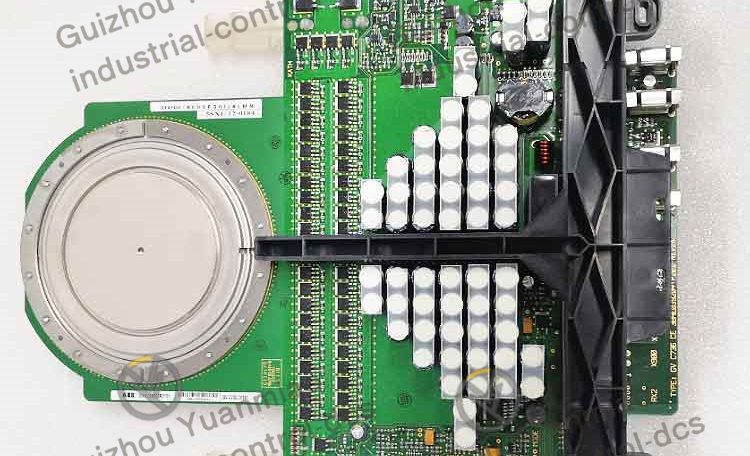
ABB 5SHY50L5500 Asymmetric Integrated Gate Commutated Thyristor (IGCT) Module
5SHY50L5500 is an asymmetric integrated gate-commutated thyristor (IGCT), which has advantages such as high voltage and large current handling capabilities, and is commonly used in high-voltage and high-power power electronic systems.
Differences between Asymmetric Integrated Gate-Commutated Thyristors and Ordinary Thyristors
Asymmetric Integrated Gate-Commutated Thyristors (Asymmetric IGCT, referred to as Asymmetric IGCT) and ordinary Thyristors (also known as Silicon Controlled Rectifiers, SCR) have significant differences in structural design, performance characteristics, and application scenarios. These differences make them suitable for different power electronic fields. The following explains the core differences:
Asymmetric Integrated Gate-Commutated Thyristors (Asymmetric IGCT, referred to as Asymmetric IGCT) and ordinary Thyristors (also known as Silicon Controlled Rectifiers, SCR) have significant differences in structural design, performance characteristics, and application scenarios. These differences make them suitable for different power electronic fields. The following explains the core differences:
I. Essential Differences in Structure and Working Principle
-
Ordinary Thyristor
It is a semi-controlled device that can only be triggered to conduct through a gate signal but cannot be forced to turn off through a gate signal. Turning off depends on an external circuit (such as reverse voltage or current zero-crossing).
It has a symmetrical structure, with similar forward and reverse voltage withstand capabilities, making it suitable for bidirectional current or DC scenarios (such as traditional topologies in rectification and inversion). -
Asymmetric IGCT
It is a fully controlled device that integrates a gate drive circuit and a commutation unit. It can not only be triggered to conduct through a gate signal but also be forced to turn off by applying a reverse current through the gate (without relying on an external circuit).
Asymmetric structure: Through optimized doping processes, the forward voltage withstand capability is much higher than the reverse voltage withstand capability (reverse voltage withstand is usually only a few hundred volts), specially designed for unidirectional power flow scenarios (such as specific links in rectification or inversion).
II. Comparison of Core Performance Parameters
| Parameters | Ordinary Thyristor | Asymmetric IGCT |
|---|---|---|
| Control Mode | Semi-controlled (only trigger conduction, cannot actively turn off) | Fully controlled (gate can trigger conduction + forced turn-off) |
| Switching Speed | Slow (turn-off depends on external conditions, response time is in milliseconds) | Fast (active turn-off, response time is in microseconds) |
| Voltage Withstand Characteristics | Symmetrical forward and reverse voltage withstand (suitable for bidirectional voltage scenarios) | High forward voltage withstand, low reverse voltage withstand (asymmetric, optimized for unidirectional scenarios) |
| Current Density | Relatively low (limited by heat dissipation and turn-off mechanism) | High (integrated design + efficient heat dissipation, higher power density) |
| Loss Characteristics | Medium conduction loss, high switching loss (due to slow turn-off) | Low conduction loss, significantly reduced switching loss (optimized by fully controlled design) |
III. Targeted Differences in Application Scenarios
-
Ordinary Thyristor
Suitable for scenarios with low switching frequency, large capacity, and unidirectional or bidirectional voltage, such as:
Power frequency rectification (e.g., electrolysis, electroplating power supplies), DC transmission (traditional HVDC), motor soft starters, etc.
It relies on its high voltage withstand and large current characteristics, but is used in occasions where switching speed is not demanding. -
Asymmetric IGCT
Suitable for medium and high-voltage, high-power scenarios with high switching frequency, unidirectional power flow, and requiring fast dynamic response, such as:
High-voltage frequency converters (e.g., rolling mill, fan drives), active power filters, high-voltage DC transmission (modular converter stations), etc.
Scenarios requiring frequent switching and low loss, using its fully controlled characteristics to achieve precise power regulation.
IV. Differences in System Design and Integration
-
Ordinary Thyristor: Requires complex turn-off circuits (such as commutation valves, forced commutation circuits), resulting in large system volume, low efficiency, and poor control flexibility.
-
Asymmetric IGCT: Integrates gate drive and protection circuits (such as overcurrent and overvoltage detection), simplifying the design of peripheral circuits; at the same time, due to its fast switching speed, it can reduce the complexity of buffer circuits (snubber circuits), improving system power density and reliability.
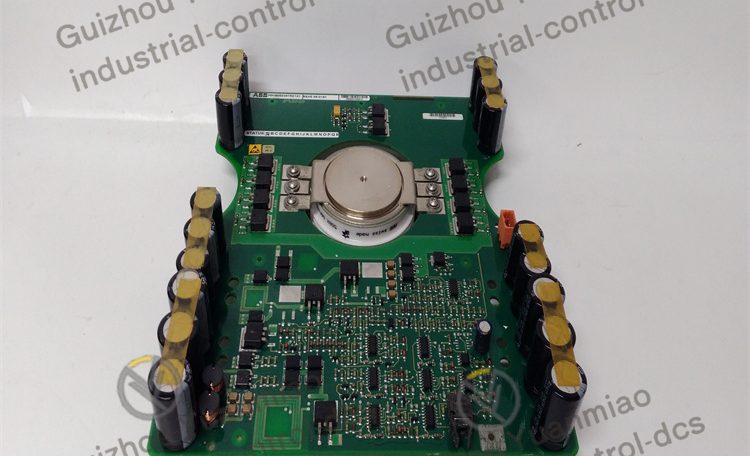
Summary: Core Impact of Key Differences
Asymmetric IGCT breaks through the limitations of ordinary thyristors in “semi-controlled, slow switching, and symmetrical voltage withstand” through fully controlled characteristics, asymmetric voltage withstand design, and integrated structure, making it more adaptable to the needs of modern power electronic systems for high frequency, high efficiency, and intelligence. Ordinary thyristors, with their mature, low-cost, and high voltage withstand characteristics, still play a role in traditional low-frequency, large-capacity scenarios. The choice between the two is essentially a trade-off between “control flexibility and scenario adaptability”.
Reviews
There are no reviews yet.