

Description
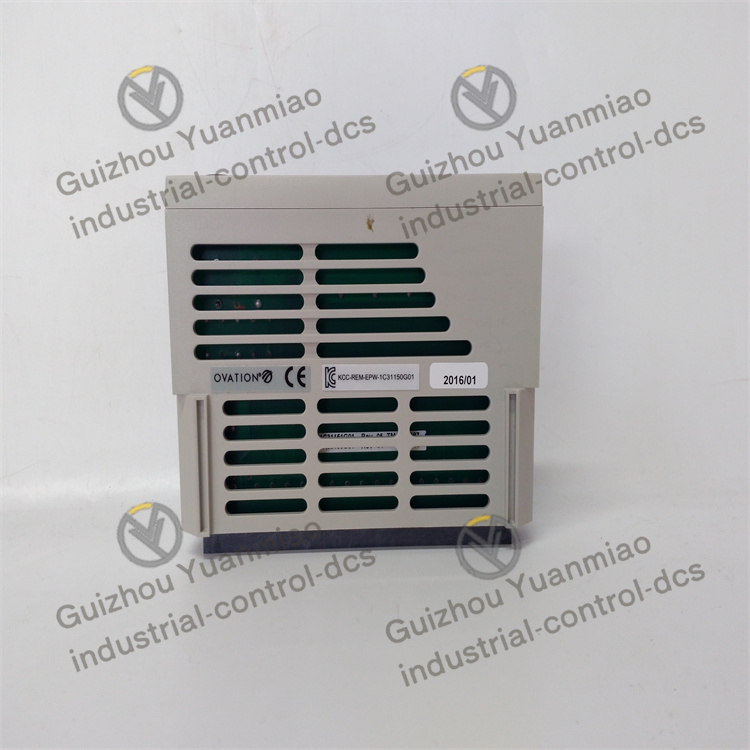
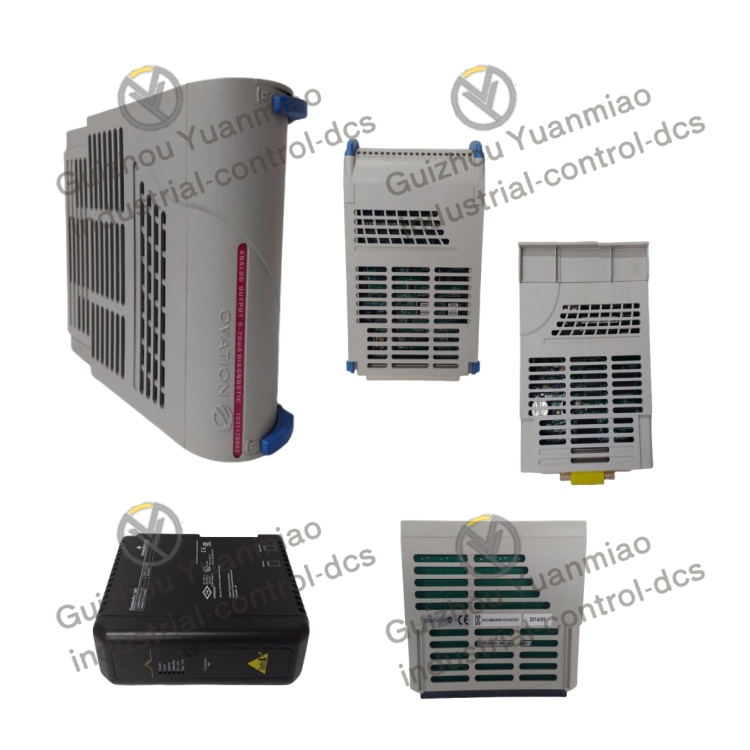
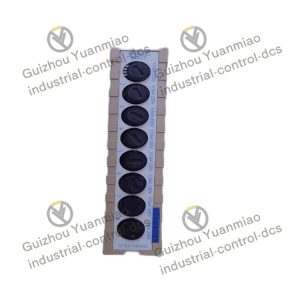
Emerson 1C31150G02 DCS Digital Output module
Basic functions
Digital signal output
Convert the digital signals of the control system (such as logic 0/1) into physical switch quantities for output to control the on-off state of external devices.
It supports two types: dry contact output (relay contact) and wet contact output (solid-state relay/transistor output).
Channel configuration
Number of channels: Usually 8 or 16 independent output channels, capable of simultaneously controlling multiple devices.
Channel isolation: Electrical isolation between channels (≥1000Vrms) to prevent signal interference and enhance reliability.
Output type
Relay output: Suitable for high-current loads (such as contactors, solenoid valves), and supports AC/DC mixed loads.
Solid state relay output: Fast response speed (≤1ms), suitable for high-frequency switching scenarios (such as pulse control).
Core characteristics
High-reliability design
Fail-safe mode: Supports presetting the output state in case of a fault (such as maintaining the final value, forced power-off) to ensure system safety.
Redundancy support: It can be configured as a redundant output mode, with automatic switching between the primary and backup channels to avoid single point of failure.
Flexible output configuration
Output logic is programmable: Supports high-level effective or low-level effective configuration to meet the requirements of different devices.
Overload protection: Built-in overcurrent and overvoltage protection circuits to prevent output short circuits from damaging the module.
Rapid response capability
Relay output response time: ≤10ms, meeting the requirements of most industrial control.
Solid-state relay output response time: ≤1ms, suitable for high-speed control scenarios (such as stepper motor drive).
Self-diagnosis and monitoring
Status feedback: Real-time monitoring of the output channel status (on/off), supporting fault alarm.
Life prediction: For relay output, it provides contact wear prediction function and indicates maintenance timing.
Environmental adaptability
Wide temperature range operation: -40°C to +85°C, suitable for harsh industrial environments.
Vibration and shock resistance: Meeting industrial-grade standards, resistant to vibration and shock, reducing mechanical failures.
Reviews
There are no reviews yet.