

Description
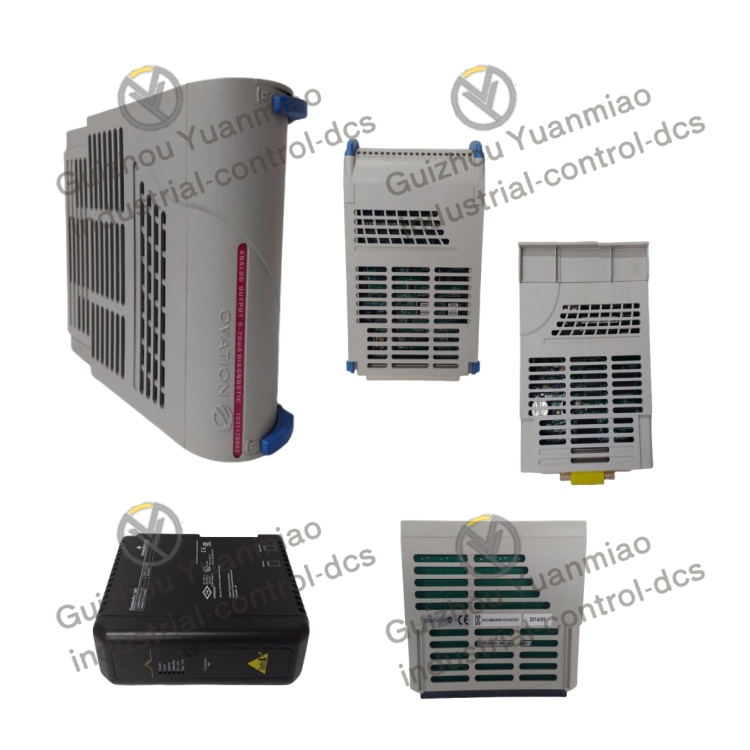
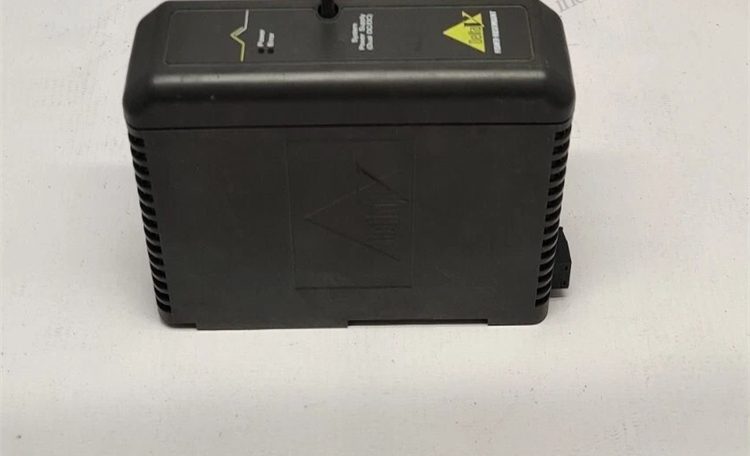
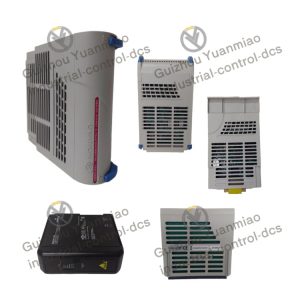
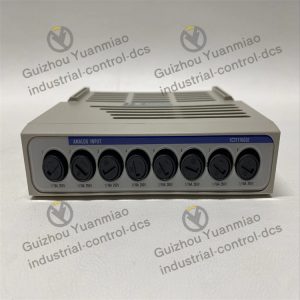
Emerson CE3008 Programmable Logic Controller Module
Working Principle
Its working principle is based on the scanning mode of PLC, which mainly includes three stages: input sampling, user program execution, and output refreshing. Completing these three stages is called a scanning cycle. During the entire operation period, the CPU of the PLC will repeat the above three stages at a certain scanning speed. The details are as follows:
Its working principle is based on the scanning mode of PLC, which mainly includes three stages: input sampling, user program execution, and output refreshing. Completing these three stages is called a scanning cycle. During the entire operation period, the CPU of the PLC will repeat the above three stages at a certain scanning speed. The details are as follows:
Input Sampling Stage: The CE3008 module sequentially reads all input states and data through scanning and stores them in the input image register. At this time, the content in the input image register will change with the state change of the external input circuit.
User Program Execution Stage: The module starts from the first instruction of the user program and scans and executes the user program in the order from top to bottom and left to right. During the scanning process, it will perform calculations according to the logical relationship set in the program based on the data in the input image register and the state of other soft components, and store the calculation results in the corresponding soft component image register.
Output Refreshing Stage: After the execution of the user program is completed, the module will refresh the data in the output image register to the output latch, and then the output latch will drive the external load, thereby realizing the control of external equipment.
Functional Features
Powerful Control Capability: When it belongs to a programmable logic controller (PLC), it can accurately control parameters such as temperature, pressure, and speed in the industrial production process to complete complex control tasks; as a servo controller, it can precisely control the speed, position, and torque of the servo motor to realize complex multi-axis linkage movement.
Powerful Control Capability: When it belongs to a programmable logic controller (PLC), it can accurately control parameters such as temperature, pressure, and speed in the industrial production process to complete complex control tasks; as a servo controller, it can precisely control the speed, position, and torque of the servo motor to realize complex multi-axis linkage movement.
Multiple Input and Output Interfaces: It supports multiple analog and digital inputs/outputs, which can be flexibly configured to meet the connection needs of different equipment and systems. For example, it can connect analog input devices such as temperature sensors and pressure sensors, as well as control digital output devices such as motors and valves.
Rich Communication Protocols: It supports various communication protocols such as EtherCAT, CANopen, and Modbus, facilitating communication with other devices such as upper computers, touch screens, and frequency converters, and realizing system integration and remote monitoring.
High Precision and High Reliability: It adopts industrial-grade components, has high reliability, can operate stably in harsh industrial environments, and can achieve high-precision control to ensure the accuracy and stability of the production process.
Flexible Programming and Configuration: It uses simple programming languages such as ladder diagrams, logic diagrams, or statement lists, without deep computer knowledge. The system development cycle is short, and the program can be modified online, which is convenient for debugging and changing control schemes.
Technical Parameters
Power Requirements: Usually provided by the system power supply through a 2-wide power supply/controller bracket, protected by a non-replaceable 3.0A fuse, with a typical power consumption of 5.0 watts and a maximum power consumption of 7.0 watts.
Power Requirements: Usually provided by the system power supply through a 2-wide power supply/controller bracket, protected by a non-replaceable 3.0A fuse, with a typical power consumption of 5.0 watts and a maximum power consumption of 7.0 watts.
Storage Capacity: Generally, it has 48MB of indoor storage space.
Working Environment: The operating temperature range is -40℃ to 70℃, the storage temperature range is -40℃ to 85℃, and it can work at 5% to 95% relative humidity without condensation.
Control Network: Equipped with a main control network and a redundant control network, both using 8-pin RJ-45 connectors to ensure the stability and reliability of network communication.
Application Fields
Industrial Automation: In scenarios such as robot control, production line automation, and packaging machinery control, it can realize precise control and collaborative work of equipment, improving production efficiency and product quality.
Industrial Automation: In scenarios such as robot control, production line automation, and packaging machinery control, it can realize precise control and collaborative work of equipment, improving production efficiency and product quality.
Semiconductor Equipment: Used in wafer transmission, testing equipment, etc., it can meet the requirements of high-precision motion control and position control in the semiconductor manufacturing process.
Electronic Manufacturing: In equipment such as SMT placement machines and automated assembly lines, it can precisely control the placement position of components and the assembly process, improving the production precision and consistency of electronic products.
Machine Tool Processing: Suitable for CNC machine tools, machining centers, etc., it can realize precise control of machine tool cutters, ensuring processing accuracy and surface quality.
Reviews
There are no reviews yet.