

Description
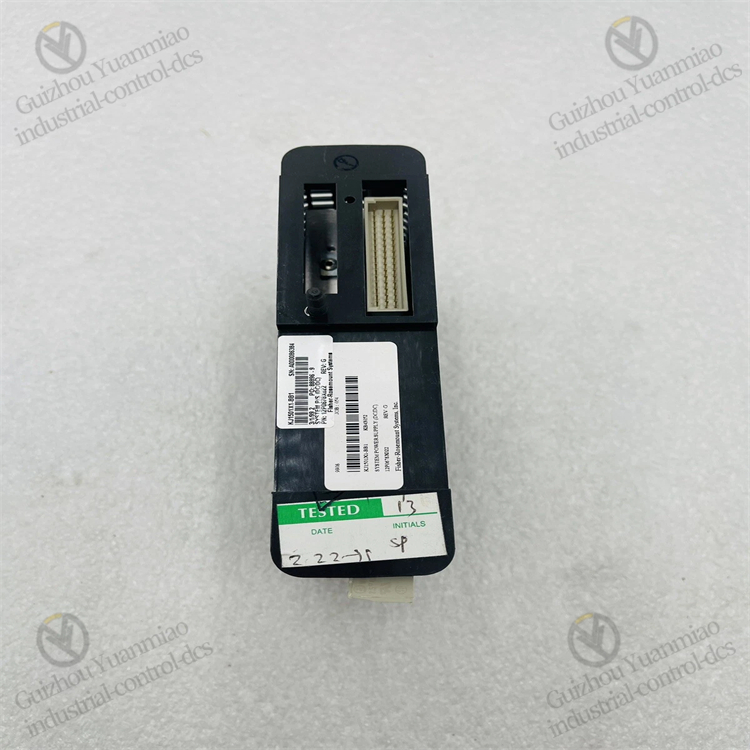
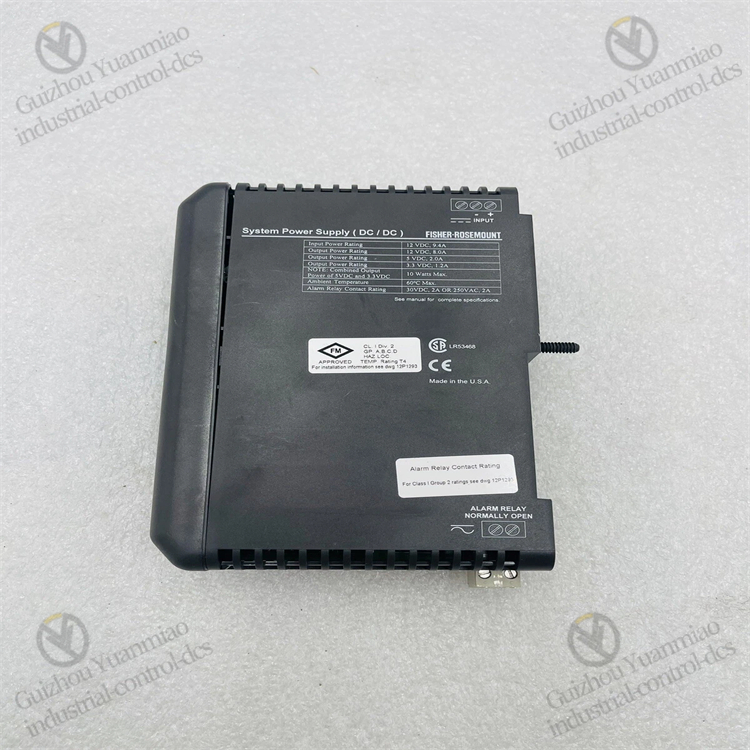
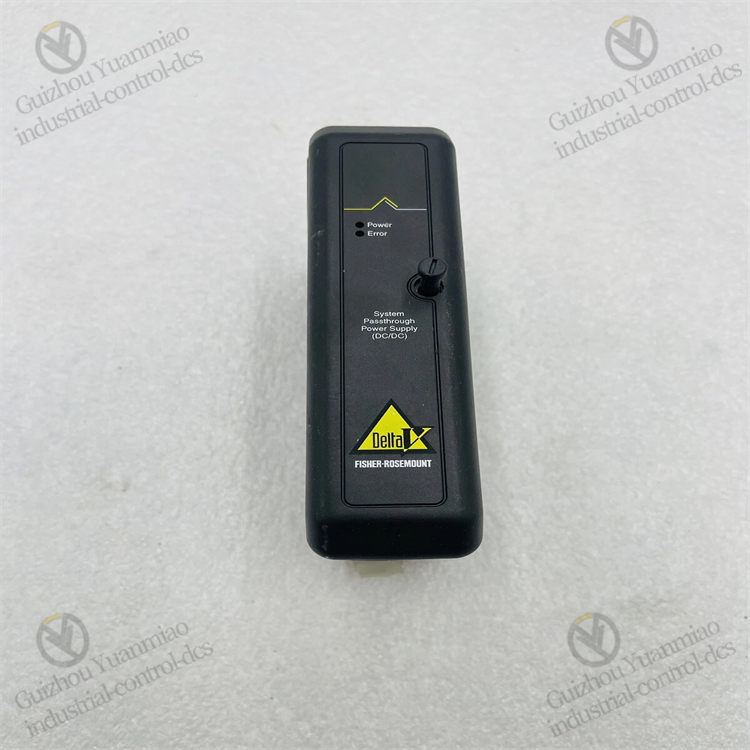
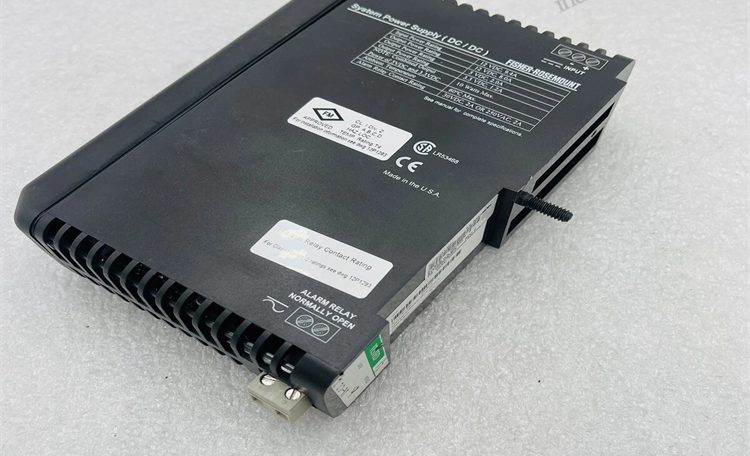
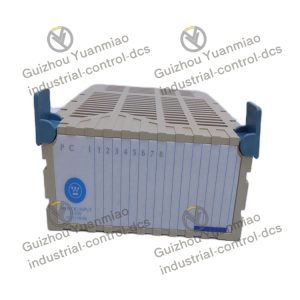
Emerson KJ1501X1-BB2 Power Module
As a power module in the DeltaV series, Emerson KJ1501X1-BB2 operates based on high-frequency switching power supply technology, achieving stable power supply through multi-stage electrical energy conversion and precise control. The following is a detailed introduction to its working principle:
-
Input Stage Processing
EMI Filtering: The module first eliminates electromagnetic interference (EMI) from the power grid through common-mode and differential-mode filters, while preventing interference generated by the module itself from feeding back into the power grid.
Rectification and Filtering:
A full-bridge rectifier is used to convert the 120/240VAC input into a pulsating DC voltage (approximately 170-340VDC).
Large-capacity electrolytic capacitors smooth the rectified voltage to form a stable DC bus voltage. -
DC-DC Conversion Core
Half-Bridge Topology:
The KJ1501X1-BB2 adopts a half-bridge conversion circuit, consisting of two power MOSFET switches (or IGBTs) and a high-frequency transformer.
The control circuit drives the switches to conduct alternately through PWM (Pulse Width Modulation) technology, chopping the DC bus voltage into high-frequency square wave signals (usually 50-200kHz).
High-Frequency Transformer Isolation:
The transformer converts the high-voltage, high-frequency signal on the primary side into a low-voltage signal on the secondary side and provides electrical isolation to ensure safety.
The turns ratio of the transformer determines the basic ratio of the output voltage. -
Output Rectification and Voltage Regulation
Synchronous Rectification Technology:
The secondary side uses synchronous rectification MOSFETs instead of traditional diodes to reduce rectification losses and improve efficiency (typically >90%).
The rectified pulsating DC passes through an LC filter network to eliminate high-frequency ripples and output a smooth 24VDC.
Voltage Regulation Control:
The output voltage is sampled through a precision voltage divider circuit and compared with a reference voltage.
The error amplifier feeds the deviation signal back to the PWM controller, dynamically adjusting the conduction time (duty cycle) of the switches to achieve voltage regulation (usually with an accuracy of ±1%). -
Monitoring and Protection System
Feedback Control Loop:
Optocoupler isolation feedback is used to ensure signal isolation between the primary and secondary sides.
The control chip responds to load changes and input voltage fluctuations by adjusting the PWM duty cycle.
Multiple Protection Mechanisms:
Overvoltage Protection (OVP): When the output voltage exceeds the threshold, the switch drive is immediately cut off to prevent damage to the load.
Overcurrent Protection (OCP): Limits the maximum output power by detecting the output current or the primary current of the transformer.
Short-Circuit Protection (SCP): Enters hiccup mode (intermittent operation) in case of output short circuit to avoid component overheating.
Over-Temperature Protection (OTP): A built-in thermistor monitors the temperature, and automatically reduces power or shuts down when the temperature exceeds 100°C. -
Redundancy and Hot-Swap Support
Parallel Current Sharing Technology:
Supports parallel power supply of multiple modules, ensuring that each module shares the load current through a current-sharing circuit to achieve N+1 redundancy.
The current-sharing accuracy is usually within ±5% to improve system reliability.
Hot-Swap Interface:
Built-in soft-start circuit and anti-reverse diode allow safe insertion and removal of the module in a live system.
Reliable connection of signals and power is achieved through a backplane connector during insertion and removal. -
Efficiency Optimization Design
Soft-Switching Technology:
Adopts Zero Voltage Switching (ZVS) or Zero Current Switching (ZCS) technology to reduce switching losses.
Improves light-load efficiency and reduces standby power consumption.
Low-Loss Materials:
The high-frequency transformer uses low-loss ferrite cores to reduce hysteresis losses.
The PCB adopts a thick copper foil design to reduce conductor resistance. -
Typical Application Scenarios
Industrial Automation: Provides intrinsic safety power for I/O modules, controllers, and field instruments of the DeltaV control system.
Process Control: In fields such as chemical industry and oil refining, provides redundant power supplies that meet SIL 2/3 standards for equipment in explosive areas.
SCADA Systems: Ensures uninterrupted power supply for remote monitoring equipment, supporting stable operation of communication modules and sensors. -
Speculated Differences from KJ1501X1-BB1
Power Density: BB2 may adopt a more advanced topology, with a smaller size or higher power.
Communication Function: May integrate Modbus or HART interfaces to support remote monitoring of power status.
Redundancy Mode: Supports higher-level redundancy configurations (such as 2N redundancy).
Working Process Diagram
plaintext
AC Input → EMI Filtering → Rectification and Filtering → DC Bus → Half-Bridge PWM Control → High-Frequency Transformer → Synchronous Rectification → LC Filtering → Regulated Output
↑ │
│ ↓
└────────── Protection Circuit ← Feedback Control ← Output Sampling ──┘
plaintext
AC Input → EMI Filtering → Rectification and Filtering → DC Bus → Half-Bridge PWM Control → High-Frequency Transformer → Synchronous Rectification → LC Filtering → Regulated Output
↑ │
│ ↓
└────────── Protection Circuit ← Feedback Control ← Output Sampling ──┘
Technical Advantages
Wide Input Range: Adapts to different global power grid standards, reducing power adaptation costs.
High Reliability: Mean Time Between Failures (MTBF) is usually over 500,000 hours.
EMC Compatibility: Complies with industrial-grade electromagnetic compatibility standards, with strong anti-interference ability.
Wide Input Range: Adapts to different global power grid standards, reducing power adaptation costs.
High Reliability: Mean Time Between Failures (MTBF) is usually over 500,000 hours.
EMC Compatibility: Complies with industrial-grade electromagnetic compatibility standards, with strong anti-interference ability.
Reviews
There are no reviews yet.