


Description
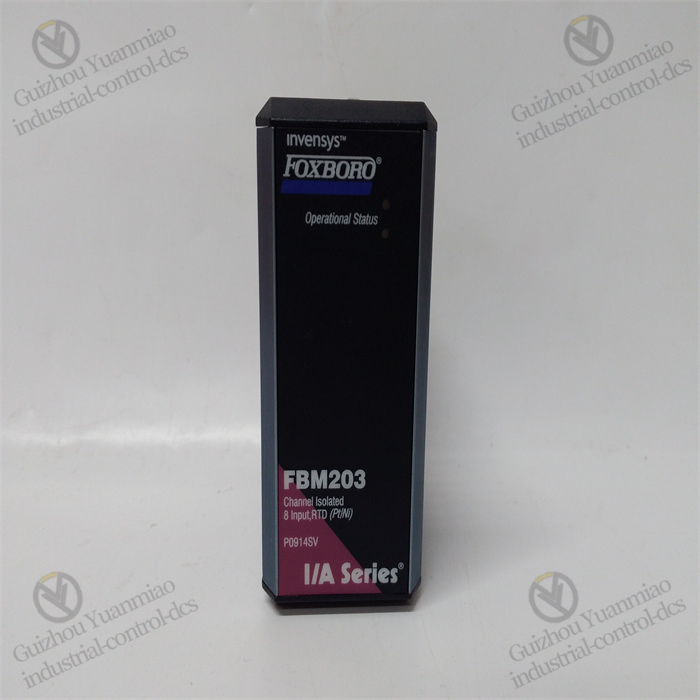
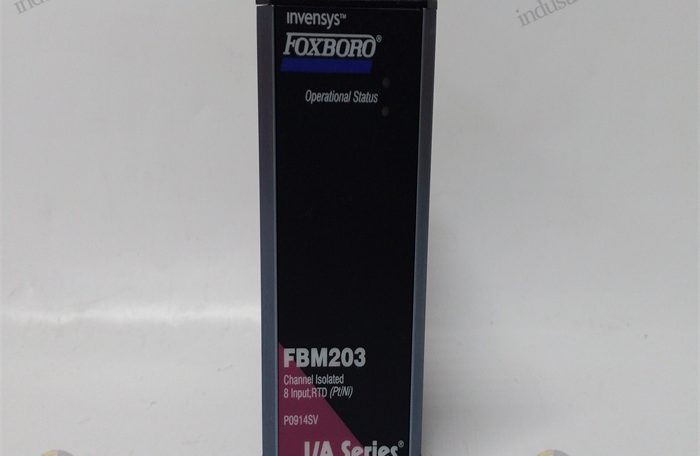
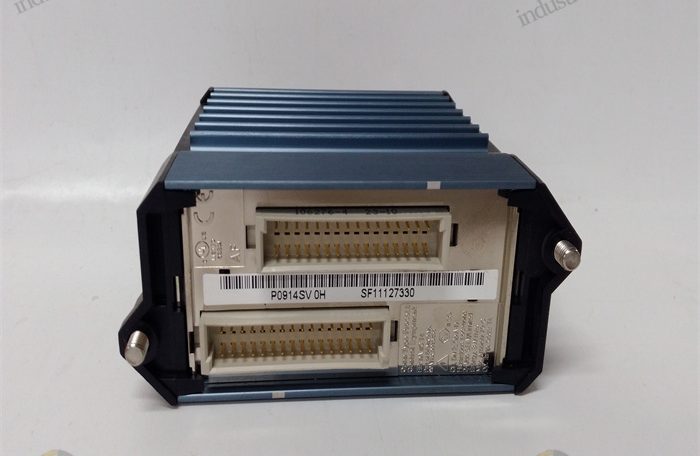
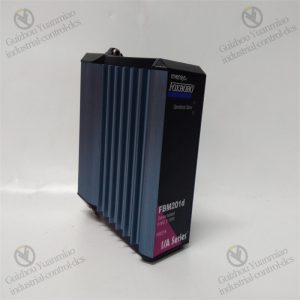
FOXBORO FBM203 Thermal Resistance Analog Input Module
FOXBORO FBM203 is an analog input module specifically designed for Resistance Temperature Detector (RTD) signals. It is mainly used for high-precision measurement of physical quantities such as temperature in industrial control systems and is widely applied in fields requiring accurate temperature monitoring, such as chemical industry, petroleum, and electric power. Its working principle and core characteristics are as follows:
I. Core Functions and Design Objectives
The core function of the FBM203 module is to receive the resistance signals output by on-site RTD sensors, convert them into digital signals through signal conditioning, conversion, and processing, and transmit them to the DCS (Distributed Control System) host to realize real-time monitoring of parameters such as temperature.
The core function of the FBM203 module is to receive the resistance signals output by on-site RTD sensors, convert them into digital signals through signal conditioning, conversion, and processing, and transmit them to the DCS (Distributed Control System) host to realize real-time monitoring of parameters such as temperature.
- Compatible RTD Types: Supports common platinum resistors (e.g., Pt100, Pt1000), copper resistors (Cu50, Cu100), etc. It can be configured through software to match different types of RTDs.
- Multi-channel Design: Usually includes 8 independent input channels, which can collect RTD signals from multiple measuring points simultaneously, improving system integration efficiency.
II. Working Principle and Key Processes
- RTD Signal Acquisition
The resistance value of an RTD changes linearly or approximately linearly with temperature (for example, the resistance value of Pt100 is 100Ω at 0℃, and the resistance increases by about 0.385Ω for every 1℃ rise in temperature).
- The FBM203 supplies power to the RTD through a precision constant current source or constant voltage source, converting the resistance change into a tiny voltage signal (such as mV level).
- Each channel is equipped with an electrical isolation function (usually photoelectric isolation or magnetic isolation) to avoid inter-channel interference, ground loop noise, and external electromagnetic interference (EMI), ensuring the stability of the original signal.
- Signal Conditioning
Since the voltage signal output by the RTD is weak and may be affected by wire resistance, the module needs preprocessing:
- Wire Resistance Compensation: Supports 2-wire, 3-wire, or 4-wire RTD connections. It eliminates the influence of wire resistance on measurement through hardware or software algorithms (3-wire/4-wire can effectively compensate for wire resistance errors).
- Filtering Processing: Built-in RC low-pass filter or digital filter to suppress high-frequency noise (such as power frequency interference, electromagnetic pulses) and smooth signal fluctuations.
- Signal Amplification: Precisely amplifies the weak mV-level signal to meet the input range requirements of subsequent A/D conversion.
- A/D Conversion (Analog-to-Digital Conversion)
The conditioned analog signal is converted into a digital signal through a high-precision A/D converter:
- Conversion Technology: Adopts Sigma-Delta (Σ-Δ) modulation technology. Through oversampling (much higher than the Nyquist frequency) and digital filtering, the conversion accuracy is improved (usually 16-24 bits of effective resolution).
- Accuracy Index: The typical measurement accuracy is ±0.05% FS (full scale), and the temperature drift coefficient is low (such as ±50ppm/℃), ensuring stability under temperature changes in industrial environments.
- Digital Signal Processing
The converted digital signal is further optimized by the module’s built-in processor:
- Linearization Compensation: Mathematically corrects the non-linear characteristics of the RTD itself (such as slight non-linearity in the high-temperature segment) to improve temperature calculation accuracy.
- Temperature Conversion: According to the resistance-temperature curve of the RTD type (such as Pt100), the resistance value is directly converted into a temperature value (℃ or ℉) and output in engineering units.
- Calibration Compensation: Applies factory-preset calibration parameters (zero point and range correction) to eliminate hardware errors.
- Alarm Monitoring: Real-time comparison of the measured value with the preset high and low temperature thresholds triggers an alarm state (such as over-temperature alarm) and feeds it back to the DCS through communication.
- Data Communication and Integration
The processed digital signal is transmitted through the bus protocol between the FBM module and the DCS system (such as FOXBORO I/A Series system bus):
- Redundancy Design: Supports dual-bus redundant communication to ensure the reliability of data transmission and avoid data interruption caused by a single point of failure.
- Status Feedback: The module uploads its operating status in real-time (such as channel failure, power supply abnormality), facilitating system diagnosis and maintenance.
- Remote Configuration: Channel parameters (such as RTD type, filtering time, alarm threshold) can be set remotely through DCS upper computer software without on-site manual adjustment.
- Power Supply and Protection Mechanism
- Isolated Power Supply: Uses an isolated DC/DC converter to isolate the module power supply from the input signal and communication bus, preventing power supply interference from affecting measurement accuracy.
- Overvoltage/Overcurrent Protection: Each channel has a built-in current-limiting resistor and transient suppression components (such as TVS tubes) to prevent damage to the module from on-site surge voltage or overcurrent.
III. Technical Parameters (Typical Values)
| Parameter | Description |
|---|---|
| Number of Input Channels | 8 independent channels |
| Compatible RTD Types | Pt100, Pt1000, Cu50, Cu100, etc. (configurable) |
| Measurement Accuracy | ±0.05% FS (full scale) |
| Temperature Drift | ±50ppm/℃ (typical value) |
| Channel Isolation | Electrical isolation between channels and to ground (≥1000V DC) |
| A/D Conversion Resolution | 16-24 bits (effective bits) |
| Sampling Rate | Configurable (e.g., 10-100 times/second) |
| Communication Interface | Compatible with FOXBORO I/A Series system bus |
| Operating Ambient Temperature | -40℃ ~ 70℃ (industrial grade) |
IV. Application Scenarios
The FBM203 module is mainly used in industrial scenarios that rely on RTD for temperature measurement, such as:
The FBM203 module is mainly used in industrial scenarios that rely on RTD for temperature measurement, such as:
- Temperature monitoring of chemical reactors and pipelines;
- Winding temperature measurement of transformers and motors in power systems;
- Constant temperature control processes in food processing and pharmaceutical industries;
- Temperature monitoring of heat treatment furnaces in the metallurgical industry, etc.
Through high-precision RTD signal acquisition and processing, it provides reliable temperature data for the DCS system, ensuring the stability and safety of industrial production processes.

Reviews
There are no reviews yet.