


Description
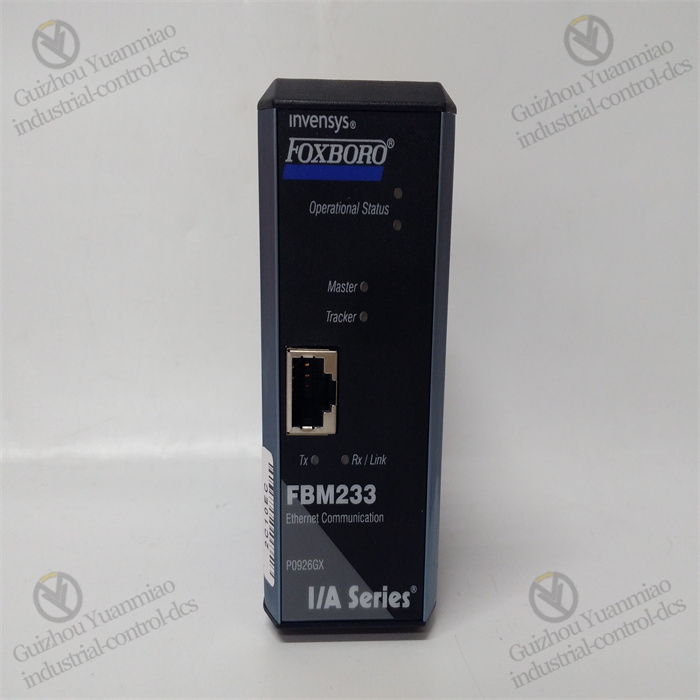
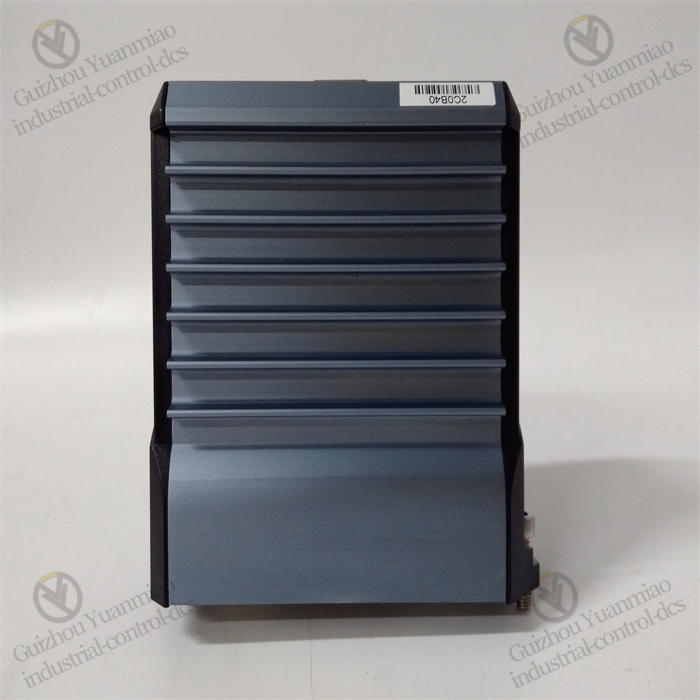
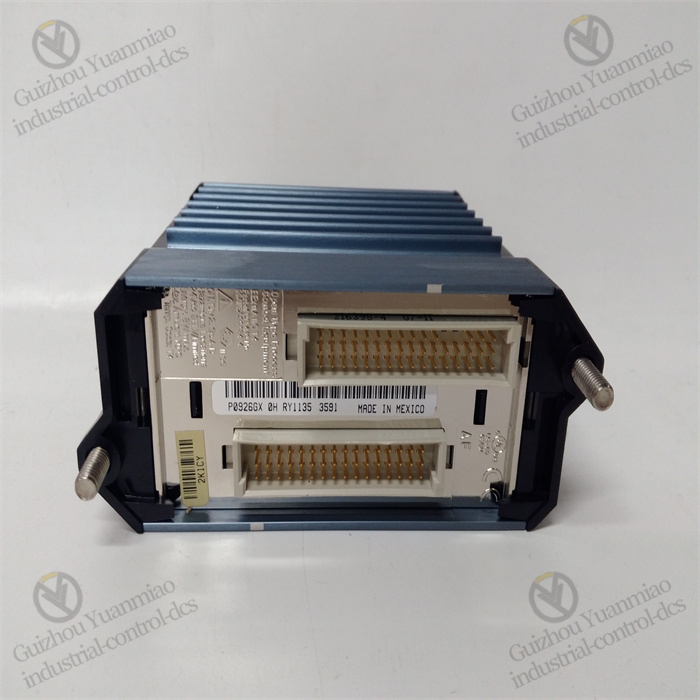
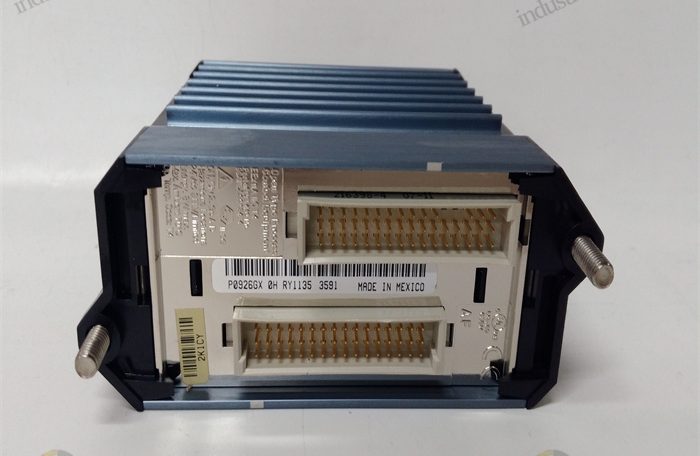
Foxboro FBM233 fieldbus module
Foxboro FBM233 is an important fieldbus module in the Foxboro I/A Series control system, mainly used to realize integration and communication with Foundation Fieldbus (FF) devices. Its working principle revolves around the execution of the Foundation Fieldbus protocol, data interaction with field devices, information transmission with the control system, and reliability assurance, which can be specifically divided into the following key links:
-
Communication Core Based on Foundation Fieldbus Protocol
FBM233 is a module specially designed for the Foundation Fieldbus H1 protocol (H1 is a low-speed bus used in the field device layer of the Foundation Fieldbus, with a transmission rate of 31.25 kbps, supporting point-to-point or bus-type connections). Its core function is to act as a “protocol converter” and “communication hub” between the control system and FF field devices:
It complies with FF protocol specifications, supports device description (DD) and function block standards, and can understand and execute communication instructions of FF devices (such as data collection, parameter configuration, diagnostic information reading, etc.).
For example, when connected to an FF intelligent transmitter (such as a pressure or temperature transmitter), FBM233 can read the function block data of the transmitter (such as the measured value, range, alarm status of the AI function block) through the H1 bus, and can also issue control instructions such as set values to the PID function block of the device. -
Connection and Data Interaction with Field Devices
FBM233 connects to on-site FF devices (such as transmitters, actuators, valve positioners, etc.) through the Foundation Fieldbus H1 interface (usually a redundantly designed H1 port) to realize two-way data communication:
- Data collection: According to the preset scanning cycle (which can be set through the configuration tool), the module reads process data (such as analog quantities like temperature, pressure, flow, or digital quantities like device operating status) from the function blocks of FF devices in real time, and collects diagnostic information of the devices (such as fault codes, maintenance prompts, communication quality, etc.) at the same time.
- Instruction issuance: It receives control instructions from the control system (such as adjusting valve opening, modifying transmitter range), converts the instructions into messages in FF protocol format through the H1 bus, and sends them to the corresponding function blocks (such as AO function blocks) of the target device to drive the device to perform actions.
- Support for bus power supply: Some FF devices can obtain working power (24V DC) from FBM233 through the H1 bus, eliminating the need for additional power lines for the devices and simplifying on-site wiring.
- Information Interaction with I/A Series Control System
FBM233 is connected to the control processor (such as CP60 series) or communication module of the I/A Series control system through Foxboro’s dedicated Module Bus to realize a closed loop of data upload and instruction reception:
- Data upload: The data collected and processed from FF devices (process values, diagnostic information, device status, etc.) is transmitted to the database of the control system (such as Historical Collection or Operator Station of I/A Series) through the Module Bus for operators to monitor, record history, handle alarms, or perform logical control.
- Instruction reception: Control instructions generated by the control strategy of the control system (such as PID adjustment, logical interlocking) are issued to FBM233 through the Module Bus, and then forwarded by the module to the corresponding FF devices to achieve precise control of the on-site process.
-
Function Block Management and Control Function Support
The core of Foundation Fieldbus is the concept of “function blocks”. FBM233 supports the management and scheduling of function blocks of field devices, which is the key to realizing distributed control:
The module can configure and activate standard function blocks (such as AI, AO, PID, DI, DO, etc.) in FF devices, and coordinate data interaction between function blocks of multiple devices (such as connecting the output of the AI function block of the transmitter to the input of the AO function block of the valve positioner to form a control loop).
It supports the “Link Active Scheduler (LAS)” function: On the FF bus, FBM233 can act as a LAS to manage bus communication, coordinate the communication priority of multiple devices on the bus, avoid data conflicts, and ensure real-time performance (such as prioritizing the transmission of process control data, then diagnostic data). -
Redundancy and Reliability Assurance
To meet the high reliability requirements of industrial sites, FBM233 has enhanced redundancy and anti-interference capabilities in hardware and communication design:
- Communication redundancy: It supports redundant connections of the H1 bus (such as two H1 buses A and B). If one bus fails, the module can automatically switch to the other bus to ensure uninterrupted communication with field devices.
- Module-level redundancy: It can form a redundant configuration with another FBM233. Through the redundancy management mechanism of the control system, seamless switching between the main and standby modules is realized (for example, when the main module fails, the standby module immediately takes over the communication function).
- Industrial-grade design: It adopts anti-electromagnetic interference (EMI) circuits and has a wide temperature operating range (usually -40°C ~ +70°C), complies with industrial standards such as IEC 61010, and can operate stably in harsh on-site environments such as chemical, electric power, and metallurgical industries.
- Configuration and Management
The parameter configuration and status monitoring of FBM233 are completed through the dedicated configuration tools of Foxboro I/A Series (such as Control Builder or Field Device Manager):
The configuration content includes: H1 bus parameters (communication rate, terminal resistance, redundancy mode), function block mapping of FF devices (associating device function blocks with control system database points), LAS schedule settings, data scanning cycle, etc.
It supports online diagnosis: Through the configuration tool, the operating status of the module (such as communication traffic, bus voltage, device connection status) and the diagnostic information of FF devices (such as fault codes, signal quality) can be viewed in real time, facilitating quick location of communication faults or device abnormalities.
Summary
The essence of FBM233’s working principle is to act as a “bridge” between Foundation Fieldbus field devices and the Foxboro control system: it realizes process data collection, control instruction issuance, and function block management of on-site intelligent devices by executing the FF H1 protocol; it interacts with the control system through the Module Bus to integrate scattered field device information into the control system. At the same time, relying on redundant design and industrial-grade reliability, it ensures the stable operation of the fieldbus network, and ultimately supports precise monitoring and distributed control of industrial processes.
The essence of FBM233’s working principle is to act as a “bridge” between Foundation Fieldbus field devices and the Foxboro control system: it realizes process data collection, control instruction issuance, and function block management of on-site intelligent devices by executing the FF H1 protocol; it interacts with the control system through the Module Bus to integrate scattered field device information into the control system. At the same time, relying on redundant design and industrial-grade reliability, it ensures the stable operation of the fieldbus network, and ultimately supports precise monitoring and distributed control of industrial processes.

Reviews
There are no reviews yet.