


Description
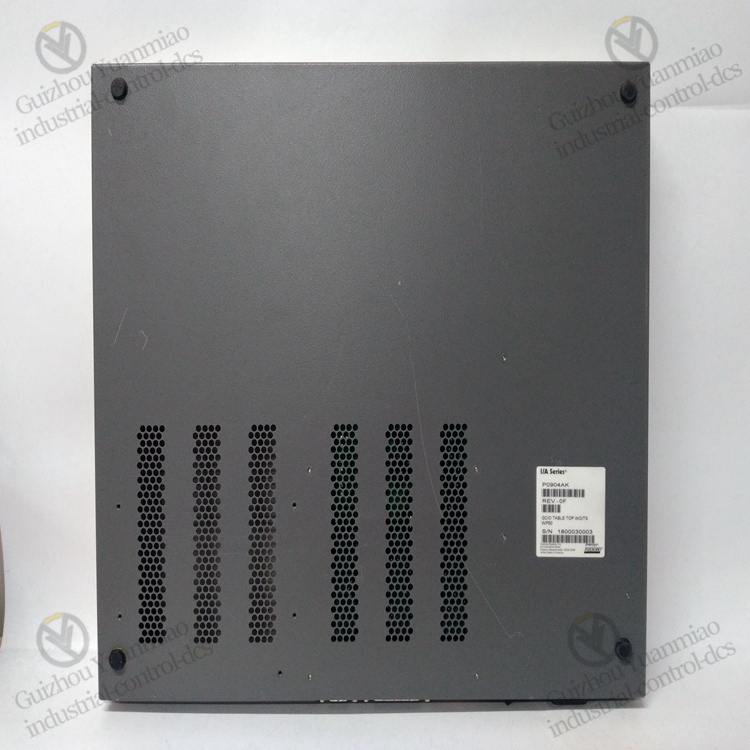
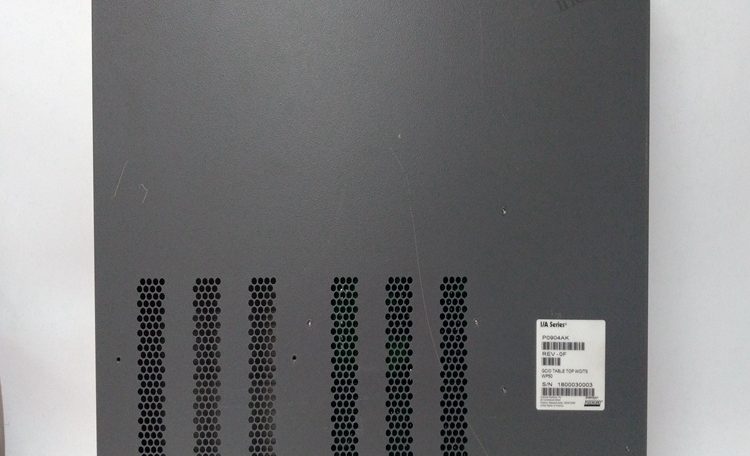
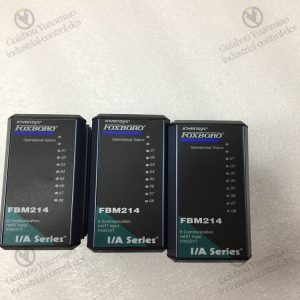
Foxboro P0904AK I/A Series Control Processor
As a core component of the distributed control system (DCS), the P0904AK control processor of the Foxboro I/A Series operates based on real-time monitoring, data processing, control decision-making, and command execution in industrial processes. Through collaboration with other devices in the system, it achieves precise and stable control over industrial production processes. The following is a detailed analysis of its specific working principles:
I. Data Acquisition and Input Processing
Signal Reception
The P0904AK control processor receives various signals from industrial sites through I/O interfaces (such as connecting on-site sensors, transmitters, etc.), including analog signals of process variables like temperature, pressure, flow, and liquid level (e.g., 4-20mA current signals, 0-10V voltage signals), as well as digital signals such as equipment switch status and alarm signals.
For example, in chemical production, it can receive signals from temperature sensors of reaction kettles and switch status signals of valves.
Signal Reception
The P0904AK control processor receives various signals from industrial sites through I/O interfaces (such as connecting on-site sensors, transmitters, etc.), including analog signals of process variables like temperature, pressure, flow, and liquid level (e.g., 4-20mA current signals, 0-10V voltage signals), as well as digital signals such as equipment switch status and alarm signals.
For example, in chemical production, it can receive signals from temperature sensors of reaction kettles and switch status signals of valves.
Signal Conversion and Preprocessing
For the received analog signals, the processor performs A/D (analog-to-digital) conversion to convert continuous analog signals into digital signals; for digital signals, it directly conducts logical recognition. At the same time, it performs preprocessing such as filtering, linearization, and range conversion on the signals to remove noise interference and ensure data accuracy.
For the received analog signals, the processor performs A/D (analog-to-digital) conversion to convert continuous analog signals into digital signals; for digital signals, it directly conducts logical recognition. At the same time, it performs preprocessing such as filtering, linearization, and range conversion on the signals to remove noise interference and ensure data accuracy.
II. Data Calculation and Control Decision-Making
Calculation Based on Preset Algorithms
The processor is equipped with a 32-bit RISC high-performance chip (with a main frequency of 1GHz), which can quickly call preset control algorithms (such as PID control, logic control, sequence control, proportional control, etc.) to perform real-time calculations on the preprocessed on-site data.
Taking PID control as an example, the processor compares the actual value collected on-site with the set target value, calculates the deviation, and automatically adjusts the output according to proportional, integral, and differential parameters to reduce the deviation and achieve stable control of process variables (such as maintaining the temperature of the reaction kettle at the set value).
Calculation Based on Preset Algorithms
The processor is equipped with a 32-bit RISC high-performance chip (with a main frequency of 1GHz), which can quickly call preset control algorithms (such as PID control, logic control, sequence control, proportional control, etc.) to perform real-time calculations on the preprocessed on-site data.
Taking PID control as an example, the processor compares the actual value collected on-site with the set target value, calculates the deviation, and automatically adjusts the output according to proportional, integral, and differential parameters to reduce the deviation and achieve stable control of process variables (such as maintaining the temperature of the reaction kettle at the set value).
Logic and Sequence Control
For complex industrial processes (such as the start-stop sequence of production lines and equipment linkage logic), the P0904AK can realize logical judgment and sequence control through programming methods such as ladder diagrams and function block diagrams (FBD). For example, in a water treatment system, according to the water quality detection results, it automatically judges and executes the equipment start sequence of “filtration → disinfection → transportation”.
For complex industrial processes (such as the start-stop sequence of production lines and equipment linkage logic), the P0904AK can realize logical judgment and sequence control through programming methods such as ladder diagrams and function block diagrams (FBD). For example, in a water treatment system, according to the water quality detection results, it automatically judges and executes the equipment start sequence of “filtration → disinfection → transportation”.
III. Output Control and Execution
Generation of Control Commands
Based on the calculation results, the processor generates corresponding control commands and sends them to actuators (such as valves, pumps, motors, etc.) through output interfaces.
Analog output: For example, outputting 4-20mA signals to control the opening of regulating valves to adjust the flow rate;
Digital output: For example, outputting switch signals to control the start-stop of motors and the opening-closing of valves.
Generation of Control Commands
Based on the calculation results, the processor generates corresponding control commands and sends them to actuators (such as valves, pumps, motors, etc.) through output interfaces.
Analog output: For example, outputting 4-20mA signals to control the opening of regulating valves to adjust the flow rate;
Digital output: For example, outputting switch signals to control the start-stop of motors and the opening-closing of valves.
Real-Time Response and Feedback
After the actuator acts, changes in the on-site status will be fed back to the processor through sensors again, forming closed-loop control. The processor continuously adjusts the output according to the feedback signals to ensure that the control effect meets expectations and avoids control deviations caused by external interference or equipment aging.
After the actuator acts, changes in the on-site status will be fed back to the processor through sensors again, forming closed-loop control. The processor continuously adjusts the output according to the feedback signals to ensure that the control effect meets expectations and avoids control deviations caused by external interference or equipment aging.
IV. Communication and Collaborative Work
Communication with Devices in the System
The P0904AK supports multiple communication protocols (such as Modbus RTU, Ethernet, OPC, etc.) and conducts data interaction with other components of the I/A Series DCS (such as I/O modules, operation stations, historical data servers, etc.) through RS-485 interfaces or Ethernet interfaces:
Sending real-time process data and equipment status to the operation station for operators to monitor;
Receiving manual control commands from the operation station (such as parameter modification, manual start-stop of equipment);
Collaborating with other processors or modules to realize distributed control (such as linkage control of multiple areas in large factories).
Communication with Devices in the System
The P0904AK supports multiple communication protocols (such as Modbus RTU, Ethernet, OPC, etc.) and conducts data interaction with other components of the I/A Series DCS (such as I/O modules, operation stations, historical data servers, etc.) through RS-485 interfaces or Ethernet interfaces:
Sending real-time process data and equipment status to the operation station for operators to monitor;
Receiving manual control commands from the operation station (such as parameter modification, manual start-stop of equipment);
Collaborating with other processors or modules to realize distributed control (such as linkage control of multiple areas in large factories).
Redundant Communication Guarantee
As a core component of the I/A Series, the P0904AK can cooperate with redundant communication modules (such as FBMSSW) to realize redundant backup of communication paths. When the main communication link fails, it automatically switches to the standby link to ensure uninterrupted data transmission and guarantee the continuity of the control process.
As a core component of the I/A Series, the P0904AK can cooperate with redundant communication modules (such as FBMSSW) to realize redundant backup of communication paths. When the main communication link fails, it automatically switches to the standby link to ensure uninterrupted data transmission and guarantee the continuity of the control process.

V. Diagnostic and Fault-Tolerant Functions
Real-Time Status Monitoring
The processor has a built-in diagnostic function, which can real-time monitor its own operating status (such as power supply, memory, communication interface) and the status of connected devices (such as sensor faults, actuator abnormalities), and prompt the fault location through indicator lights or system alarm information (sent to the operation station).
Real-Time Status Monitoring
The processor has a built-in diagnostic function, which can real-time monitor its own operating status (such as power supply, memory, communication interface) and the status of connected devices (such as sensor faults, actuator abnormalities), and prompt the fault location through indicator lights or system alarm information (sent to the operation station).
Redundant Design and Fault Tolerance
It supports redundant configuration of processors (main-standby switch). When the main processor fails, the standby processor can seamlessly take over the control tasks, avoiding system shutdown and improving the reliability of industrial production (especially suitable for continuous production scenarios such as petroleum and chemical industries).
It supports redundant configuration of processors (main-standby switch). When the main processor fails, the standby processor can seamlessly take over the control tasks, avoiding system shutdown and improving the reliability of industrial production (especially suitable for continuous production scenarios such as petroleum and chemical industries).
Summary
The P0904AK control processor, through the closed-loop process of “data acquisition → operation decision-making → output control → feedback adjustment”, combined with high-performance hardware, flexible control algorithms, and reliable communication capabilities, plays the role of “brain” in the Foxboro I/A Series DCS, providing core control support for the stable, efficient, and safe operation of industrial processes. Its wide application in chemical, petroleum, electric power, and other fields is based on its adaptability to complex industrial environments and precise control capabilities.
The P0904AK control processor, through the closed-loop process of “data acquisition → operation decision-making → output control → feedback adjustment”, combined with high-performance hardware, flexible control algorithms, and reliable communication capabilities, plays the role of “brain” in the Foxboro I/A Series DCS, providing core control support for the stable, efficient, and safe operation of industrial processes. Its wide application in chemical, petroleum, electric power, and other fields is based on its adaptability to complex industrial environments and precise control capabilities.
Reviews
There are no reviews yet.