


Description
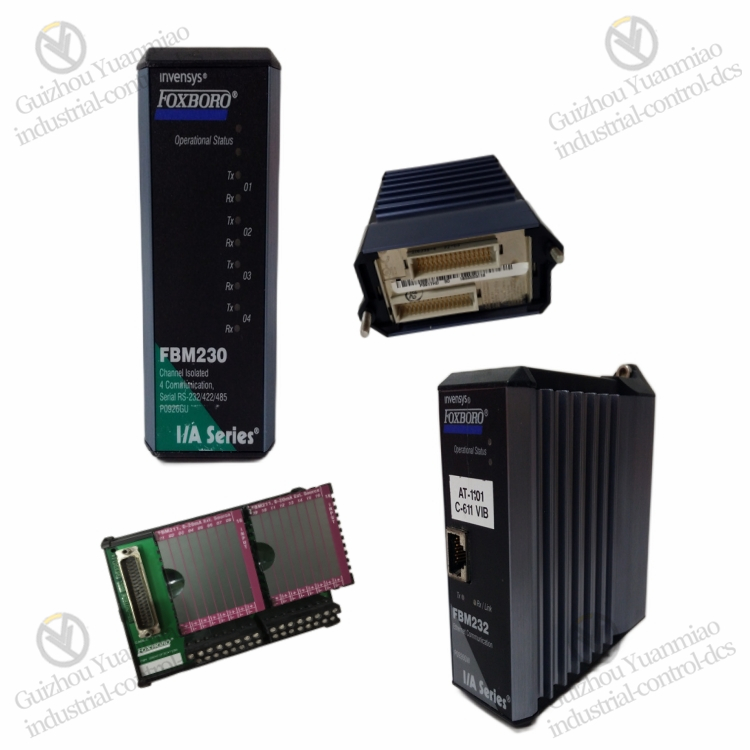
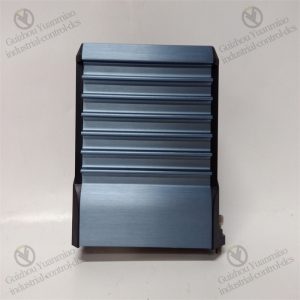
FOXBORO P0926GV FBM231 Field Device System Integration Module
FOXBORO’s (Foxboro, now part of Schneider Electric) P0926GV FBM231 is a field device system integration module specifically designed for industrial automation control systems. It is a key component of its I/A Series (Intelligent Automation Series) distributed control system. This module is primarily responsible for signal conversion, data transmission, and integration management between field devices and control systems, and is widely used in monitoring and control scenarios in process industries.
Working Principle
As a “bridge” between field devices and control systems, the FBM231 module’s core function is to realize on-site signal acquisition, processing, and communication with the upper-level control system:
- Signal Access: Receives analog signals (typically 4-20mA or 1-5V) from various on-site sensors (such as temperature, pressure, and flow sensors) or transmitters.
- Signal Conversion and Processing: Converts analog signals into digital signals via an internal high-precision A/D converter (analog-to-digital conversion), and performs filtering, linearization, and other processing to ensure data accuracy.
- Data Transmission: Transmits processed digital signals to controllers (e.g., CP60/CP70) through the dedicated bus of the FOXBORO I/A Series system (such as Fieldbus), while receiving configuration instructions or control signals from the controller.
- Status Monitoring: Equipped with built-in diagnostic functions, it can real-time monitor the operating status of the module itself and connected devices (such as disconnection, signal overrun, etc.), and feed fault information back to the control system for quick troubleshooting.
Functional Features
-
High Reliability
- Adopts industrial-grade hardware design, supports wide-temperature operating environments, and adapts to harsh industrial scenarios such as dust and vibration.
- Features channel isolation (e.g., signal-to-power isolation, inter-channel isolation) to effectively resist electromagnetic interference (EMI) and radio frequency interference (RFI), ensuring signal stability.
-
Flexible Signal Adaptation
- Supports multi-channel analog input (usually 8 or 16 channels) and is compatible with standard industrial signals such as 4-20mA and 1-5V, adapting to different types of field devices.
- Channel parameters (e.g., range, filter coefficient) can be flexibly configured via upper-level configuration software without hardware adjustments.
-
Powerful Diagnostic Capability
- Provides real-time self-diagnosis (e.g., power failure, A/D conversion error) and channel diagnosis (e.g., signal open circuit, over-range), with status feedback via indicator lights or communication interfaces.
- Supports online fault troubleshooting, reducing system downtime.
-
Seamless System Integration
- Specifically designed for the FOXBORO I/A Series distributed control system, it can be directly connected to the system bus, working collaboratively with components such as controllers and operation stations to achieve global data sharing.
- Supports redundant configurations (e.g., module redundancy, bus redundancy) to enhance system fault tolerance and ensure uninterrupted critical processes.
Technical Parameters
- Signal Type: Analog Input (AI), supporting 4-20mA, 1-5V DC, etc.
- Number of Channels: Typically 16 single-ended analog inputs (subject to specific models).
- Accuracy: ±0.1% of full scale (typical value), ensuring high-precision data acquisition.
- Isolation: Isolation between channels and between channels and the system, with an isolation voltage usually of 250V AC.
- Power Requirement: Usually 24V DC (with redundant power support).
- Operating Environment: Operating temperature range is generally -40°C to +70°C (wide-temperature models), humidity 5%-95% (non-condensing).
- Communication Interface: Compatible with FOXBORO I/A Series system Fieldbus or Ethernet/IP (for some models).
Typical Application Scenarios
With its stable signal processing capability and system integration, the FBM231 module is widely used in key links of process industries:
- Petrochemical Industry: In refineries or chemical plants, it is used to collect parameters such as temperature and pressure of reaction kettles, and flow and liquid level of pipelines, providing data support for production process control (e.g., PID regulation) to ensure stable reaction conditions.
- Power Industry: In thermal power plants, it monitors parameters such as steam pressure of boilers, superheater temperature, and rotational speed of steam turbines, ensuring safe and efficient operation of generator sets.
- Water Treatment: In municipal sewage treatment plants or industrial wastewater treatment systems, it collects signals such as pH value, dissolved oxygen content, and liquid level of sewage, providing a basis for automated processes such as dosing control and water pump start-stop.
- Metallurgical Industry: In blast furnaces and steel rolling production lines of steel plants, it monitors parameters such as furnace temperature and rolling pressure, realizing precise control of smelting and rolling processes and improving product quality.
Reviews
There are no reviews yet.