


Description
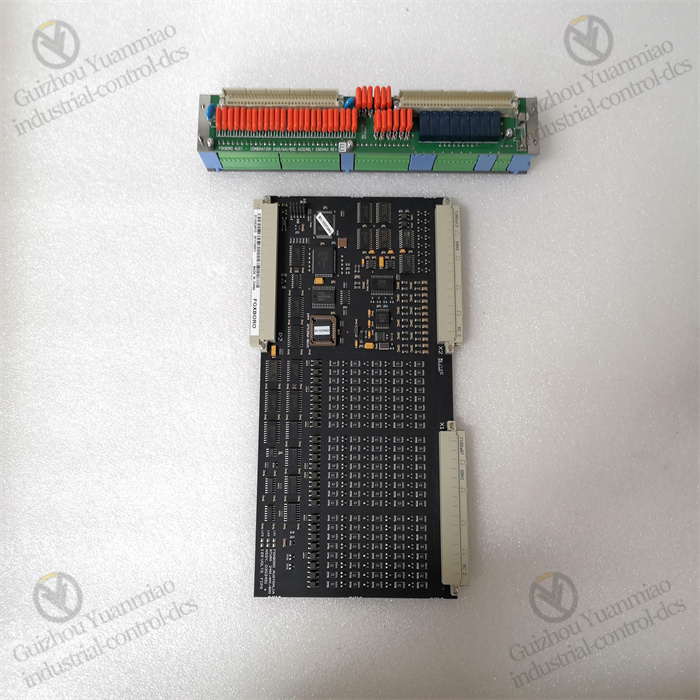
FOXBORO SY-0303451D Analog Input (AI) Module
As an analog input (AI) module, FOXBORO SY-0303451D is a key component in industrial automation control systems that connects on-site analog signals with upper-level control systems. Its working principle mainly revolves around the collection, processing, conversion, and transmission of analog signals, with the specific process as follows:
-
On-site Signal Access
Various sensors in industrial sites (such as temperature sensors, pressure transmitters, level meters, flow meters, etc.) convert physical quantities (temperature, pressure, level, flow, etc.) into analog electrical signals (commonly 4-20mA current signals or 0-10V voltage signals). These analog signals are connected to the input end of the SY-0303451D module through dedicated cables.
The module is designed with multiple independent signal channels (the specific number of channels needs to refer to the model specifications), which can simultaneously access multiple different analog signals to meet the needs of multi-parameter collection in industrial sites. -
Signal Conditioning
Due to potential electromagnetic interference, signal attenuation, or noise in the on-site environment, the module first performs signal conditioning on the input original analog signals to ensure the accuracy and stability of the signals:
- Filtering: Suppress high-frequency noise (such as electromagnetic interference generated by motors, frequency converters, and other equipment) through a low-pass filter to retain effective signals.
- Amplification/Attenuation: Amplify weak signals (such as mV-level thermocouple signals) or attenuate strong signals to make the signal range suitable for subsequent analog-to-digital conversion circuits.
- Isolation Protection: Some models may have built-in optoelectronic isolation or electromagnetic isolation circuits to prevent on-site high-voltage, surges, and other interferences from affecting the module’s internal circuits and upper-level control systems through signal lines, while protecting the sensors and the module itself.
-
Analog-to-Digital Conversion (A/D Conversion)
The conditioned analog signals (continuously changing electrical signals) cannot be directly recognized by digital control systems (such as DCS, PLC). The module converts them into digital signals (discrete binary data) through an internal analog-to-digital converter (ADC):
The accuracy of the ADC (such as 12-bit, 16-bit) determines the accuracy of the conversion. As an industrial-grade module, SY-0303451D usually has high conversion accuracy (such as 16-bit) to ensure the capture of small signal changes (for example, 0.1% of full-scale error).
The converted digital signals have a linear correspondence with the original physical quantities (for example, 4mA corresponds to 0% of the range, 20mA corresponds to 100% of the range), facilitating subsequent calculation and processing. -
Data Processing and Calibration
The module further processes the converted digital signals to ensure data reliability:
- Linearization Correction: For the nonlinear characteristics of some sensors (such as thermocouples, thermal resistors), the module performs linearization compensation through built-in algorithms to make the output data more consistent with the actual physical quantities.
- Temperature Compensation: Eliminate the impact of ambient temperature changes on conversion circuits (such as ADC, amplifier circuits) to ensure measurement accuracy within a wide temperature range.
- Calibration Function: Support users to perform zero and range calibration through software or hardware methods to correct drift errors after long-term use.
-
Data Transmission and System Integration
The processed digital signals are transmitted to the upper-level control system (such as FCP280 controller) through the module’s internal communication interface (usually compatible with the bus protocol of the Foxboro DCS system, such as fieldbus, Ethernet, etc.):
As part of the Foxboro DCS system, the module follows the unified communication protocol of the system to realize data interaction with controllers and operation stations, supporting real-time monitoring and historical data storage.
In some scenarios, the module may have a local data caching function to ensure that data is not lost during short-term communication interruptions, and automatically synchronize to the system after the connection is restored. -
Status Monitoring and Fault Diagnosis
The module has a built-in self-test circuit that can monitor its own working status in real-time (such as power supply voltage, channel faults, A/D conversion abnormalities, etc.) and feed back fault information to the upper-level system through indicator lights or digital signals:
For example, when the input signal of a certain channel exceeds the range (such as >20mA or <4mA), the module will trigger an alarm to notify the operator to check the sensor or line problems in time to ensure the continuity of data collection.
Summary
The core role of the FOXBORO SY-0303451D analog input module is a “bridge”: it accurately and stably transmits physical quantities in industrial sites to the control system through the process of “analog signal → conditioning → A/D conversion → digital signal → transmission”, providing reliable original data support for the monitoring, control, and optimization of industrial processes. It is widely used in petrochemical, electric power, pharmaceutical, and other scenarios that have high requirements for the collection accuracy of analog parameters.
The core role of the FOXBORO SY-0303451D analog input module is a “bridge”: it accurately and stably transmits physical quantities in industrial sites to the control system through the process of “analog signal → conditioning → A/D conversion → digital signal → transmission”, providing reliable original data support for the monitoring, control, and optimization of industrial processes. It is widely used in petrochemical, electric power, pharmaceutical, and other scenarios that have high requirements for the collection accuracy of analog parameters.

Reviews
There are no reviews yet.