

Description
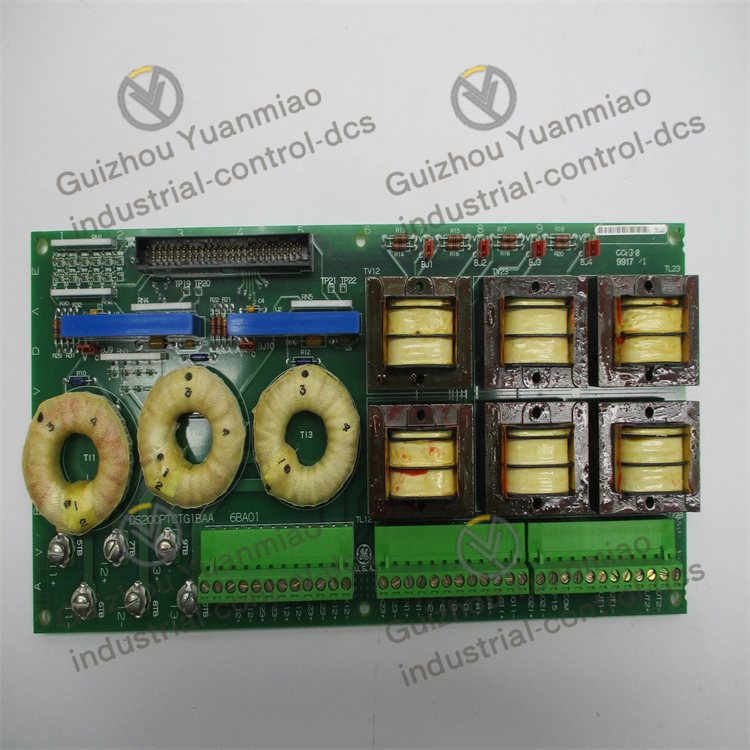
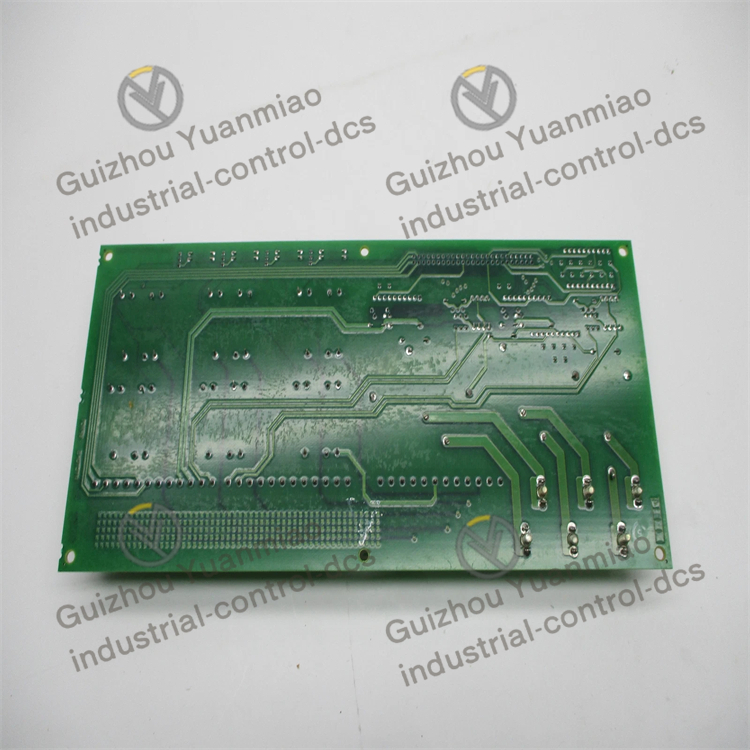
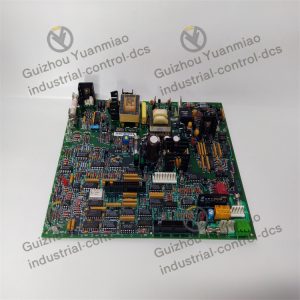
GE DS200PTCTG1B Signal conditioning card
Core functional features:
Signal isolation and conditioning
Isolation function: Through transformer isolation technology, high-voltage and high-current PT/CT signals are converted into low-voltage and low-current safety signals to protect the control system from high-voltage impacts.
Signal scaling: Precisely adjust the amplitude of the input signal to conform to the input range of the control system (for example, converting a 100V/5A transformer signal to a ±10V DC voltage signal).
Anti-interference capability: By adopting multi-layer circuit board design and shielding technology, it effectively suppresses electromagnetic interference (EMI) and radio frequency interference (RFI), ensuring the stability of signal transmission.
Multi-channel input processing
Three-phase signal support: Capable of simultaneously processing three sets of three-phase PT/CT inputs, suitable for complex power system monitoring and control.
Independent terminal design: Four independent terminal strips (arranged along the edge of the circuit board) facilitate wiring and maintenance, and support flexible signal configuration.
High-precision analog conversion
Industrial-grade components: High-precision analog devices such as the AD202JY isolated amplifier are adopted to ensure the accuracy of signal conversion (typically with an error of less than ±0.5%).
Wide dynamic range: Supports a wide range of input signal variations, adapting to PT/CT sensors of different specifications.
Safety and Reliability
Static protection: The circuit board adopts an anti-static design and is equipped with an ESD protection circuit. Anti-static gloves must be worn during operation to ensure stability in highly sensitive environments.
Redundant design: Key components are configured with redundancy to enhance the system’s fault tolerance and reduce the risk of single point of failure.
Reviews
There are no reviews yet.