

Description
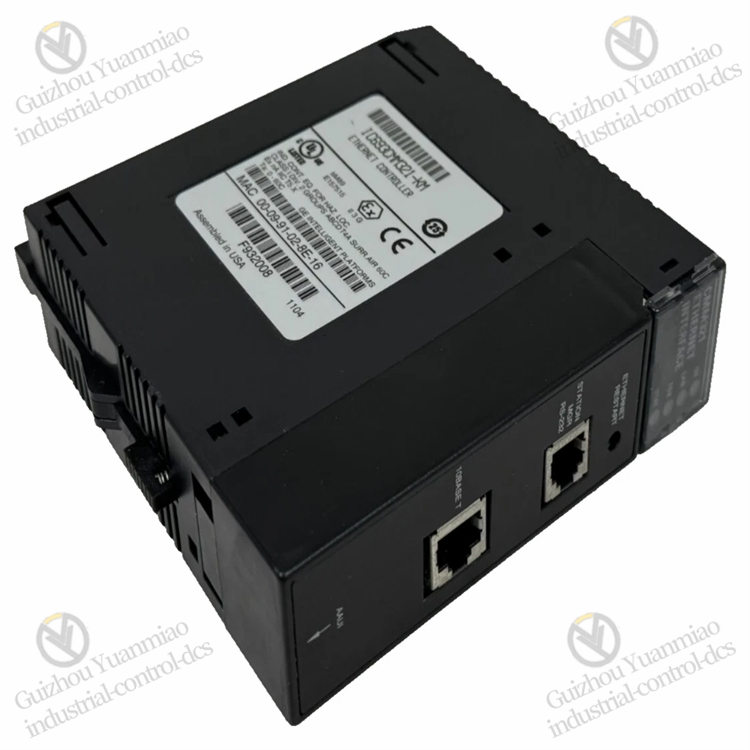
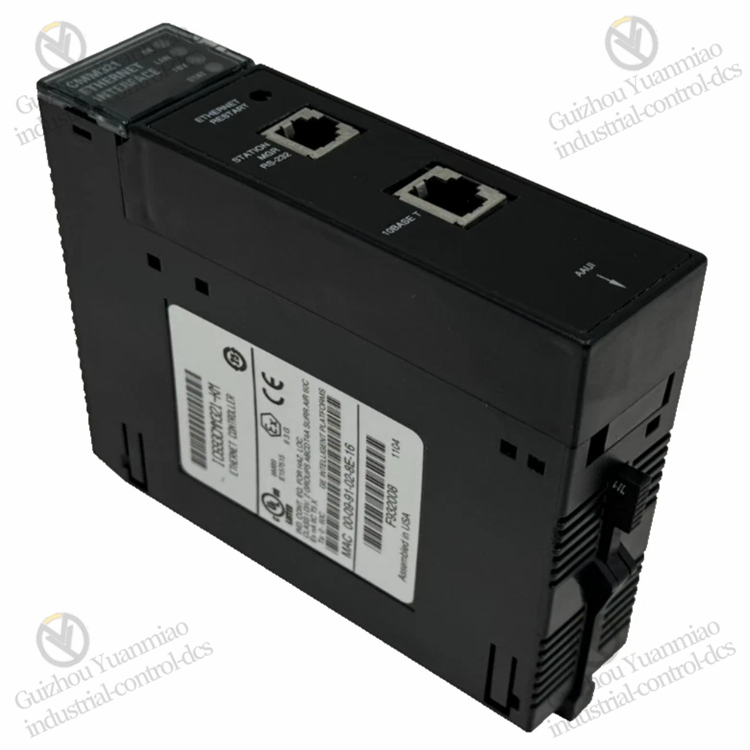
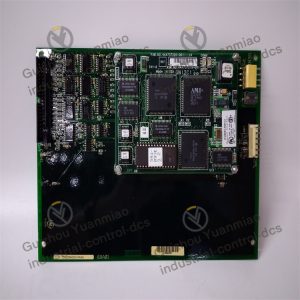
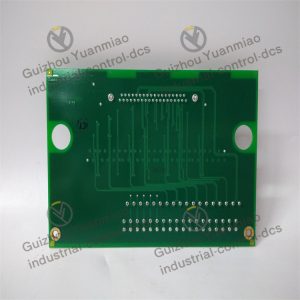
GE IC693CMM321-KM Communication Module
I. Core Function Positioning
As a communication expansion module of the 90-30 series, IC693CMM321-KM undertakes the core tasks of protocol conversion, data transmission and device networking. Its specific functions include:
As a communication expansion module of the 90-30 series, IC693CMM321-KM undertakes the core tasks of protocol conversion, data transmission and device networking. Its specific functions include:
Multi-protocol support: It supports multiple industrial communication protocols (such as Modbus RTU, Modbus TCP, Ethernet/IP, etc.) and can communicate with third-party devices (such as frequency converters, intelligent instruments, HMI, etc.) as a master station or a slave station.
Ethernet communication: It provides a 10/100Mbps adaptive Ethernet interface and supports standard network protocols such as TCP/IP and UDP, realizing remote connection between the PLC and upper computers (such as SCADA systems) or other controllers.
Data exchange and synchronization: It forwards data between different communication networks (such as fieldbus and Ethernet) to realize collaborative control between devices (such as synchronization of multiple stations in a production line).
Remote monitoring and diagnosis: It supports remote programming, debugging and equipment status monitoring through the network interface, facilitating operation and maintenance personnel to quickly respond to faults.
Ethernet communication: It provides a 10/100Mbps adaptive Ethernet interface and supports standard network protocols such as TCP/IP and UDP, realizing remote connection between the PLC and upper computers (such as SCADA systems) or other controllers.
Data exchange and synchronization: It forwards data between different communication networks (such as fieldbus and Ethernet) to realize collaborative control between devices (such as synchronization of multiple stations in a production line).
Remote monitoring and diagnosis: It supports remote programming, debugging and equipment status monitoring through the network interface, facilitating operation and maintenance personnel to quickly respond to faults.
II. Technical Parameters
| Parameter Category | Specific Parameters |
|---|---|
| Communication interface | 1 RJ45 Ethernet interface (10/100Mbps adaptive), supporting full-duplex communication |
| Protocol support | Modbus RTU (master/slave), Modbus TCP (master/slave), Ethernet/IP (adapter mode) |
| Communication rate | Ethernet: 10/100Mbps; Serial port (needs expansion): up to 115.2kbps |
| I/O mapping area | Supports a communication data buffer of 256 bytes input / 256 bytes output for storing exchanged data |
| Working environment | Temperature: 0°C ~ 60°C; Humidity: 5% ~ 95% (non-condensing); Vibration resistance: 10 ~ 500 Hz, 1 g acceleration |
| Power supply requirements | DC 5V ± 5%, typical power consumption is about 5W |
| Installation method | Can be directly inserted into the communication slot of the 90-30 series rack, and communicates with the CPU module through the backplane bus |
III. Core Characteristics
Strong protocol compatibility
It supports a variety of mainstream industrial protocols, and can connect intelligent devices of different brands (such as Siemens frequency converters, ABB instruments) without additional conversion equipment, reducing system integration costs.
Strong protocol compatibility
It supports a variety of mainstream industrial protocols, and can connect intelligent devices of different brands (such as Siemens frequency converters, ABB instruments) without additional conversion equipment, reducing system integration costs.
Flexible configuration
Communication parameters (such as IP address, baud rate, protocol type) can be flexibly configured through programming software (such as VersaPro), and online modification is supported to adapt to different application scenarios.
Communication parameters (such as IP address, baud rate, protocol type) can be flexibly configured through programming software (such as VersaPro), and online modification is supported to adapt to different application scenarios.
Redundant design
Some models support dual-network port redundancy (requires specific configuration), which automatically switches to the backup network when the main network fails, improving system reliability.
Some models support dual-network port redundancy (requires specific configuration), which automatically switches to the backup network when the main network fails, improving system reliability.
Fault diagnosis
It has built-in status indicators and diagnostic functions, which can feedback communication status in real-time (such as network connection, data transmission), facilitating quick location of fault points.
It has built-in status indicators and diagnostic functions, which can feedback communication status in real-time (such as network connection, data transmission), facilitating quick location of fault points.
IV. Application Scenarios
IC693CMM321-KM is mainly used to build industrial automation communication networks, with typical applications including:
IC693CMM321-KM is mainly used to build industrial automation communication networks, with typical applications including:
Factory automation: Connect PLC with intelligent devices in the workshop (such as robots, sensors, distributed I/O) to realize data collection and device linkage.
Remote monitoring system: As a gateway device, it transmits on-site PLC data to the remote monitoring center through Ethernet, supporting remote operation and early warning.
Multi-system integration: In mixed-brand automation systems, it serves as a protocol conversion hub (such as Modbus RTU to Ethernet/IP) to realize communication between heterogeneous devices.
Energy management: In substations or industrial power systems, it collects data such as electric meter and switch status and uploads them to the energy management platform for analysis.
Remote monitoring system: As a gateway device, it transmits on-site PLC data to the remote monitoring center through Ethernet, supporting remote operation and early warning.
Multi-system integration: In mixed-brand automation systems, it serves as a protocol conversion hub (such as Modbus RTU to Ethernet/IP) to realize communication between heterogeneous devices.
Energy management: In substations or industrial power systems, it collects data such as electric meter and switch status and uploads them to the energy management platform for analysis.
Reviews
There are no reviews yet.