

Description
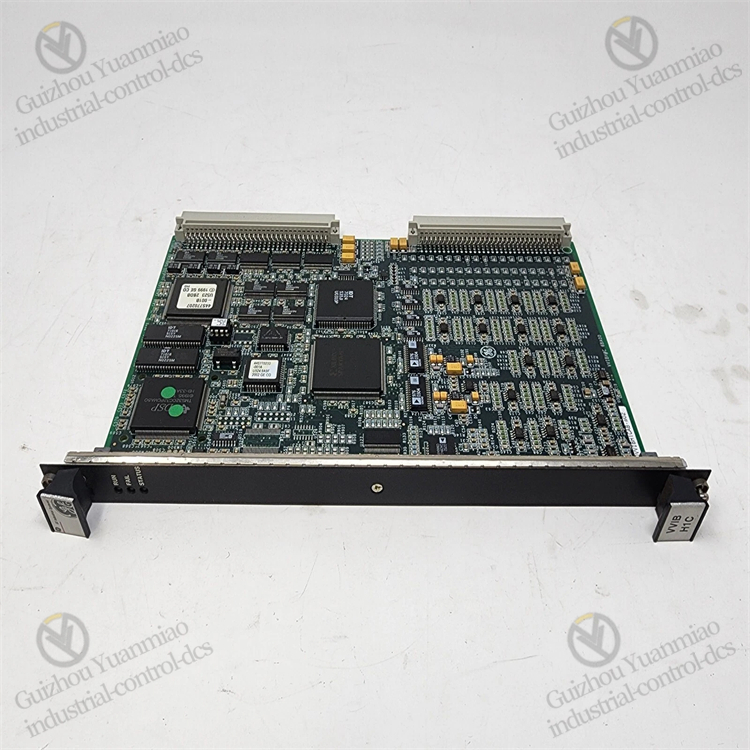
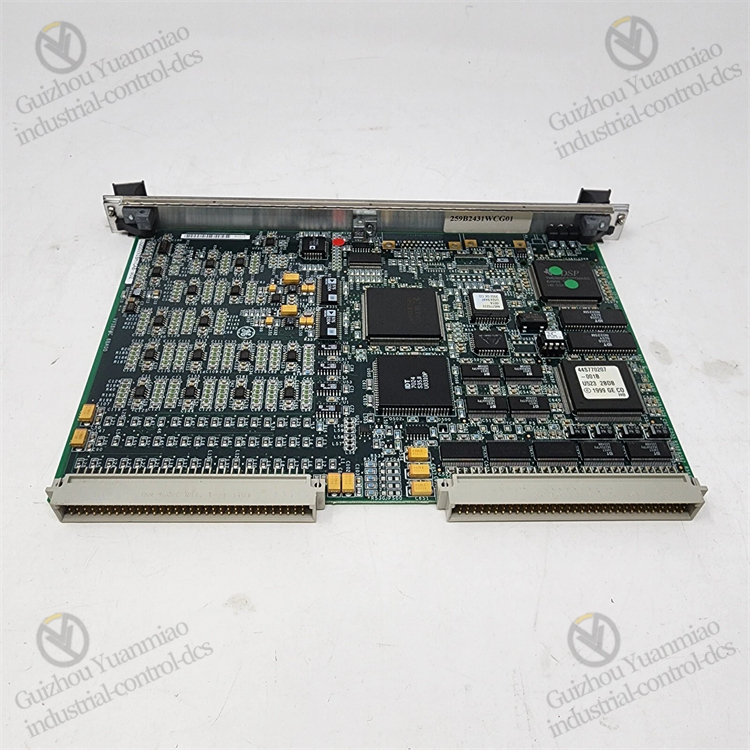
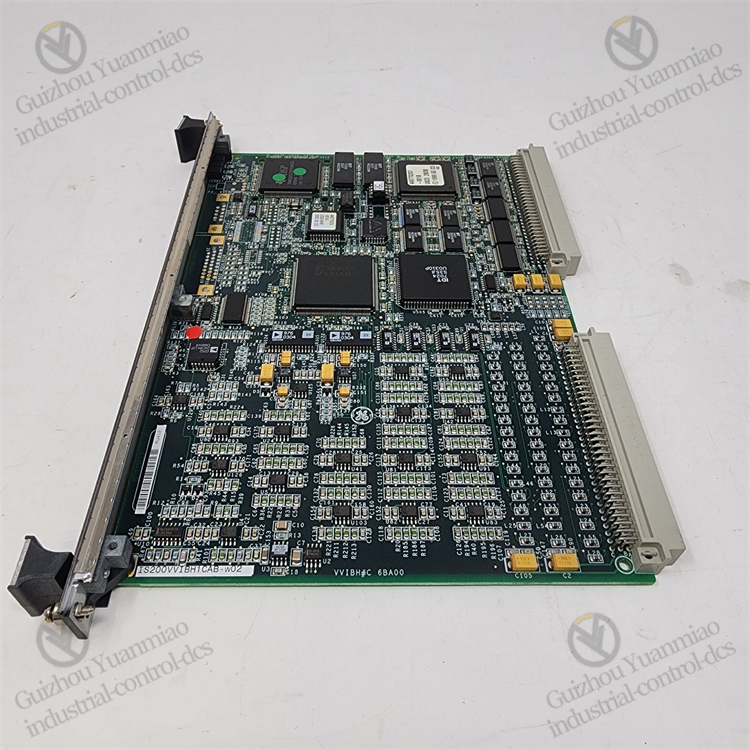
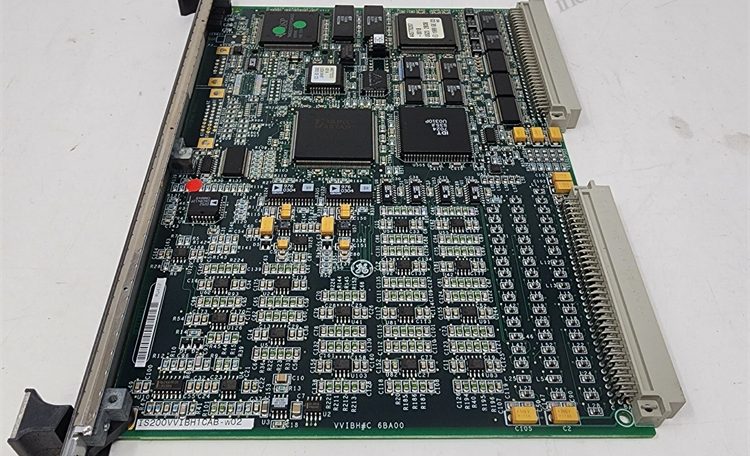
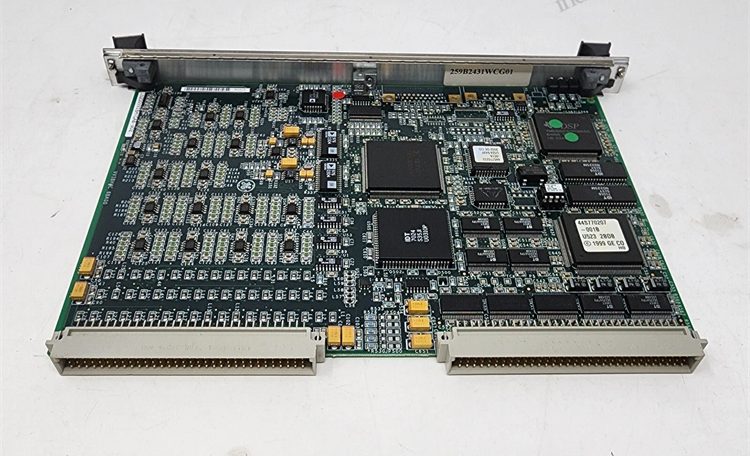
GE IS200VVIBH1CAB-W02 Analog I/O Module
I. Working Principle
The core function of the analog I/O module is to realize the conversion and transmission between analog signals and digital signals, and the specific process is as follows:
The core function of the analog I/O module is to realize the conversion and transmission between analog signals and digital signals, and the specific process is as follows:
Analog Input (AI) Function
It receives continuous analog signals (such as voltage signals 0-10V, current signals 4-20mA, etc.) from external sensors (such as temperature sensors, pressure transmitters, flow sensors, etc.). Through the internal high-precision A/D (Analog-to-Digital Converter), the analog signals are converted into digital signals. After being processed by the module’s processor, the digital signals are transmitted to the upper-level control system (such as PLC, DCS or turbine controller) through the bus (such as VME bus), so as to realize the real-time collection of industrial process parameters.
It receives continuous analog signals (such as voltage signals 0-10V, current signals 4-20mA, etc.) from external sensors (such as temperature sensors, pressure transmitters, flow sensors, etc.). Through the internal high-precision A/D (Analog-to-Digital Converter), the analog signals are converted into digital signals. After being processed by the module’s processor, the digital signals are transmitted to the upper-level control system (such as PLC, DCS or turbine controller) through the bus (such as VME bus), so as to realize the real-time collection of industrial process parameters.
Analog Output (AO) Function
It receives digital control commands from the upper-level control system, converts the digital signals into continuous analog signals (such as 4-20mA current signals or 0-10V voltage signals) through the internal D/A (Digital-to-Analog Converter), and outputs them to actuators (such as control valves, frequency converters, servo motors, etc.), so as to realize the precise control of industrial equipment (such as adjusting valve opening, motor speed, etc.).
It receives digital control commands from the upper-level control system, converts the digital signals into continuous analog signals (such as 4-20mA current signals or 0-10V voltage signals) through the internal D/A (Digital-to-Analog Converter), and outputs them to actuators (such as control valves, frequency converters, servo motors, etc.), so as to realize the precise control of industrial equipment (such as adjusting valve opening, motor speed, etc.).
Signal Processing and Communication
The module has a built-in processor and communication interface, which can perform preprocessing such as filtering, linearization, and range conversion on the collected analog signals to reduce the impact of interference signals. At the same time, it communicates with other components of the system through standardized bus protocols (such as Modbus, VMEbus) to ensure the real-time and reliability of data transmission.
The module has a built-in processor and communication interface, which can perform preprocessing such as filtering, linearization, and range conversion on the collected analog signals to reduce the impact of interference signals. At the same time, it communicates with other components of the system through standardized bus protocols (such as Modbus, VMEbus) to ensure the real-time and reliability of data transmission.
II. Functional Features
Combined with the industrial-grade design standards of GE’s same-series modules, this module may have the following characteristics:
Combined with the industrial-grade design standards of GE’s same-series modules, this module may have the following characteristics:
High-Precision Signal Processing
- The analog input channels support high-precision acquisition (with a resolution of 16 bits or higher), ensuring minimal measurement errors for parameters such as temperature and pressure;
- The analog output channels have low drift characteristics, and the output signals are stable, meeting the needs of precise control (such as valve adjustment accuracy up to ±0.1%).
Wide Adaptability
- The input channels are compatible with various types of analog signals (such as 4-20mA current, 0-10V voltage, thermocouple/RTD signals, etc.), and can flexibly adapt to different sensors;
- The output channels can be configured as 4-20mA or 0-10V signals, adapting to various actuators to meet diversified control needs.
High Reliability and Environmental Adaptability
- Using industrial-grade components and conformal coating, it can resist dust, moisture, oil stains and chemical corrosion, and adapt to a wide temperature working environment of -40℃~70℃;
- Equipped with overvoltage and overcurrent protection functions to prevent damage to the module caused by external circuit faults and improve system stability.
Modularity and Ease of Use
- Supports VME bus or other industrial bus protocols, and can be seamlessly integrated into GE Mark VI and other turbine control systems, facilitating system expansion and maintenance;
- Provides configuration software, supporting flexible setting of channel parameters (such as range, filtering method), simplifying the debugging process.
Fast Response Capability
- Has high-speed data processing capability, with low signal acquisition and output delay, meeting the needs of real-time control in industrial processes (such as turbine speed regulation, pressure closed-loop control).
III. Application Fields
As a key component of the industrial automation system, this module is mainly used in scenarios that require high-precision analog signal acquisition and control, and plays an important role especially in the following fields:
As a key component of the industrial automation system, this module is mainly used in scenarios that require high-precision analog signal acquisition and control, and plays an important role especially in the following fields:
Energy and Power Industry
- Turbine/generator set control: Used to collect analog signals such as shaft temperature, oil pressure and vibration of steam turbines and gas turbines, output control commands to adjust valve opening and fuel supply, and ensure the stable operation of power generation equipment;
- New energy field: In wind power and photovoltaic power stations, monitor parameters such as wind turbine speed and inverter temperature, and control pitch systems, grid-connected switches and other equipment.
Heavy Industry and Process Industry
- Metallurgy and chemical industry: In the control of steelmaking furnaces and reaction kettles, collect analog signals such as temperature, pressure and liquid level, control heating power and feeding speed to ensure stable production process;
- Oil and natural gas: Used for pressure monitoring of oil pipelines and control of drilling platform equipment, output signals to adjust pump speed and valve opening, ensuring the safety of extraction and transportation.
Intelligent Manufacturing and Machining
In CNC machine tools and production line automation systems, collect signals such as motor speed and tool position, output control commands to adjust feed speed and spindle speed, and improve machining accuracy.
In CNC machine tools and production line automation systems, collect signals such as motor speed and tool position, output control commands to adjust feed speed and spindle speed, and improve machining accuracy.
Rail Transit and Large Equipment
- In the traction system of subways and high-speed railways, monitor parameters such as temperature and voltage of traction motors, control converter output, and ensure stable start-stop and speed regulation of trains;
- In large engineering machinery (such as shield machines, cranes), it is used for pressure monitoring of hydraulic systems and control of actuators to ensure safe operation of equipment.
Reviews
There are no reviews yet.