


Description
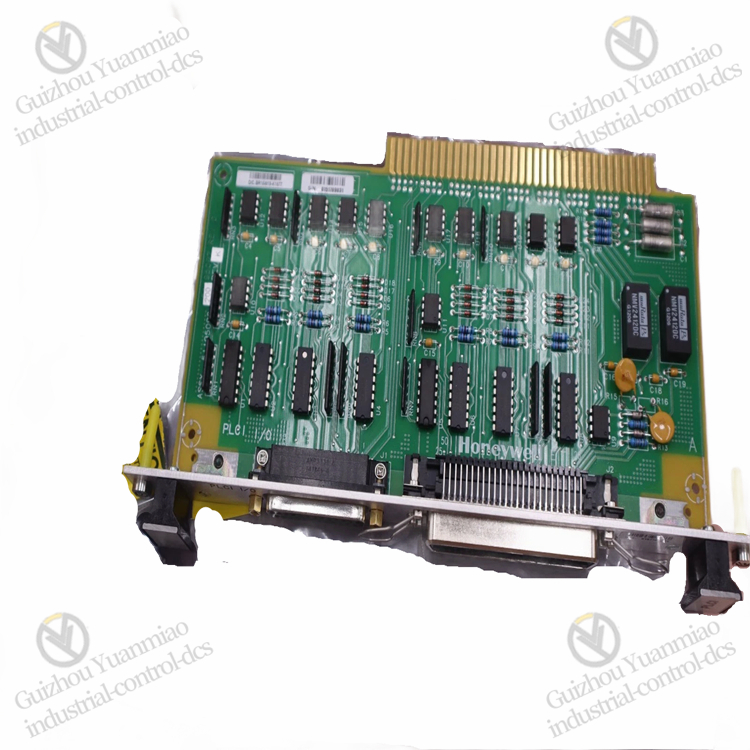
Honeywell 51195096-100 DCS module
Honeywell 51195096-100 is a crucial module in Honeywell’s DCS (Distributed Control System), primarily designed for signal processing and data interaction in industrial automation. Its operational principle revolves around the core workflow of “Signal Access – Processing – Communication – Control Feedback,” which is detailed as follows:
-
Signal Access: Connecting Field Devices to the System
The module features multiple input channels supporting various industrial signals, including:- Analog Signals: 4-20mA current signals or 0-10V voltage signals from sensors such as temperature (thermocouple/RTD), pressure, and flow sensors.
- Digital Signals: Discrete signals like device status (start/stop, fault alarms) and limit switches.
- Pulse Signals (in some scenarios): Compatible with pulse outputs from flow meters or similar devices.
These signals originate directly from field sensors, actuators, or other equipment and are physically connected via hardware interfaces (e.g., terminal blocks), serving as the “entrance” for the system to collect field data. -
Signal Processing: Standardization and Conditioning
Raw signals undergo internal circuit processing to meet system requirements:- Signal Conversion: Analog-to-Digital (A/D) conversion for analog inputs or Digital-to-Analog (D/A) conversion for outputs, ensuring compatibility with the DCS protocol.
- Signal Conditioning: Amplification, filtering, and isolation to eliminate electromagnetic interference (e.g., noise from motors or inverters), enhancing signal stability and accuracy.
- Range Calibration: Users can calibrate based on field device specifications (e.g., -50°C to 300°C for temperature sensors) to ensure precise signal-to-physical value correspondence.
-
Data Communication: Interaction with DCS Core
As an “intermediate node,” the module exchanges data with system controllers (e.g., PLCs, operator stations) via internal buses (e.g., Honeywell’s proprietary control network or Ethernet):- Data Upload: Processed field signals (e.g., temperature, pressure, device status) are encapsulated per the DCS communication protocol (e.g., Honeywell’s FTE Fault-Tolerant Ethernet) and transmitted to controllers or HMIs for monitoring and decision-making.
- Command Reception: Control instructions (e.g., valve opening adjustment, pump 启停) are received, converted into executable formats, and routed to output channels.
-
Control Signal Output: Executing System Commands
For field device control, the module sends processed signals to actuators:- Analog Outputs (e.g., 4-20mA): Control continuous variables like valve positions or motor speeds.
- Digital Outputs (e.g., relay contacts): Manage discrete actions such as device start/stop or valve switching.
During output, the module monitors signal status in real-time to ensure accurate execution. Abnormalities (e.g., overcurrent, disconnection) trigger internal fault diagnostics. -
Fault Diagnosis and Self-Protection
Built-in fault detection circuits monitor the module and connected devices:- Fault Alerts: Detects issues like signal line breaks, out-of-range values, power anomalies, or internal circuit failures, generating fault codes or alarms transmitted to the DCS HMI for maintenance alerts.
- Protection Mechanisms: Activates safeguards (e.g., 切断输出通道) to prevent fault propagation and ensure system safety.
Summary
The Honeywell 51195096-100 DCS module acts as a “bridge” between field devices and the DCS system:
The Honeywell 51195096-100 DCS module acts as a “bridge” between field devices and the DCS system:
- It aggregates, processes, and uploads dispersed field signals for real-time process monitoring.
- It converts control commands into device-readable signals for automated control.
Its robust signal processing capabilities and reliable communication mechanisms ensure precise regulation and safe operation of industrial processes.
Reviews
There are no reviews yet.