

Description
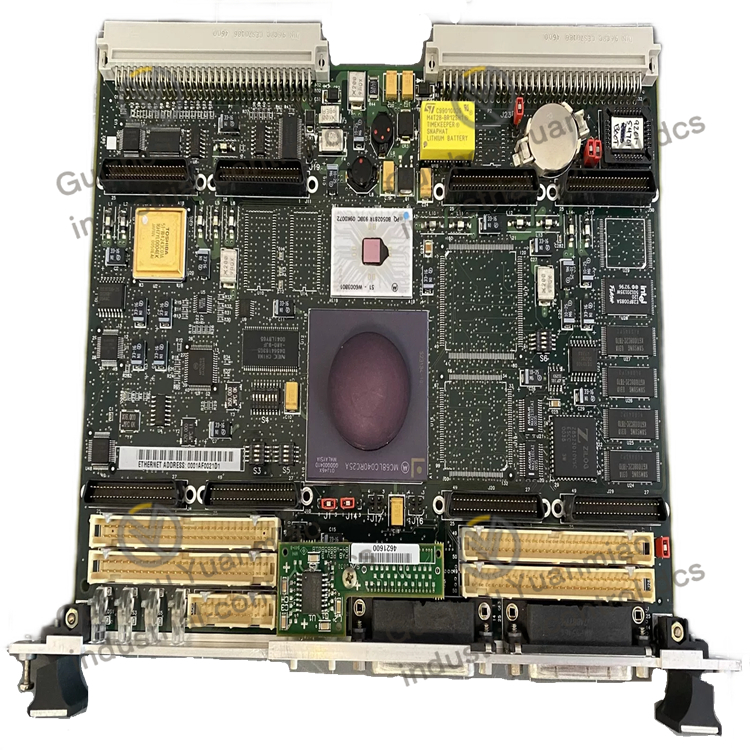
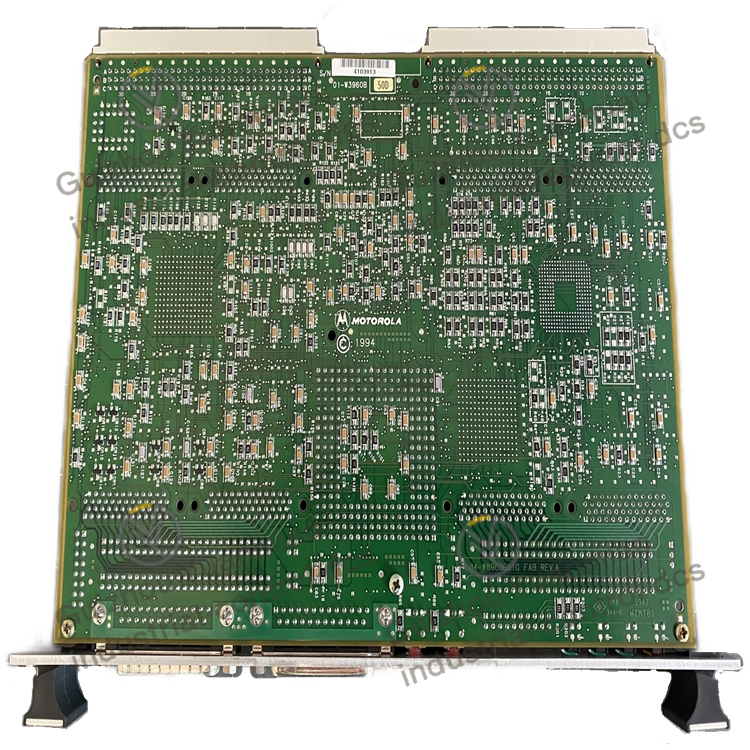
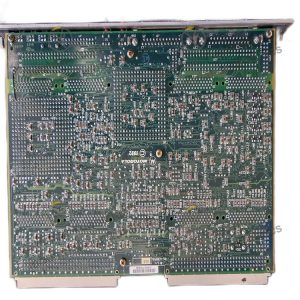
MOTOROLA MVME162-410 industrial control module
Processor: It adopts the MPC860 processor with a main frequency of 40MHz and integrates a communication processor module (CPM). CPM can efficiently handle multiple communication protocols, reduce the burden on the main processor, and is suitable for scenarios with high requirements for communication processing.
Memory and storage: Standard equipped with 16MB SDRAM, supports expansion up to 64MB, which can meet the memory capacity requirements of different applications. It is equipped with 8MB of on-board Flash memory for storing programs and data, and is also equipped with a PCMCIA slot, supporting memory card expansion, which is convenient for users to increase the storage capacity according to their actual needs.
Interface: It provides two RS-232 serial ports and one RS-485/422 serial port, which can meet different serial communication requirements and facilitate data transmission and communication with other devices. It also features a 10/100Mbps Ethernet port, facilitating access to the Ethernet network and enabling network communication functions. In addition, there are multiple user-defined I/O interfaces, which facilitate quick adaptation to new types of sensors or actuators and meet the connection requirements of multiple devices.
Operating system support: Compatible with operating systems such as VxWorks, QNX, and Linux. Users can choose the appropriate operating system based on their specific development needs, offering high flexibility.
Core advantages: Firstly, the MPC860 processor integrates a CPM module, which not only reduces power consumption but also enhances communication efficiency, making it suitable for edge computing scenarios that are sensitive to energy consumption. Secondly, it supports PCMCIA memory card expansion and has a custom I/O interface design, making it highly flexible and expandable. Finally, through measures such as redundant power management, hardware watchdog and ECC memory verification, it ensures stable operation in key systems such as avionics and nuclear power plant monitoring, and has excellent industrial-grade protection capabilities.
Application scenarios: In the field of industrial automation, it can be used as the core controller of PLC or DCS systems to coordinate multi-axis motion control and real-time data acquisition. In communication base stations, remote monitoring and fault diagnosis of base station equipment can be achieved through Ethernet ports and serial ports. In terms of military equipment, such as radar signal processing and unmanned aerial vehicle flight control scenarios, its anti-interference capability and real-time response speed have become key advantages. At the same time, it can also be used in the field of environmental monitoring, but it is necessary to ensure that the operating temperature is within the range of 0°C to 60°C and the relative humidity does not exceed 95% (without condensation) to avoid component aging caused by extreme environments.
Reviews
There are no reviews yet.