



Description
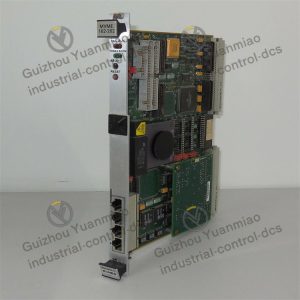
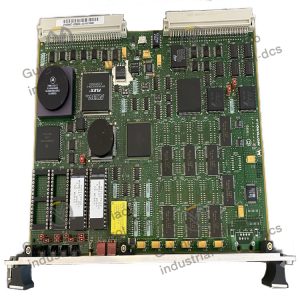
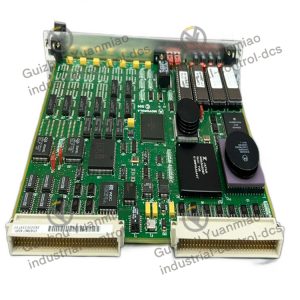
MOTOROLA MVME167-03B single-board computer
Processor performance: Equipped with a 25MHz MC68040 microprocessor and a floating-point coprocessor, it features outstanding processing speed and floating-point operation performance, capable of meeting the high computing power requirements of application scenarios such as scientific computing and industrial control.
Bus interface: It is equipped with a full 32-bit master/slave VME bus interface, which can be conveniently connected and communicated with other devices that comply with the VME bus standard, achieving system expansion and integration.
Memory-related: It includes a new “PETRA” application-specific integrated circuit (ASIC), replacing the functions previously implemented in the MCECC chip and enhancing the performance of the memory subsystem. Meanwhile, the memory configuration switch allows users to adjust the memory size according to application requirements. For applications with smaller memory demands, targeted configuration can be carried out.
Compatibility: Compatible with the existing M68000 series software, in a CISC-based software environment, it can achieve a performance level close to RISC while maintaining compatibility with the target code of the existing software platform.
Motion control function: High-performance motion control can be integrated with the logical solution function of the RX3i PACSystem. Equipped with electronic CAM capability, each servo axis has start and overtravel switch inputs, as well as two position capture pass inputs.
Input and output functions: It provides 5V, 24V and analog I/O, which can be used by PLC. There is an incremental orthogonal encoder input on each axis for encoder/analog mode. There is also a 13-bit analog output, which can be controlled by PLC or used as a digital servo regulation monitor. In addition, through on-board local logic control, it features high-speed digital output (four each of 24V and 5V).
Firmware and Configuration: The firmware is stored in flash memory and can be updated via the COMM port, facilitating software upgrades and maintenance. Programming software can configure the location where the CPU acquires logic, configuration and data during power-on, and can also perform operations such as storing configuration to flash memory and reading from flash memory to RAM.
Reviews
There are no reviews yet.