

Description
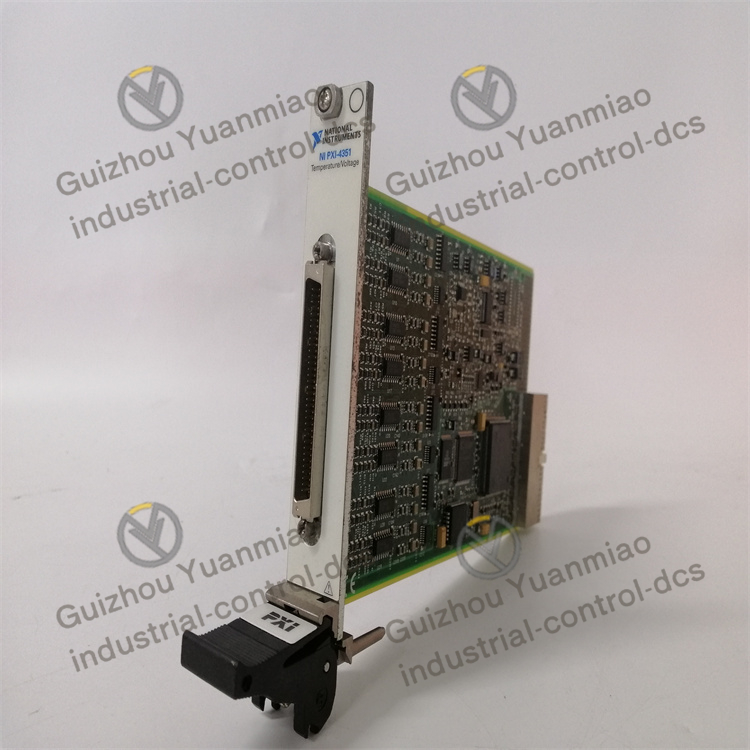
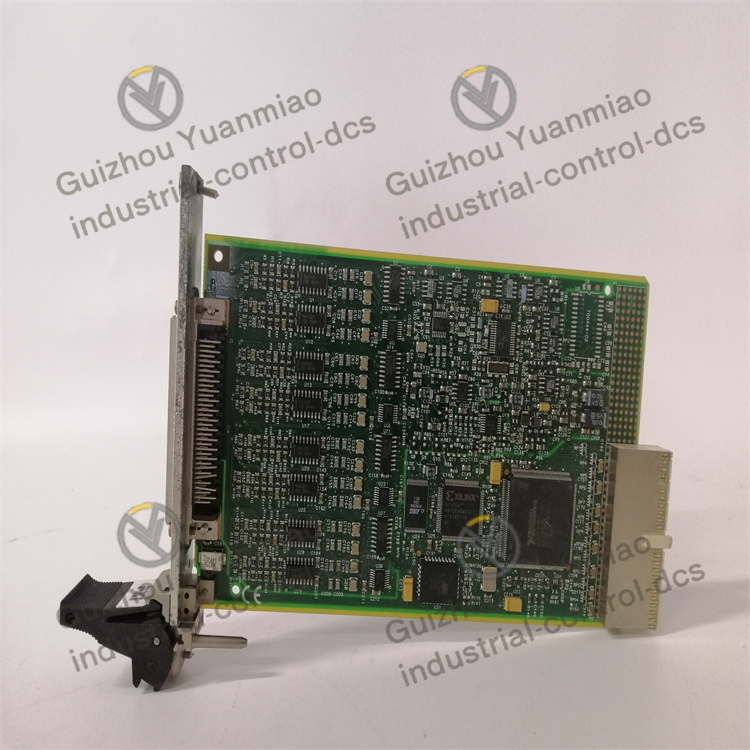
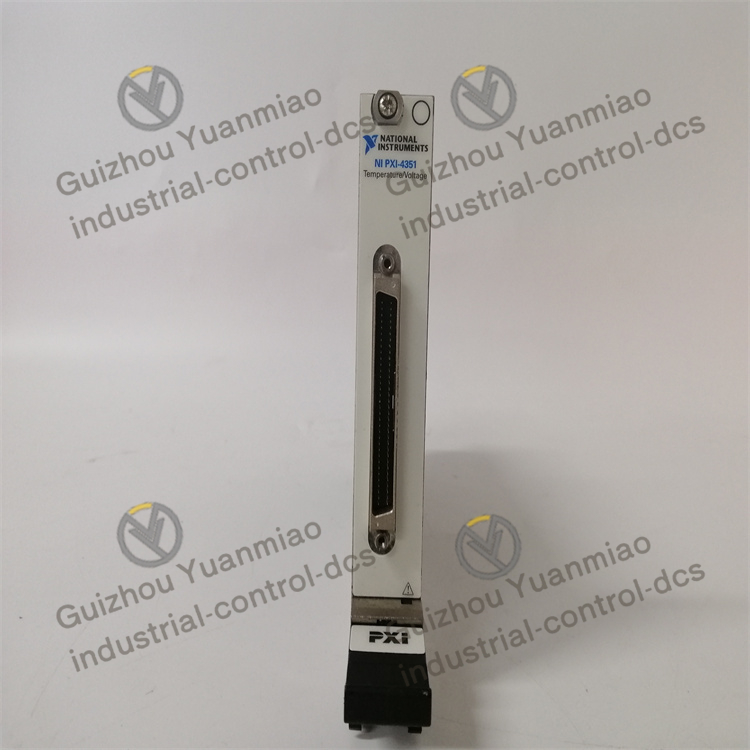
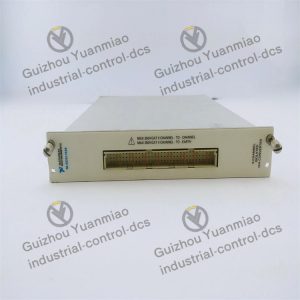
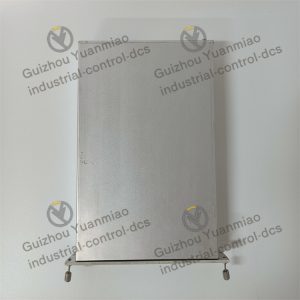
NI PXI-4351 High-precision analog input module
Performance characteristics:
High-precision measurement: By adopting advanced temperature sensors and measurement technologies, equipped with a 24-bit sigma-delta analog-to-digital converter (ADC), combined with a low-leakage structure and analog and digital filtering, it can provide excellent resolution, accuracy and noise suppression, ensuring the accuracy and reliability of temperature data measurement.
Multi-channel measurement: Typically featuring 8 differential or 16 single-ended input channels, it can simultaneously measure data from multiple temperature sensors, meeting the requirements of multi-point temperature measurement and enhancing measurement efficiency and accuracy.
High sampling rate: The sampling rate can reach 250ks/s, enabling rapid data collection. It is suitable for scenarios that require real-time monitoring of temperature changes and can promptly capture rapid temperature fluctuations.
Wide input range and high impedance: The input range is ±10V, which can adapt to the output signals of various types of sensors. The input impedance is 1MΩ, which can reduce the influence on the measured signal and ensure the measurement accuracy.
Support for multiple measurement types: It supports various types of temperature sensors such as thermocouples, resistance temperature probes (RTD), and thermistors. It can also use an internal precision current source for ohm measurement and an external shunt resistor for current measurement. It is rich in functions and highly applicable.
Signal regulation function: The module is equipped with a signal regulation function, which can process the input signal to further ensure the accuracy and stability of the measurement signal and optimize the measurement results.
Good compatibility: Adhering to the PXI (PCIe Extensions for Instrumentation) bus standard, it is compatible with the PXI bus system, can be conveniently combined and expanded with other PXI modules, and can build complex measurement systems according to actual needs.
Easy to program and use: Supports multiple programming languages and development environments, facilitating users’ configuration, programming and control. At the same time, it provides a wealth of debugging tools and functions, facilitating users to troubleshoot and optimize the system.
High reliability: Utilizing high-quality electrical and mechanical components and undergoing strict quality control and testing, it can operate stably and reliably within a wide temperature range of -40 °C to + 85°C, and is capable of adapting to harsh industrial environments.
Open-circuit thermocouple detection: It is equipped with a software-programmable open-circuit thermocouple detection function, which can quickly detect thermocouples that may be damaged before or during the measurement process, facilitating timely problem identification and maintenance.
Application:
Test and measurement systems: They can be used in test laboratories and manufacturing environments to measure and record temperature data during product testing, quality control, and R&D processes. For instance, in the research and development of electronic products, the temperatures of components such as chips under different working conditions are monitored to evaluate their heat dissipation performance and stability.
Environmental monitoring: It is capable of monitoring the temperature in laboratories, production environments and other places, conducting temperature control and recording, and providing support for applications that require maintaining specific environmental conditions. For instance, in a greenhouse, the internal temperature should be monitored in real time to adjust the ventilation and temperature control equipment promptly and create a suitable environment for plant growth.
Industrial automation: In industrial control systems, the temperature during the production process can be monitored and controlled to ensure the normal operation of equipment and meet production requirements. For instance, during the steel smelting process, the temperature of equipment such as furnaces is monitored to prevent abnormal temperatures from affecting product quality and equipment lifespan.
Machine vision system: In machine vision applications, it is used to monitor the temperature of cameras or other devices, preventing the performance of the equipment from being affected by excessively high or low temperatures, and ensuring the stability and reliability of the system.
Laboratory research: Applicable to laboratory research in fields such as physics, chemistry, and biology, it can measure and record temperature data. For instance, in chemical experiments, precisely measuring the temperature changes during the reaction process provides data support for the analysis of experimental results.
Energy management: It can monitor the temperature of buildings, factories or equipment, helping to optimize energy usage efficiency. For instance, monitor the temperature in the factory workshop, and in combination with the production process and equipment operation conditions, reasonably adjust the operation of air conditioning, ventilation and other equipment to achieve energy-saving goals.
Medical equipment: In the manufacturing or research of medical equipment, it is used to monitor and control the temperature of medical equipment to ensure its normal operation and patient safety. For instance, in devices such as CT scanners, monitor the temperature of key components to prevent overheating that could damage the equipment or affect the imaging effect.
Nuclear energy seawater desalination: It can be used in the experimental measurement and control platform for nuclear energy seawater desalination to measure thermal parameters such as temperature, pressure and flow rate at various parts. For instance, when the Institute of Nuclear Energy and New Energy Technology of Tsinghua University was researching the high-temperature multi-effect seawater desalination system with vertical evaporation tubes, it utilized PXI-4351 to collect temperature data, facilitating the measurement and analysis of thermal hydraulics parameters.
Reviews
There are no reviews yet.