

Description
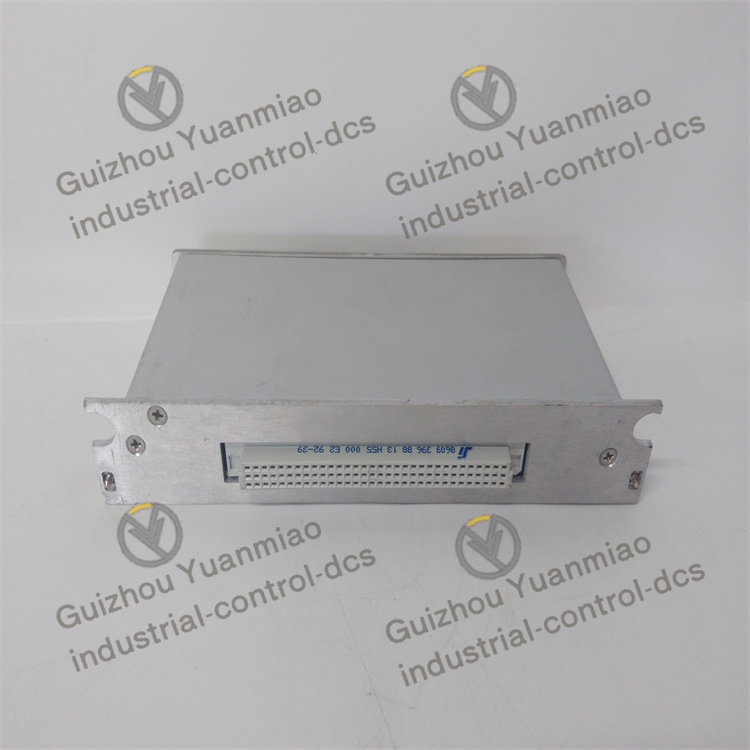
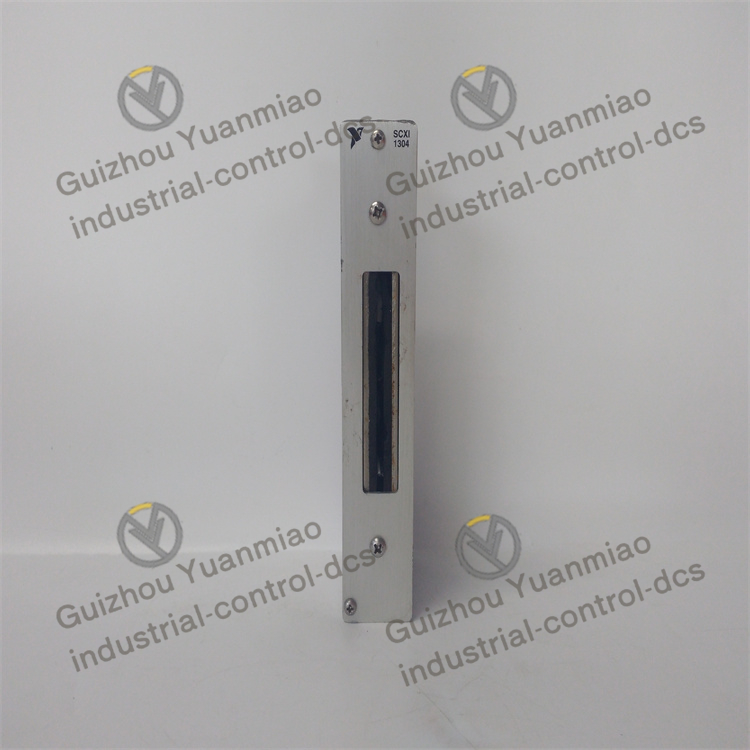
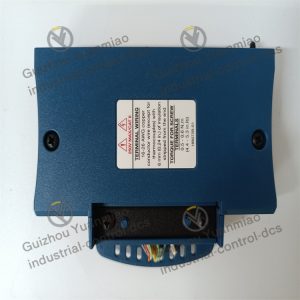
NI SCXI-1304 Signal Conditioning Module
SCXI-1304 is a high-performance industrial signal conditioning module. Through channel configuration, signal conditioning and high-speed sampling at the hardware level, combined with parameter control driven by software, it achieves precise acquisition and anti-interference transmission of industrial-grade signals. The core principle lies in enhancing signal quality through designs such as differential input, programmable gain, and filtering. At the same time, it achieves system integration through standardized interfaces and software ecosystems, making it suitable for industrial and scientific research scenarios that require multi-channel, high-precision, and anti-interference capabilities.
Channel configuration: It features 32 single-ended or 16 differential input channels, which can flexibly adapt to various application scenarios.
Measurement range and resolution: It can measure signals within the ±10V range, with a 16-bit resolution, enabling precise signal measurement.
Sampling rate: The sampling rate of each module can reach up to 250ks/s, ensuring accurate and rapid data collection, and is suitable for real-time monitoring and analysis.
Coupling mode: Each channel can be configured as AC or DC coupling through switch Settings. When AC coupling is applied, a single-pole high-pass filter is placed in the input paths of the positive and negative channels. When performing DC coupling, the filter in the signal path will be removed, and the screw terminals will be directly connected to the module input.
Operating temperature: The recommended operating temperature range is 0℃ to 50℃, and the storage temperature range is -20 ℃ to 70℃.
Humidity range: The non-condensing relative humidity range is 10% to 90%.
Electrical safety standards: Comply with electrical safety standards such as IEC 61010-1, EN 61010-1, UL 3111-1, UL 61010B-1 and CAN/CSA C22.2 No.1010.1.
Terminal quantity: It is equipped with 22 screw terminals, among which 8 pairs of screw terminals can be used to connect to the signals input by 8 modules, and 1 pair is used to connect to the analog ground of the module, facilitating signal connection.
Reviews
There are no reviews yet.