



Description
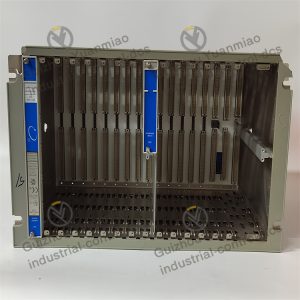
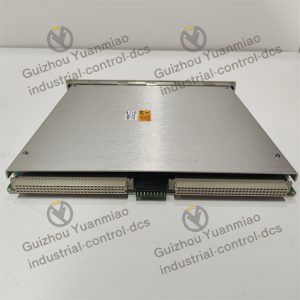
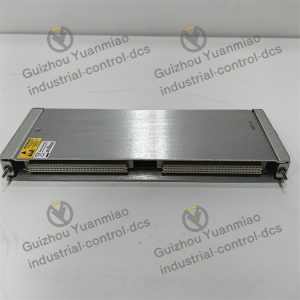
BENTLY 3500/25 key phase module
Function
Key signal detection: It can precisely detect keyways or protrusions on the shafts of rotating machinery and generate key signals that are synchronized with the shaft rotation. This signal serves as a reference benchmark, providing an accurate time reference for other monitoring parameters (such as vibration, displacement, etc.), so as to better analyze and evaluate the operating status of the equipment.
Rotational speed measurement: By counting and processing the key signals, the rotational speed of rotating machinery can be precisely measured. This is of great significance for monitoring whether the equipment is operating within the normal speed range and for determining whether there are any abnormal conditions such as speed fluctuations in the equipment.
Phase information provision: Provide phase information for vibration analysis, etc. Combining the data from the vibration sensor, the key phase module can help determine the relationship between the vibration phase and the rotation position of the shaft, which is conducive to accurately identifying the cause and location of the vibration, such as distinguishing different types of vibration problems like imbalance, misalignment, and resonance.
Working principle
The key phase module works by receiving signals from the key phase sensor (usually an eddy current sensor or a magnetoelectric sensor) installed near the rotating shaft. When the keyway or protrusion on the shaft passes through the sensor, the sensor generates a pulse signal. The key phase module amplifies, shapes and processes this pulse signal, and then outputs a square wave signal that is synchronized with the rotation of the shaft. The frequency of this signal is proportional to the rotational speed of the shaft, and its rising or falling edge corresponds to a specific position of the keyway or protrusion on the shaft. Thus providing accurate key phase and rotational speed information for the entire monitoring system.
Technical parameters
Input signal type: Supports input from various types of key phase sensors, such as eddy current sensors, magnetoelectric sensors, etc. The amplitude range of the input signal is generally -20V to + 20V.
Output signal: It is usually a TTL level or a square wave signal with an open collector output, which can be directly interfaced with other monitoring modules or control systems. The output signal frequency range is generally from 0Hz to 10kHz, which can meet the rotational speed measurement requirements of most rotating machinery.
Measurement accuracy: The rotational speed measurement accuracy is usually ±0.1% or higher, and the phase measurement accuracy can reach ±1° or better, which can provide high-precision measurement data for equipment monitoring.
Operating temperature range: Generally -40 ℃ to + 85℃, suitable for various harsh industrial environments.
Power supply requirements: It is usually powered by a 24V DC power supply, with relatively low power consumption, generally within a few watts.
Reviews
There are no reviews yet.