

Description
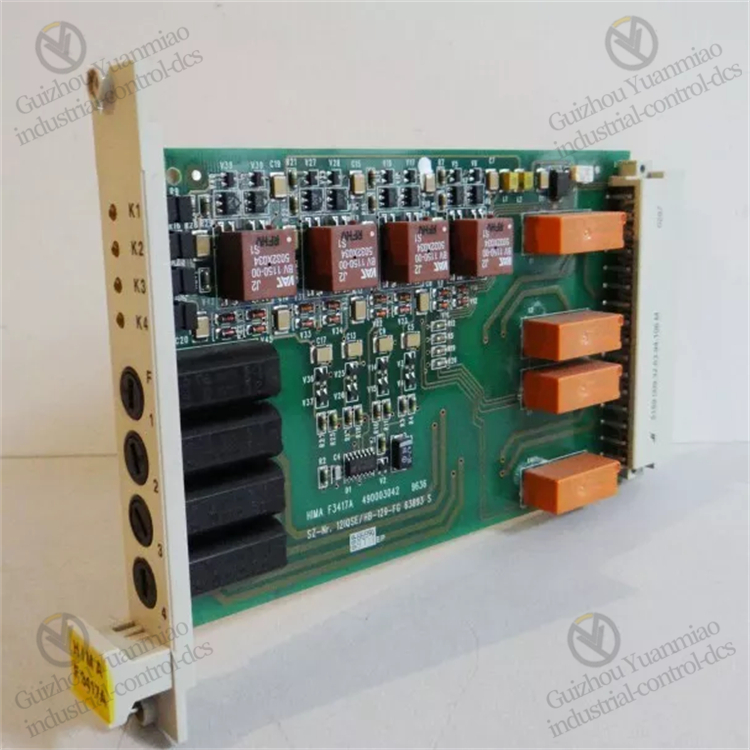
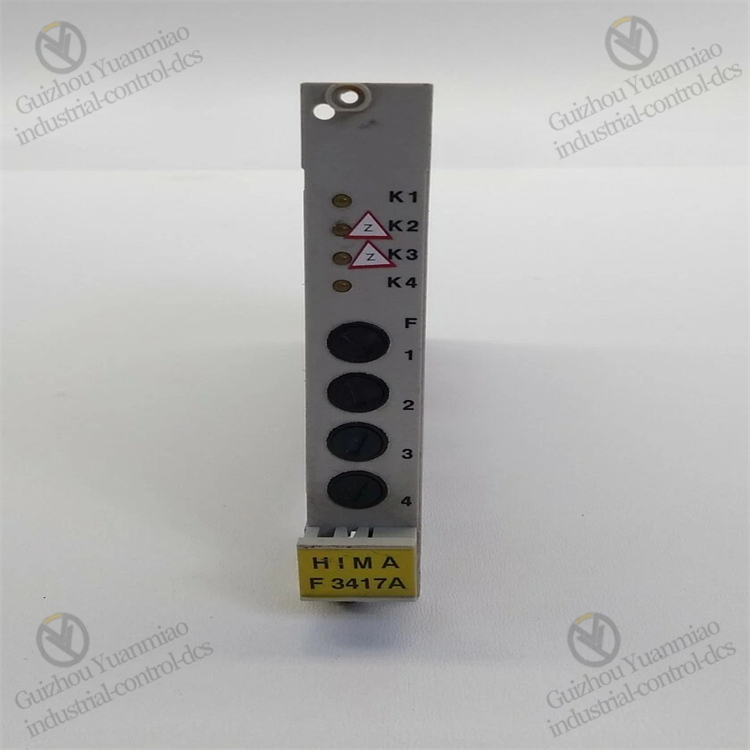
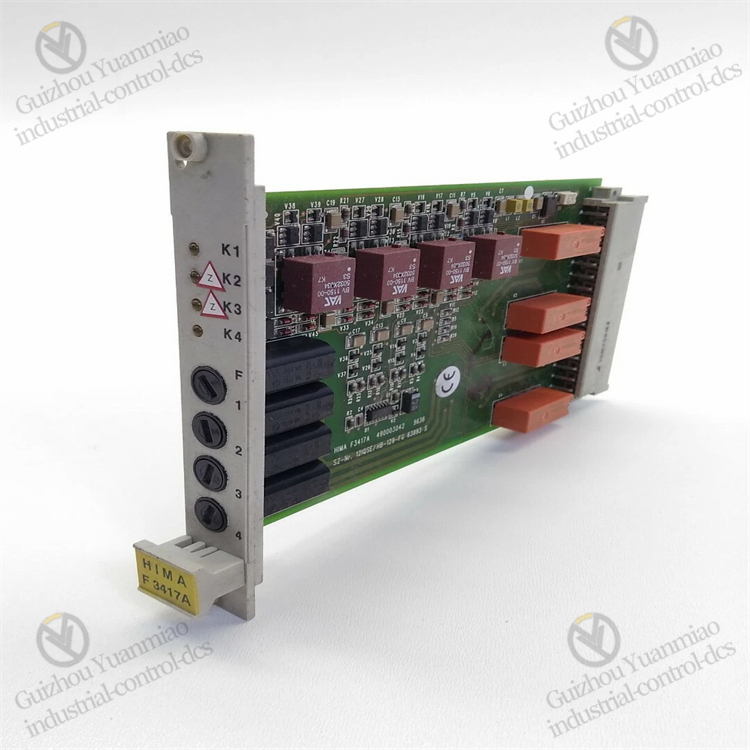
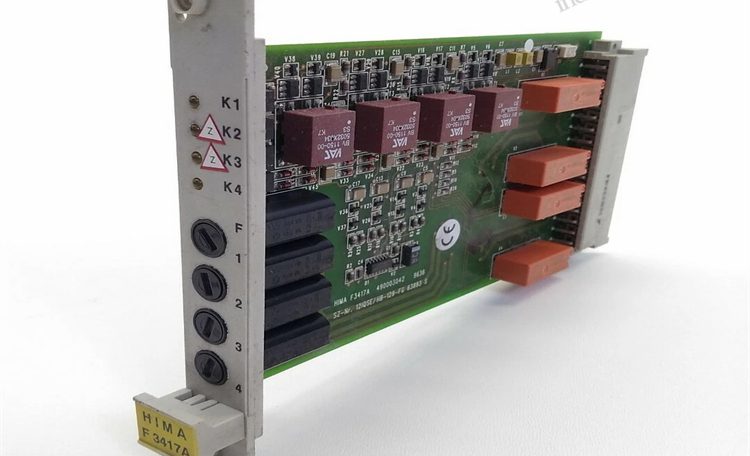
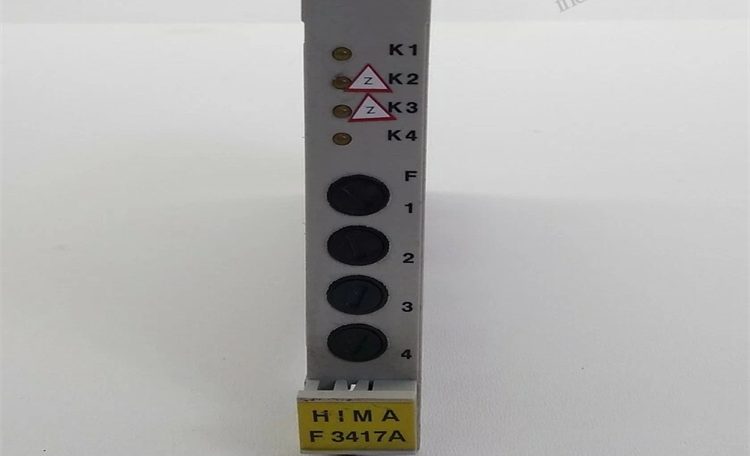
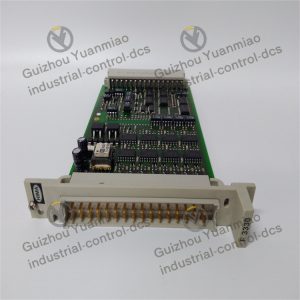
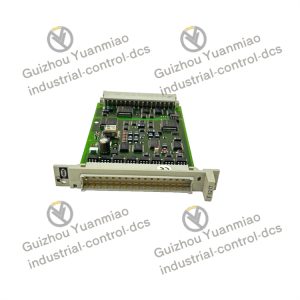
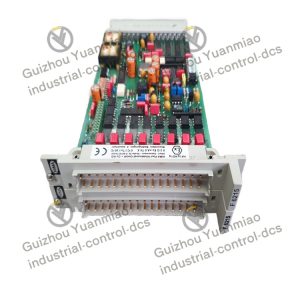
HIMA F3417A Programmable Safety Controller
The HIMA F3417A programmable safety controller is a core control device specially designed for industrial safety-critical fields. With high safety, reliability, and flexibility, it is widely used in scenarios with extremely high requirements for system fault tolerance and risk control. The following is a detailed introduction from aspects such as functional features, technical parameters, working principles, and application fields:
I. Core Functional Features
-
High Safety Level and Certification
- Complies with international safety standards SIL 3 (IEC 61508) and AK 6 (DIN V 19250), and has been certified by authoritative institutions such as TÜV Rheinland, ensuring reliable operation in safety-critical systems (such as emergency shutdown and fire protection).
- Adopts a fail-safe design with built-in redundancy and fault-tolerant mechanisms at both hardware and software levels. Even if some components fail, it can maintain the system’s safe state through logical verification and switching mechanisms to avoid dangerous outputs.
-
Powerful Processing and Expansion Capability
- Equipped with a dual-core processor, it supports high-speed logical operations and real-time data processing, and can execute complex safety control algorithms (such as interlock logic and sequence control) with fast response speed, ensuring rapid disposal of abnormal working conditions.
- Supports modular expansion, and can connect up to 16 I/O modules (such as digital and analog modules), flexibly adapting to system requirements of different scales, covering from small and medium-sized equipment control to large-scale distributed safety systems.
-
Fault Tolerance and Redundancy Configuration
- Supports a redundant architecture (such as dual-machine hot backup). The active and standby controllers synchronize data in real-time. When the active controller fails, the standby machine can switch seamlessly to ensure uninterrupted system operation, which is suitable for non-interruptible industrial processes (such as chemical reactions and oil and gas transportation).
- Built-in comprehensive self-diagnostic function, which can monitor the status of key components such as processors, memory, communication links, and power supplies in real-time, and quickly locate faults through alarm signals or diagnostic data, shortening maintenance time.
-
Flexible Programming and Communication
- Supports graphical programming tools (such as HIMA Planar) and adopts programming languages compliant with the IEC 61131-3 standard (such as Function Block Diagram FBD and Ladder Diagram LD), facilitating engineers to design and debug safety logic and reducing development difficulty.
- Compatible with multiple industrial communication protocols (such as PROFIBUS, EtherNet/IP, Modbus), it can communicate seamlessly with upper computers (such as SCADA systems), field devices (such as sensors and actuators), or other control systems (such as DCS) to realize data interaction and remote monitoring.
-
Environmental Adaptability
- Adopts a robust shell design, which can withstand vibrations, electromagnetic interference (EMC), and temperature fluctuations in industrial environments, ensuring stable operation under harsh working conditions.
II. Key Technical Parameters
| Parameter Category | Specific Parameters |
|---|---|
| Processor | Dual-core processor, with computing speed meeting the needs of complex safety logic |
| Memory Configuration | The capacity of program memory and data memory supports large-scale logic programming (specific capacity varies slightly by model) |
| Power Supply Requirement | Usually powered by 24V DC, supports a wide voltage range (such as 18-32V DC), with overvoltage and undervoltage protection |
| Communication Interface | Standard configuration with multiple communication ports, including Ethernet (for programming and communication with upper computers), PROFIBUS DP, etc. |
| Expansion Capability | Supports up to 16 I/O modules, and can expand digital, analog, relay and other types of modules |
| Working Environment | Operating temperature: -20℃ to +70℃; Protection level: IP20 (panel mounting) |
| Certification Standards | SIL 3 (IEC 61508), AK 6 (DIN V 19250), ATEX, IECEx, etc. |
| Redundancy Support | Supports dual-machine redundancy configuration with a switching time of < 100ms to ensure system continuity |
III. Working Principle
-
Signal Acquisition and Processing
It receives on-site sensor signals (such as temperature, pressure, liquid level switching signals, or emergency button signals) through connected I/O modules, which are filtered and isolated by internal circuits and then transmitted to the processor. -
Safety Logic Operation
The processor performs real-time operations on input signals based on pre-programmed safety logic (such as interlock conditions and threshold judgment). For example, when a combined signal of “excessive pressure + abnormal temperature” is detected, the “emergency shutdown” logic is triggered. -
Output Control and Redundancy Verification
The operation results drive actuators (such as shut-off valves and shutdown buttons) through output modules. At the same time, the dual-core processor ensures the accuracy of output instructions through cross-validation (comparing the operation results of both sides) to avoid misoperation caused by a single processor failure. -
Status Monitoring and Diagnosis
It records system operation data in real-time (such as input/output status and fault codes) and uploads them to the monitoring system or HMI through the communication interface. Engineers can remotely check the controller status and quickly locate faults (such as module offline and communication interruption).
IV. Typical Application Fields
-
Chemical and Petrochemical Industry
- Used in reactor safety interlock systems: Monitors parameters such as temperature, pressure, and liquid level, and triggers actions such as closing emergency shut-off valves and stopping stirring when exceeding the standard to prevent explosions or leaks.
- Integrated into fire and gas detection systems (F&G): Receives signals from flame detectors and combustible gas sensors, and links with fire-fighting equipment (such as sprinklers and sound-light alarms).
-
Oil and Gas and Energy Industry
- Applied in pipeline emergency shutdown systems (ESD): Detects dangers such as leaks and sudden pressure drops, and quickly shuts down transfer pumps and valves to prevent the expansion of oil and gas leakage accidents.
- Used for power plant equipment protection: Controls the safety logic of generators and transformers, such as triggering isolation devices in case of overvoltage/overcurrent to prevent equipment damage.
-
Machinery and Manufacturing Industry
- In production line safety protection, it connects to equipment such as safety doors and emergency stop buttons. When personnel accidentally enter dangerous areas, it immediately stops mechanical operation to ensure the safety of operators.
Summary
As a core controller in safety-critical fields, the HIMA F3417A has core advantages such as high safety certification, redundant fault-tolerant design, and flexible expansion capability. Through precise logic control and real-time diagnosis, it provides reliable guarantees for the safe operation of industrial processes and is a key device for risk management and control in industries such as chemical engineering, oil and gas, and electric power.
Reviews
There are no reviews yet.