

Description
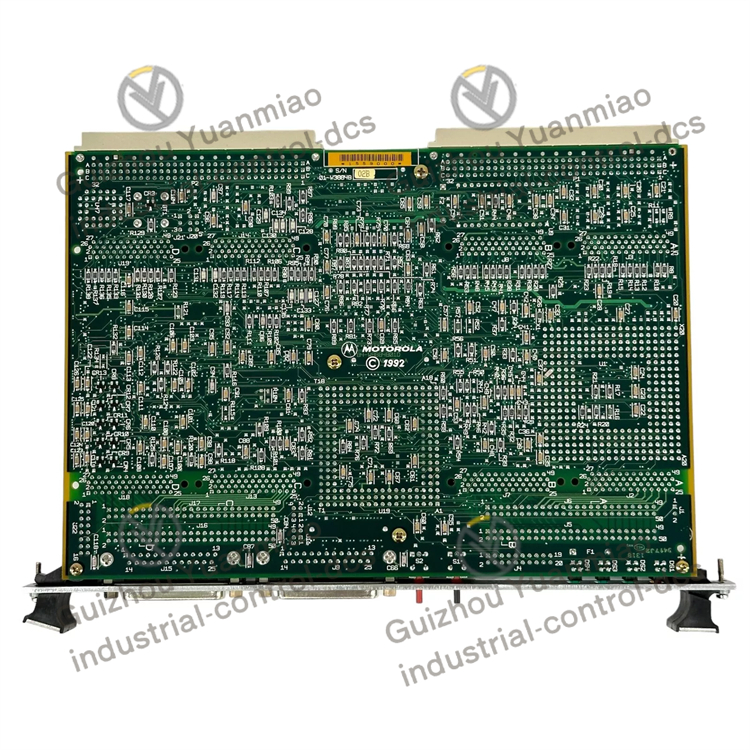
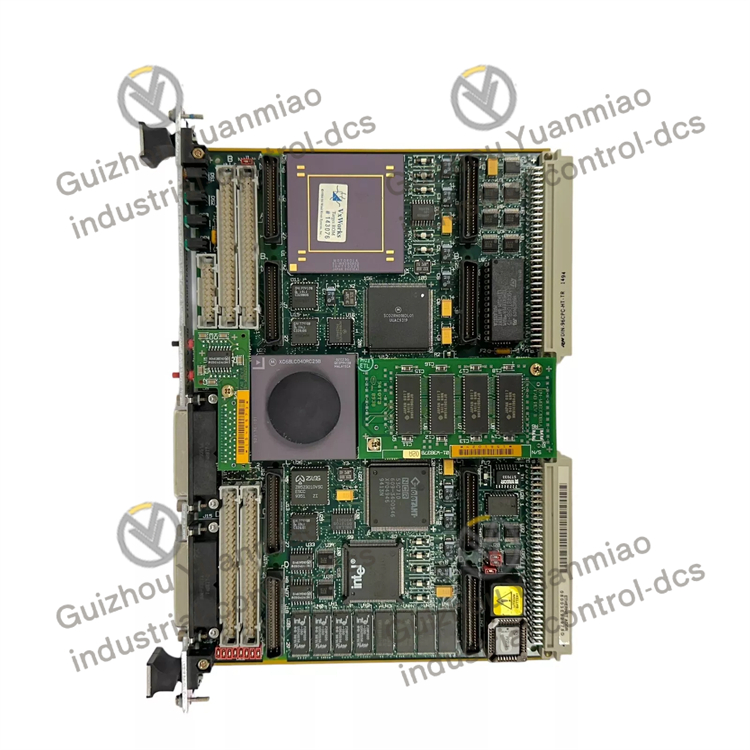
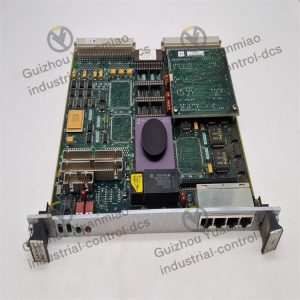
MOTOROLA MVME162-10 single-board computer
Performance characteristics
Processor: It adopts a 32MHz MC68040 enhanced 32-bit microprocessor, featuring 8KB cache, memory management unit (MMU), and floating-point operation unit (FPU). The 25MHz MC68040 32-bit microprocessor or the 25MHz MC68LC040 enhanced 32-bit microprocessor can also be selected. Both have 8KB cache and MMU, which can meet the requirements of complex algorithms and real-time tasks.
Memory and storage: Equipped with 4MB, 8MB or 16MB shared DRAM, and also has 512KB SRAM with a spare battery to ensure that data is not lost in case of power failure. Furthermore, there is 1MB of flash memory for on-board monitors, debuggers or user-installed firmware. At the same time, there is 8K x 8 NVRAM and a clock with a spare battery.
Interface: Two serial communication ports are provided. The console port is EIA-422 (V.36) DTE/DCE. It also features four 16 or 32-bit IndustryPack ports, each equipped with a DMA channel. In addition, optional SCSI bus interface and Ethernet transceiver interface are available, both equipped with 32-bit local bus DMA, which can adapt to multiple industrial protocols and facilitate connection and communication with other devices.
Bus: It is equipped with A32/D64 VMEbus master/slave interfaces, has the function of a system controller, and supports high-performance DMA for VMEbus D64 and local bus memory burst cycles. Meanwhile, it is the four-level requester, seven-level interrupter and seven-level interrupt handler of VMEbus, and also supports the remote RESET/ABORT/STATUS control function.
Others: It has six 32-bit timers, four of which are independent of VMEbus, and one watchdog timer, which is helpful for the execution of system scheduled tasks and system stability monitoring. Furthermore, there is a 32-pin PLCC EPROM socket on the board, and it is equipped with an on-board debugger and diagnostic firmware for convenient debugging and maintenance.
Application scenarios
Power system: It can be used as the core controller of the substation automation system to achieve voltage/current sampling, protection logic operations and remote communication. It can also be used as an automatic voltage regulator to convert fluctuating voltage into constant voltage, ensuring the stable operation of the power system.
Transportation: In the high-speed rail signal control system, it undertakes the tasks of train position tracking and dispatching command issuance, which helps to ensure the safety and efficiency of train operation.
Military equipment: It can be used for radar data preprocessing and human-machine interaction interfaces of fire control systems. It has the ability to resist harsh environments. Through reinforced design, it can adapt to battlefield environments and provide reliable support for military tasks.
Aerospace: Responsible for data collection and real-time calculation in flight control and navigation systems, providing guarantees for the stable flight and precise navigation of aircraft.
Industrial automation: Widely applied in industries such as numerical control machinery, metallurgy, petrochemicals, papermaking and printing, it can serve as a core component of industrial automation, controlling the operation of production equipment and monitoring various parameters during the production process.
Reviews
There are no reviews yet.