

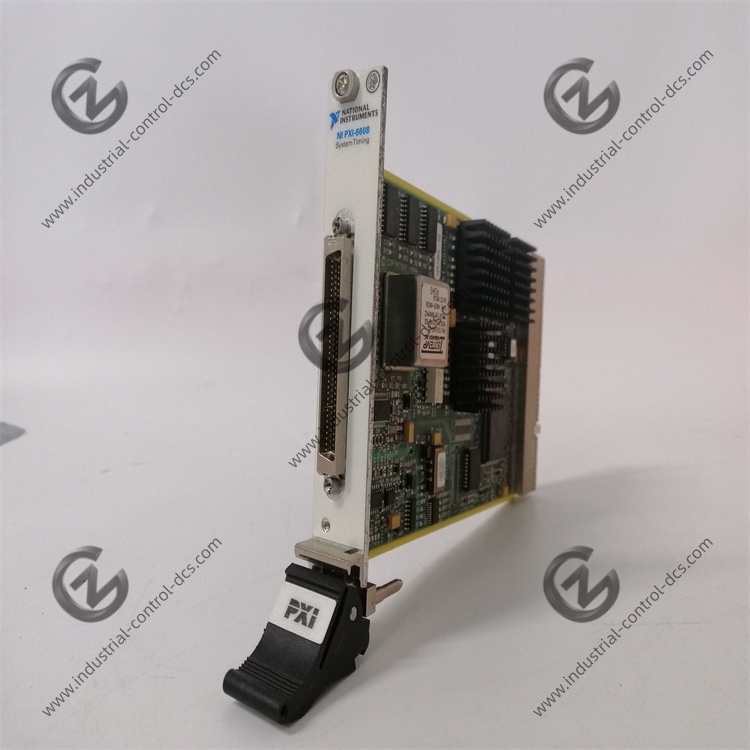
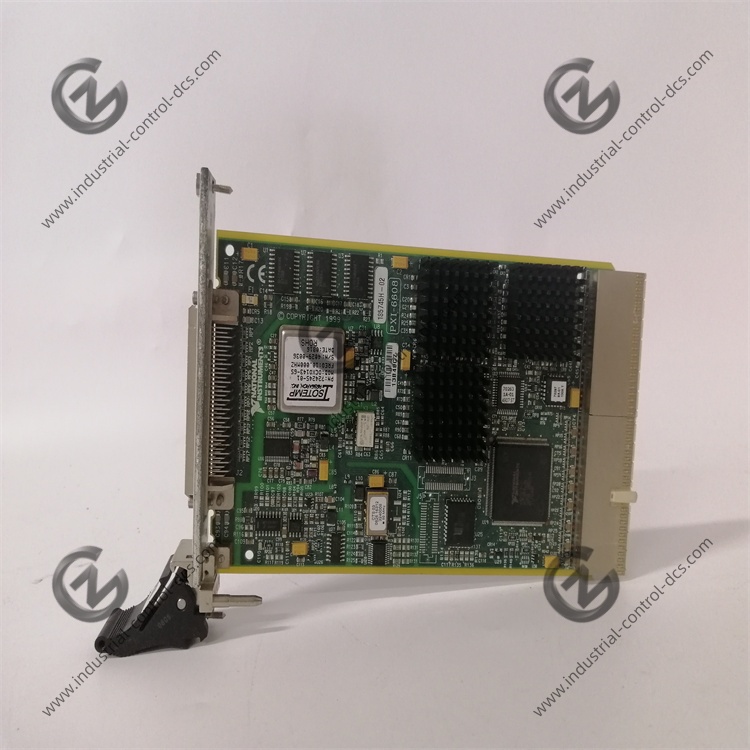
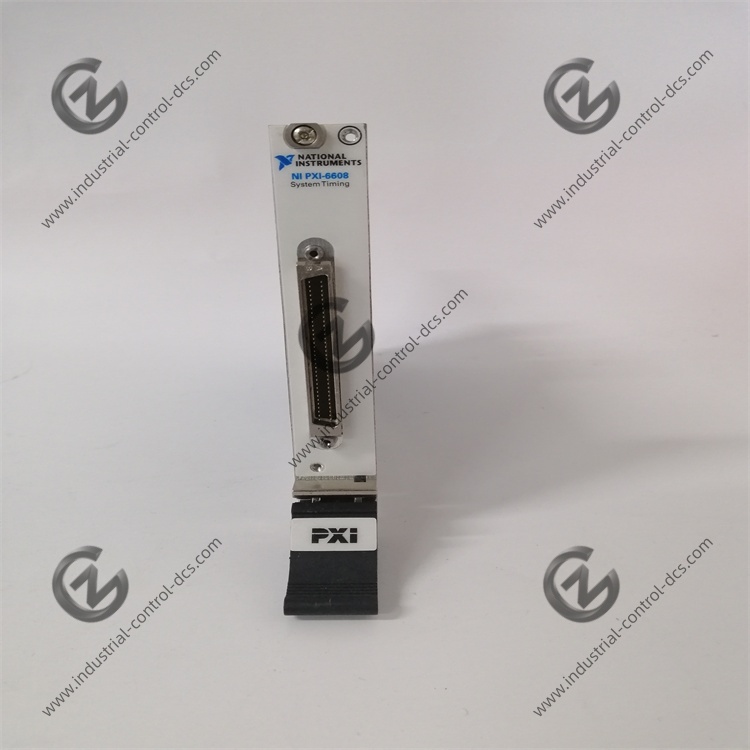
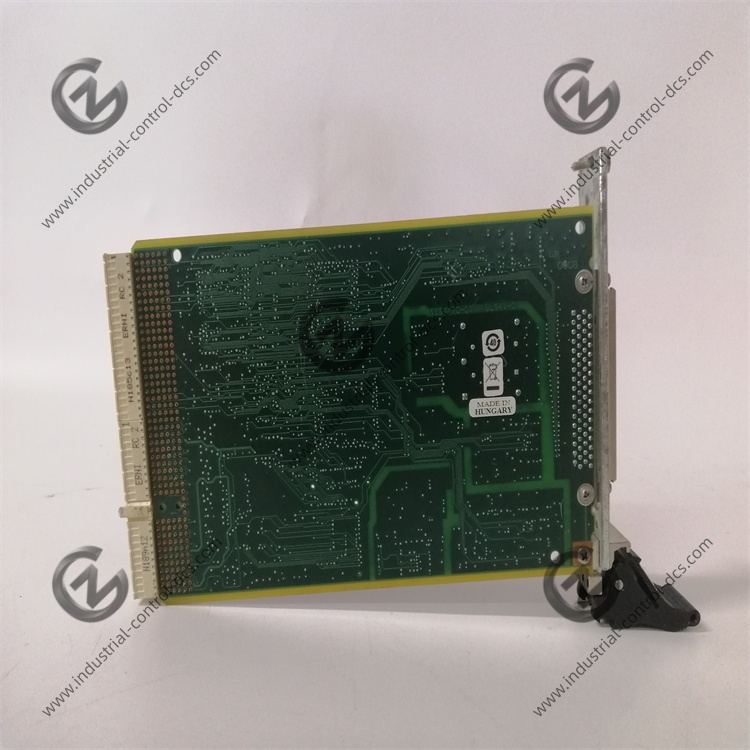
Description
Channel & Physical Interface Configuration
-
Counter resources: 8 independent reconfigurable 32-bit up/down counter-timers, no shared resource limitation between channels
-
Digital I/O: 32 programmable PFI general-purpose bidirectional TTL/CMOS lines, multiplexed with counter source/gate/out auxiliary signals
-
Rear connector: 68-pin shielded latching female SCSI-II connector, matched with SH68-68-D1 shielded cable
-
Slot occupation: Single-width 3U PXI peripheral slot; only Slot 2 achieves full 75 ppb OCXO clock optimization
-
Dimension & weight: 160 × 100 mm footprint, 225 g bare module weight including OCXO oven circuit
Core Counter/Timer Electrical Parameters
-
Counter resolution: Fixed 32-bit non-lossy counting, maximum count value 4,294,967,295
-
Native timebases: 100 kHz, 20 MHz, 80 MHz onboard reference clocks; ×2/×8 programmable prescalers
-
Max frequency handling: 80 MHz without prescaling, 125 MHz with prescaler enabled
-
Minimum edge separation: 25 ns for dual-edge interval measurement, supporting high-speed pulse sequence capture
-
Quadrature encoder support: X1/X2/X4 decoding modes, minimum Z-index trigger pulse width 50 ns
-
Rollover latency: 53.69 s @ 80 MHz timebase, 214.74 s @ 20 MHz timebase
Exclusive OCXO High-Stability Clock Specifications
-
OCXO center frequency: 10.000000 MHz, hardware fine-tunable ±500 ppb for long-term drift correction
-
Warm-up requirement: 5 minutes warm-up to reach ±20 ppb accuracy (power-off interval <1 hour)
-
Temperature stability: ±5 ppb across 0 ℃ ~ 50 ℃ ambient range referenced to 25 ℃
-
Long-term drift: ±0.45 ppb per day, ±45 ppb annual aging drift
-
Power supply stability: ±5 ppb frequency deviation under ±5% backplane +5 V supply fluctuation
-
Clock output capability: Can drive PXI backplane PXI_CLK10 to upgrade system-wide timing accuracy
Digital I/O Signal Characteristics
-
Logic level standard: TTL/CMOS compatible; input low ≤0.8 V, input high ≥2.0 V
-
Schmitt trigger hysteresis: Fixed 300 mV for anti-glitch noise suppression on input lines
-
Input impedance: 25 kΩ ~ 500 kΩ passive pull-down, 10~200 μA pull-down current
-
Output impedance: 75 Ω integrated series resistance for signal impedance matching
-
Output drive capability: 4 mA sink/source current, low-level output voltage ≤0.4 V under full load
-
Power-on default state: All PFI lines high-impedance input with weak pull-down protection
PXI Bus & DMA Synchronization Resources
-
PXI bus compliance: PXI Rev.2.2, supports 6 local trigger lines, 1 star trigger and PXI_Clk10
-
DMA channels: 3 independent scatter-gather DMA channels for zero-CPU continuous counter streaming
-
Backplane power consumption: 1.0~2.5 A @ +5 V rail, peak power during OCXO warm-up
-
Auxiliary I/O power: Onboard isolated +5 V @ 1 A output on rear connector for external sensor power supply
-
Multi-module synchronization: Sub-100 ps skew when synchronized via PXI star trigger with DAQ/DMM modules
Isolation & Safety Withstand Ratings
-
Channel-to-chassis withstand: ±11 V continuous signal voltage, IEC 61010 CAT I measurement category only
-
Channel-to-channel withstand: ±22 V differential continuous voltage between independent PFI lines
-
ESD protection: ±15 kV human body model for all PFI pins conforming to IEC 61000-4-2
-
Pollution degree: Class 2 indoor dry environment only, max working altitude 2000 m
Mechanical & Environmental Specifications
-
Operating temperature: 0 ℃ ~ +55 ℃; Storage temperature: -20 ℃ ~ +70 ℃
-
Humidity: 0%–90% non-condensing operation, 5%–95% non-condensing storage
-
Shock resistance: 30 g peak half-sine operational shock, 11 ms pulse duration
-
Vibration resistance: 0.3 grms operational random vibration, 2.4 grms non-operational storage vibration
-
EMC compliance: CE, FCC Class A industrial electromagnetic certification, requires shielded cabling
Compatibility Matching List
-
Compatible chassis: PXI-1031, PXI-1042, PXI-1045 all legacy 3U PXI chassis
-
Compatible controllers: PXI-8186 and all NI embedded/external PXI system controllers
-
Matching accessories: SH68-68-D1 shielded cable, CB-68LP breakout terminal block
-
Official status: Fully obsolete, only aftermarket inventory and third-party repair available
Software Compatibility
-
Drivers: NI-DAQmx, Traditional NI-DAQ, NI-TIO dedicated timing driver
-
Configuration tools: NI MAX, Counter Input/Output Interactive Panel
-
Supported software: LabVIEW, LabWindows/CVI, Python PyDAQmx, C# timing development kits
-
Supported OS: Windows XP/7/10, Phar Lap ETS real-time operating system
Pros & Limitations
-
Pros: Industry-leading OCXO clock stability, 8 fully independent counters, high-speed 125 MHz frequency measurement, low-latency DMA transmission, comprehensive quadrature encoder decoding, system clock cascading capability
-
Limitations: No onboard signal galvanic isolation, only CAT I low-voltage safety rating, mandatory 5-minute warm-up for precision use, slot-specific clock performance limitation, incompatible with Windows 11 latest DAQmx
Reviews
There are no reviews yet.