

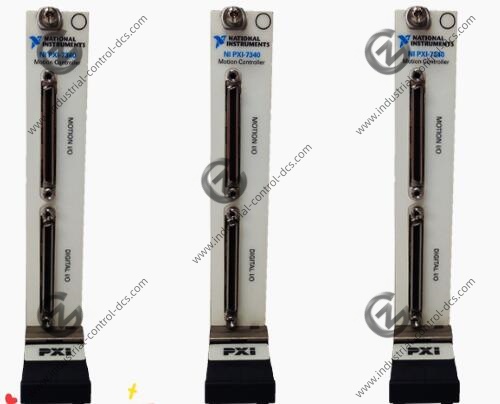
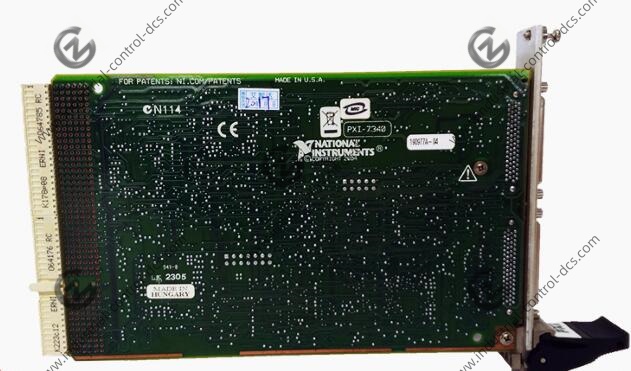
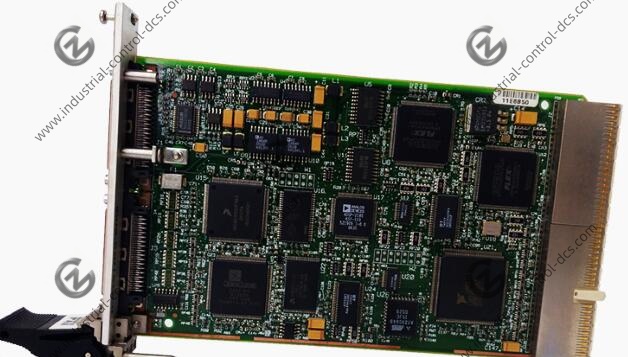
Description
Axis & Hardware Architecture
-
Max axis capacity: 4 axes configurable independently or multi-axis coordinated interpolation
-
Dual-core parallel processing: Embedded CPU for host communication and task scheduling; DSP for PID loop and trajectory generation; FPGA for high-speed encoder and pulse timing
-
Motion mode compatibility: ±10 V analog servo drive, step/direction or CW/CCW stepper drive
-
Onboard storage: 64 KB volatile RAM for temporary program buffering, 128 KB non-volatile flash ROM for permanent firmware and user program storage
-
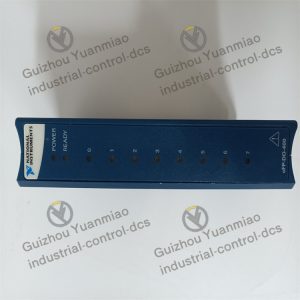
Slot occupation: Single-width 3U PXI peripheral slot, no additional chassis space required
Core Motion Performance Parameters
-
Servo PID update rate: 62.5 μs per single axis, 250 μs for simultaneous 4-axis closed-loop update
-
Stepper pulse output: Max 4 MHz pulse frequency, minimum 120 ns pulse width
-
Encoder feedback: Quadrature incremental input, max 20 MHz counting rate, single-ended 0-5 V signal level
-
Position range: ±2³¹ counts/steps for absolute and relative positioning
-
Velocity range: 1 ~ 20,000,000 counts/s with trapezoidal/S-curve acceleration profile
Analog I/O Specifications
-
Analog Inputs: 8-channel multiplexed 12-bit single-ended ADC, 4 for user feedback, 4 for internal diagnosis; ±10 V/±5 V/0-10 V/0-5 V programmable ranges
-
ADC scan speed: 25 μs per enabled channel, 10 kΩ minimum input impedance
-
Analog Outputs: 4-channel 16-bit single-ended DAC for servo torque command, fixed ±10 V range, ±5 mA max output current
-
Auxiliary analog reference: 7.5 V @ 5 mA precision reference output for external circuit calibration
Digital & Safety I/O Parameters
-
General Digital I/O: 32-bit bidirectional channel, 0-5 V logic level, 24 mA sink/source current per channel
-
Axis-specific I/O: 3 limit/home inputs per axis, 1 high-speed capture trigger, 1 breakpoint output, 1 axis inhibit output
-
PWM Output: 2-channel 8-bit resolution PWM, max 50 kHz frequency for auxiliary drive control
-
Safety protection: 63 ms timeout watchdog timer, global shutdown input to disable all axis outputs instantly
-
Signal isolation note: No onboard galvanic isolation; external isolated terminal block required for industrial field wiring
PXI & RTSI Bus Resources
-
PXI bus compliance: PXI Rev.2.2 peripheral slot specification, 33 MHz 32-bit PCI bus bandwidth
-
RTSI synchronization: 8 shared trigger lines for cross-module synchronization with DAQ, switch modules
-
Backplane power draw: 1 A @ +5 V, 30 mA @ ±12 V, total typical power consumption 5.7 W
-
Inter-module synchronization skew: <1 PID update cycle for multi-device coordinated motion
Mechanical & Environmental Specifications
-
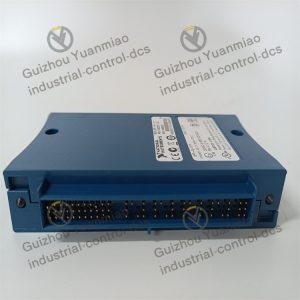
Dimension: 160 × 100 mm excluding VHDCI connectors, single 3U PXI form factor
-
Weight: 170 g bare module weight
-
Operating temperature: 0 ℃ ~ +55 ℃; Storage temperature: -20 ℃ ~ +70 ℃
-
Humidity: 10%–90% non-condensing, Pollution Degree 1 indoor use only
-
Voltage withstand: 12 V channel-to-ground, 22 V channel-to-channel continuous signal voltage
Compatibility Matching List
-
Compatible chassis: PXI-1031, PXI-1042, PXI-1045 and all standard 3U PXI chassis
-
Compatible controllers: PXI-8186 and all NI embedded/external PXI system controllers
-
Matching accessories: UMI-7764 universal motion terminal block, 2m VHDCI shielded cable
-
Official status: Fully obsolete, only aftermarket replacement inventory and third-party repair available
Software Compatibility
-
Drivers: NI-Motion legacy driver suite, compatible with NI-DAQmx parallel use
-
Configuration tools: NI MAX, Motion Explorer interactive tuning utility
-
Supported software: LabVIEW 8.x and above, LabWindows/CVI, Python with NI-Motion API, C#
-
Supported OS: Windows XP/7/10, Phar Lap ETS real-time operating system
Pros & Limitations
-
Pros: Independent DSP real-time computing to avoid host PC delay, mixed servo/stepper axis hybrid control, high-speed sub-microsecond position capture, onboard standalone program operation, RTSI cross-device synchronization
-
Limitations: No built-in signal isolation requiring external accessories, limited to 4 axes, outdated driver support for latest Windows versions, no EtherCAT bus interface
Reviews
There are no reviews yet.