

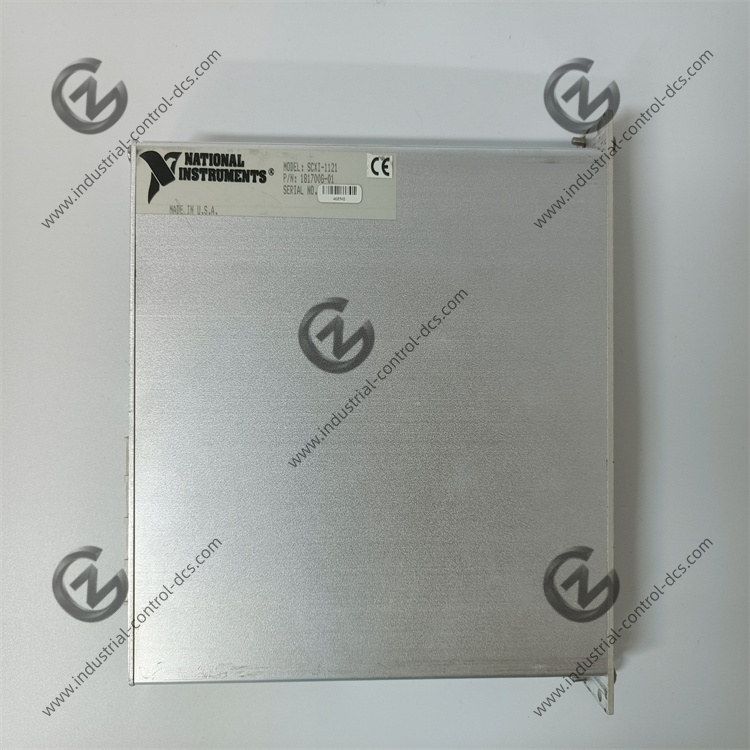
Description
Channel & Wiring Configuration
-
8-channel fully differential simultaneous sampling analog input
-
Two operation modes: multiplexed mode (occupy 1 DAQ AI channel) / parallel high-speed mode
-
Per-channel independent track-and-hold circuit for synchronous signal capturing
-
Built-in half-bridge completion; quarter-bridge resistors supplied via SCXI-1314
-
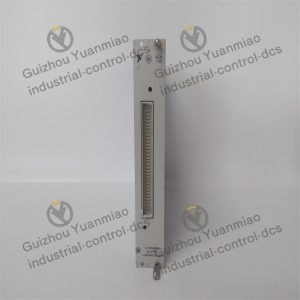
Rear 96-pin shielded DIN connector for front terminal block connection
Programmable Gain & Input Range
-
49 software-selectable gain steps ranging from ×1 to ×1000
-
Voltage input span: ±10 mV to ±10 V full scale
-
Max measurable strain: ±40,000 µε (quarter-bridge, GF=2.0)
-
Per-channel excitation: 0-10 V programmable isolated voltage excitation
-
Remote sense function to eliminate lead wire voltage drop errors
Filter & Scanning Parameters
-
Filter type: 4-pole Butterworth low-pass filter, 24 dB/octave rolloff
-
Selectable cutoff frequencies: 10 Hz, 100 Hz, 1 kHz, 10 kHz, bypass mode
-
Bypass bandwidth: 20 kHz (-3dB)
-
Min channel settling time: 3 µs (±0.0125% accuracy)
-
Typical inter-channel sampling skew: ±200 ns
Key Electrical Specifications
-
Input impedance: >1 GΩ per differential channel
-
60Hz CMRR: >85 dB for gain ≥20; >60 dB for gain <20
-
Nonlinearity error: ≤0.02% FSR
-
Overvoltage protection: ±35 VDC powered on, ±25 VDC powered off
-
Maximum excitation load: Drive 350 Ω full-bridge sensor at 10 V output
-
Power consumption: 4.1 W typical operating power
-
Onboard NIST-traceable calibration reference and EEPROM storage
Mechanical & Environmental Specifications
-
Dimension: 172×86×32 mm, standard single-slot SCXI module
-
Operating temperature: 0℃ ~ +50℃
-
Storage temperature: -20℃ ~ +70℃
-
Humidity: 10%–90% non-condensing
Compatibility Matching List
-
Matched terminal block: SCXI-1314 strain measurement terminal block
-
Compatible chassis: SCXI-1000, SCXI-1001
-
Compatible controllers: SCXI-1600, PCI/PXI SCXI bus adapters
-
Official status: Obsolete, available for aftermarket replacement
Software Compatibility
-
Drivers: NI-DAQmx, Traditional NI-DAQ 7.0 and above
-
Configuration tools: NI Measurement & Automation Explorer (MAX)
-
Supported software: LabVIEW, LabWindows/CVI, Python DAQmx, C#
Pros & Limitations
-
Pros: True simultaneous sampling, full bridge type compatibility, remote excitation compensation, dual-point shunt calibration, automatic bridge nulling, excellent low-noise performance for micro-strain signals
-
Limitations: No channel-to-channel galvanic isolation, narrow operating temperature range, no AC signal input support
Reviews
There are no reviews yet.