


Description
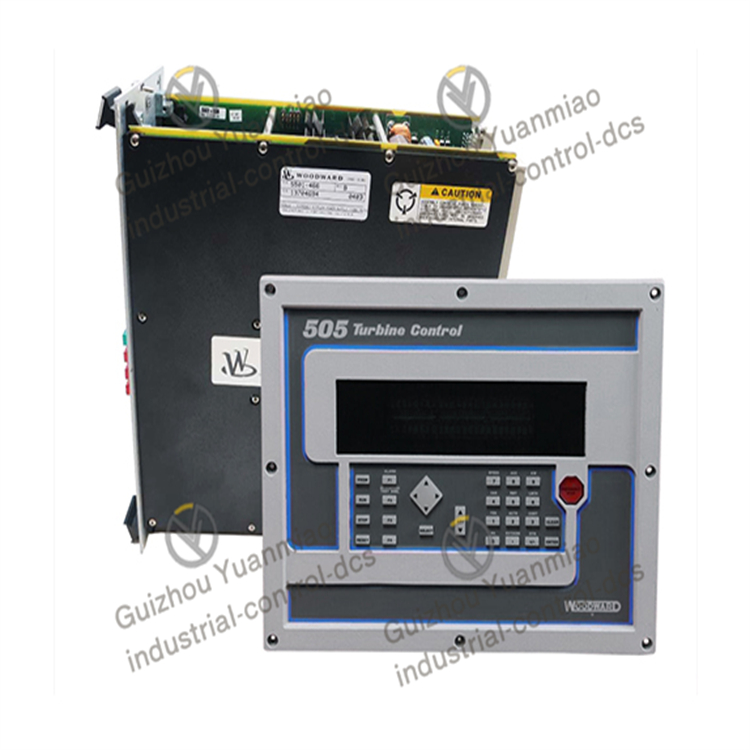
Woodward 8230-3011 generator controller
Technical Specification:
Input voltage: 90-150VDC, rated 125VDC.
Power consumption: Rated 40W.
Operating temperature: -40℃ to + 70℃ (-40℉ to + 158℉).
Storage temperature: -55℃ to + 105℃ (-67℉ to + 221℉).
Humidity standard: 95% at 38℃.
Weight: 6 pounds and 8 ounces.
Dimensions: 16.25 (width) ×11.5 (length) ×2.375 (height).
Functional features:
Rich input and output: It features 8 digital inputs, 4 analog inputs, 3 analog outputs, 1 actuator output and 3 communication ports. The communication port can be used for communication with RS-232, RS-422 or RS-484, and can also be programmed through one of the ports using the Woodward handheld programmer (Part number 9907-207).
Supports multiple sensors: According to specific application requirements, two reluctance transmitters or two proximity switches can be selected for use. The measurement frequency of the magnetoresistive transmitter is 400- 15,000 Hz, and that of the proximity switch is 30- 15,000 Hz.
Main application fields
Marine diesel-electric propulsion system: It can be used in the diesel-electric propulsion system of ships to control the propulsion generator, ensuring stable power output from the generator, providing reliable power for the ship’s propulsion motor, and guaranteeing the ship’s navigation.
Ship auxiliary power generation system: It can serve as the controller of the ship’s auxiliary generator, monitor and adjust the operation status of the generator in real time, and rationally allocate power according to the power demand of various equipment on the ship to ensure the normal operation of lighting, communication, navigation and other equipment on the ship.
Base load power generation system: It is suitable for some power generation systems that require a stable base load, such as self-owned power stations in factories, mines and other places. It can maintain the stable operation of the generator under the base load, ensure the reliability and stability of power supply, and meet the continuous power demand within the site.
Island mode system: In island mode, such as independent power stations in remote areas or offshore platforms, this controller enables the generator to operate independently, automatically adjust the output, meet the various load demands on the island or platform, and quickly adjust when the load changes to maintain the stability of the power system.
Weak grid environment: Due to its MW control mode, it can provide stable control functions in weak grid environments, such as in areas with weak grid infrastructure or when the grid is disturbed, effectively addressing issues like significant frequency fluctuations and ensuring the normal operation of equipment connected to the grid.
Reviews
There are no reviews yet.